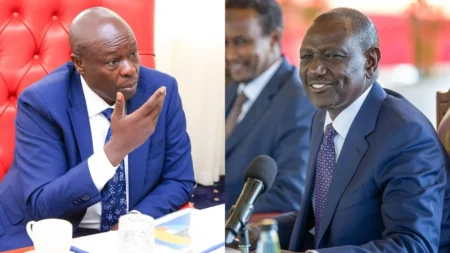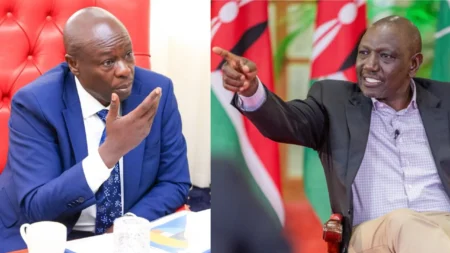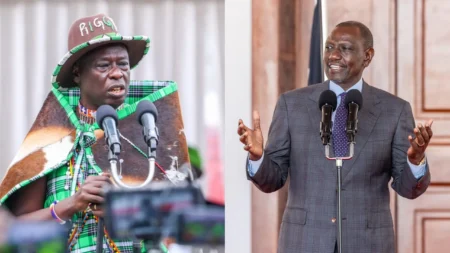
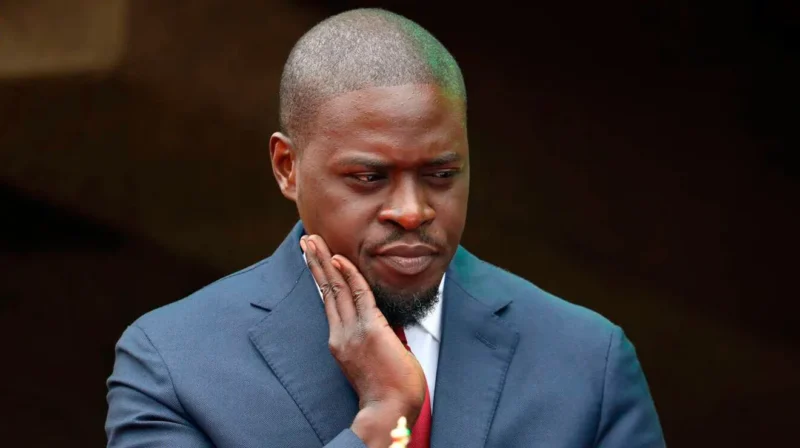


NAIROBI, Kenya — Former Deputy President Rigathi Gachagua has explained why he failed to present evidence supporting his claims that Kenya’s Social Health Authority (SHA) could collapse within six months, citing personal delays.
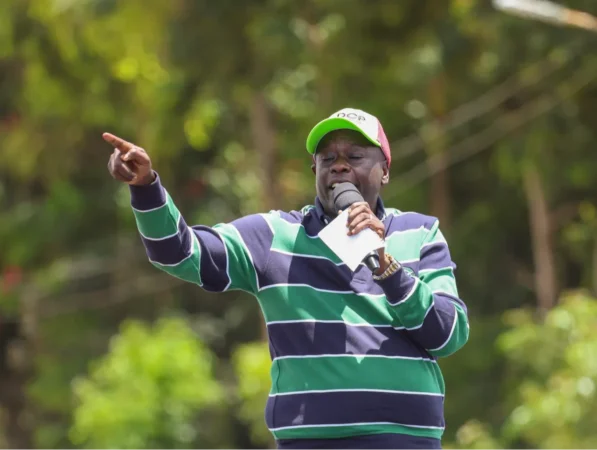
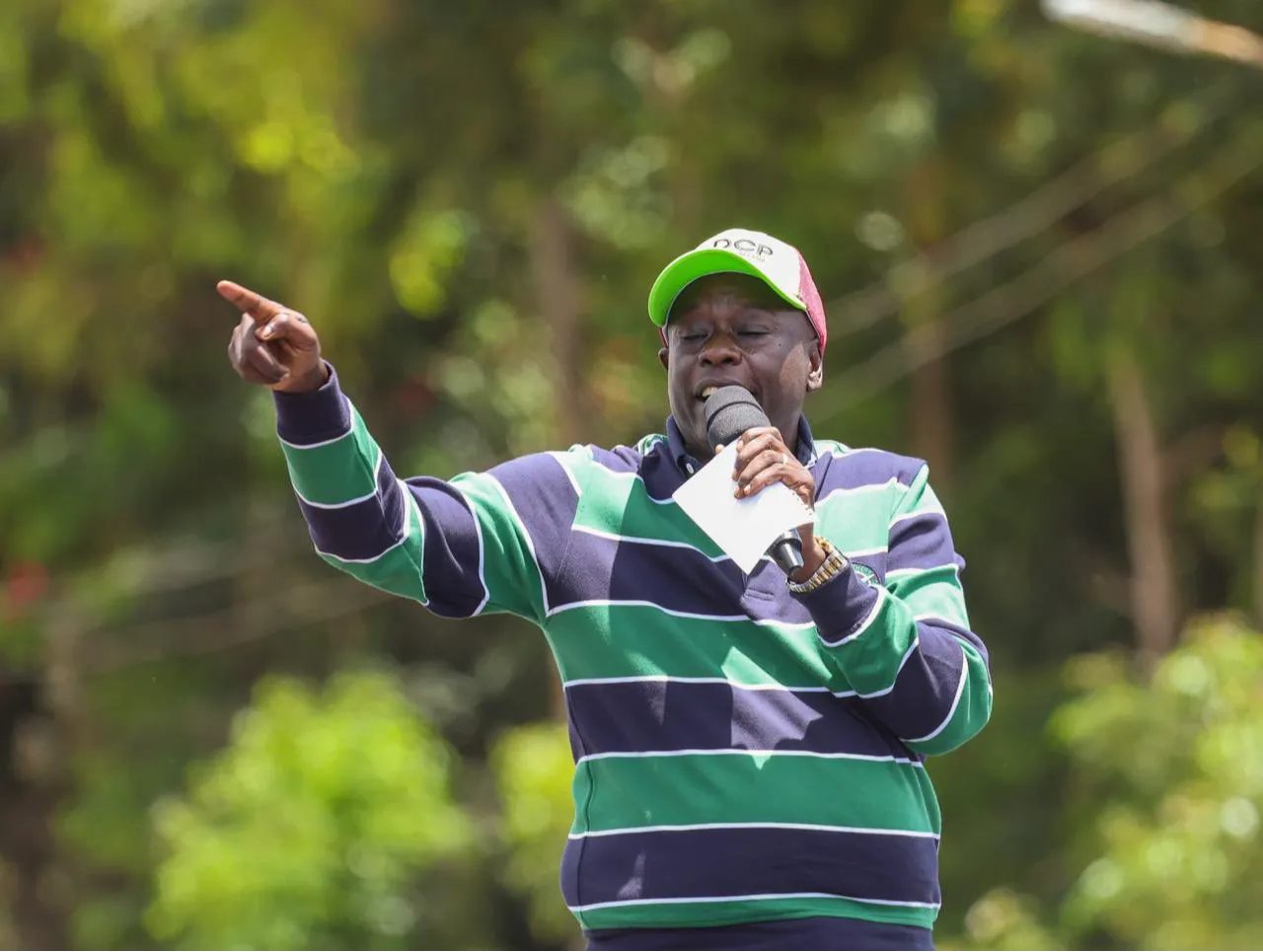
Speaking at an opposition rally in the Ukambani region, Gachagua said he had intended to respond within the deadline set by Health Cabinet Secretary Aden Duale but was held up by personal errands.
He was responding to a public challenge from Duale to table a dossier substantiating allegations of mismanagement within the government-backed health insurance programme under the Social Health Authority (SHA).
In a light-hearted tone, Gachagua told supporters: “Yesterday, you asked me to give you details by 10 am today. I got a little late because I passed by a barber,” he said.
“I wanted to answer you by 10 am but I figured because I answer you, I must get a shave. Also, you cannot go to your cousins looking shaggy. You must look sharp. That is why I am a little late.”
Despite failing to provide evidence, the former deputy president intensified his criticism of the SHA programme, alleging large-scale financial impropriety in its rollout.
“The SHA system cost Sh104 billion, and that money went into people’s pockets,” he alleged.
He further claimed, without offering supporting details, that a company linked to a senior government official was part of the consortium involved in implementing the project.
“In that Sh104 billion consortium, one firm belongs to a senior government officer,” Gachagua said.
He also alleged that as much as Sh50 billion had been lost through the scheme, escalating his accusations against one of the government’s flagship health sector reforms.
Gachagua had earlier said he had intelligence suggesting the SHA system was on the brink of collapse, remarks that prompted a swift rebuttal from Duale.
Speaking during a Waqf empowerment event in Wajir South, Duale dismissed the claims as baseless and challenged Gachagua to make public any evidence.
“I dare Riggy G to release that dossier tomorrow at 10,” Duale said.
“We have paid health facilities across the country, faith-based, private, public, and more, Sh21 billion as of this morning.”
Duale defended the SHA rollout, maintaining that the system remains operational and continues to expand nationwide.
According to the Health Ministry, the programme has registered more than 30.1 million Kenyans, with approximately 12,000 new sign-ups recorded daily.
He added that the government has disbursed about Sh92.5 billion under the new health financing framework.
Also Read: Political war erupts as Gachagua blasts Ruto over governance failures
“Of this amount, approximately Sh75 billion has been paid through the Social Health Insurance Fund, while Sh13 billion has been allocated to support primary healthcare services,” Duale said.
The cabinet secretary also accused Gachagua of politicising the health sector and exploiting concerns among private and faith-based healthcare providers for political gain.
The dispute highlights growing political tensions around Kenya’s transition from the defunct National Health Insurance Fund (NHIF) to the SHA model, a cornerstone of President William Ruto’s universal health coverage agenda.
While the government has framed SHA as a transformative reform aimed at expanding access and equity in healthcare, critics, including sections of the opposition and healthcare providers, have raised concerns over its financing model, transparency, and sustainability.
The latest exchange underscores the increasingly adversarial tone of public discourse around the reform, with demands for greater accountability likely to intensify as implementation progresses.