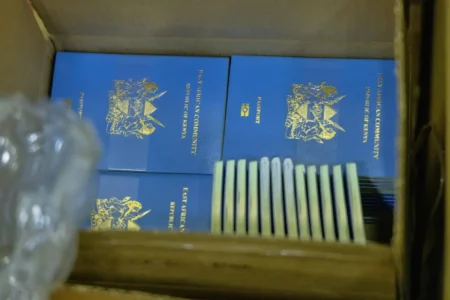





NAIROBI, Kenya — For weeks, silence has hung over Kenya’s Ministry of Interior, even as serious allegations emerged that Kenyan passports may have been issued to unqualified foreign nationals, raising concerns over national security and the integrity of one of the country’s most critical identification documents.
The Kenyan passport, long regarded as a symbol of national identity and a gateway to global mobility, has recently come under scrutiny following claims that individuals of questionable standing may have obtained it.
Among those cited in the allegations are members of Sudan’s paramilitary Rapid Support Forces (RSF) and a Zimbabwean businessman reportedly facing international scrutiny over past criminal activity.
The claims, which surfaced in February, quickly escalated into a matter of both domestic and international concern. Yet, for weeks, government officials maintained a firm denial, offering little detail even when pressed in parliamentary sessions.
That silence was partially broken on Thursday when Principal Secretary for Immigration, Dr Belio Kipsang, acknowledged that the matter had reached the highest levels of government deliberation.
“We still have critical discussion, and my CS and CS for Foreign Affairs are engaged and seized of those issues, mainly on those issues of those passports, and I do not want to go into that,” said Dr Kipsang.
Despite mounting speculation, including references to leaked documents circulating online, the government has sought to downplay the credibility of the evidence.
“If you clearly looked at that document, it never indicated that those guys were having passports, and as I said earlier, this is an issue of national interest,” he added.
At the heart of the controversy lies the broader question of trust in Kenya’s identity management systems.
Currently ranked among the top ten most powerful passports in Africa and 68th globally, the Kenyan passport’s standing is built on years of stringent vetting procedures and international cooperation.
Any breach, real or perceived, could have far-reaching implications, including tighter visa restrictions for Kenyan citizens abroad.
“We have reason to protect our passport… it is the best in the East African region. We have very good reason to protect the integrity of our identification documents… it is a cardinal duty.”
“We have not issued any of our documents to individuals who do not meet the criteria of issuance. Anybody who may have been issued docs and people who we have issued our docs are people who meet the requirements,” Kipsang said.
While the government works to contain the reputational fallout from the passport controversy, it is simultaneously pushing forward with an ambitious domestic agenda. Authorities have launched an accelerated national identification drive aimed at issuing 11 million ID cards across all 47 counties by next year.
The initiative underscores the central role of identification systems in governance, elections, and access to public services. However, the ongoing passport allegations cast a shadow over these efforts, raising broader questions about the robustness of Kenya’s document issuance frameworks.
Also Read: US rights group links Ruto to Kenya passport scandal involving Sudan’s RSF
Beyond the immediate political implications, the issue also touches on regional security dynamics.
The mention of Sudan’s RSF, a group embroiled in a prolonged and violent conflict, adds an international dimension, potentially placing Kenya under greater scrutiny from global partners concerned about cross-border security and document fraud.
As investigations continue and the government maintains its position, the controversy remains unresolved. What is clear, however, is that the stakes extend far beyond bureaucratic procedures. At issue is the credibility of Kenya’s identity systems and the confidence they command both at home and abroad.
For now, the question persists: How secure are the systems that safeguard Kenya’s most vital documents—and who, ultimately, is accountable for protecting them?