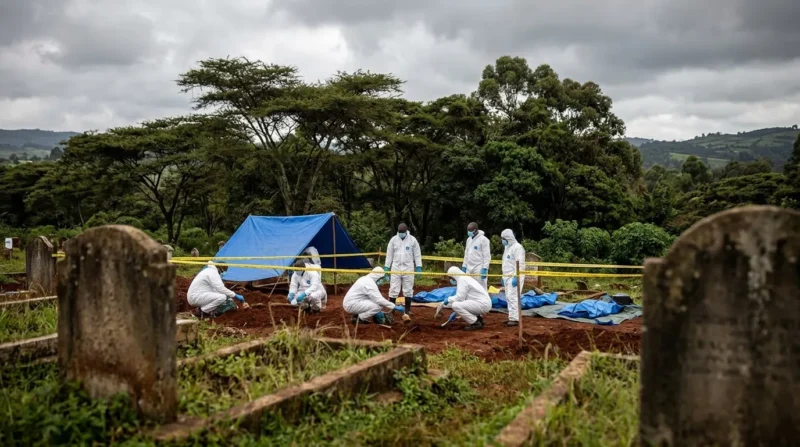


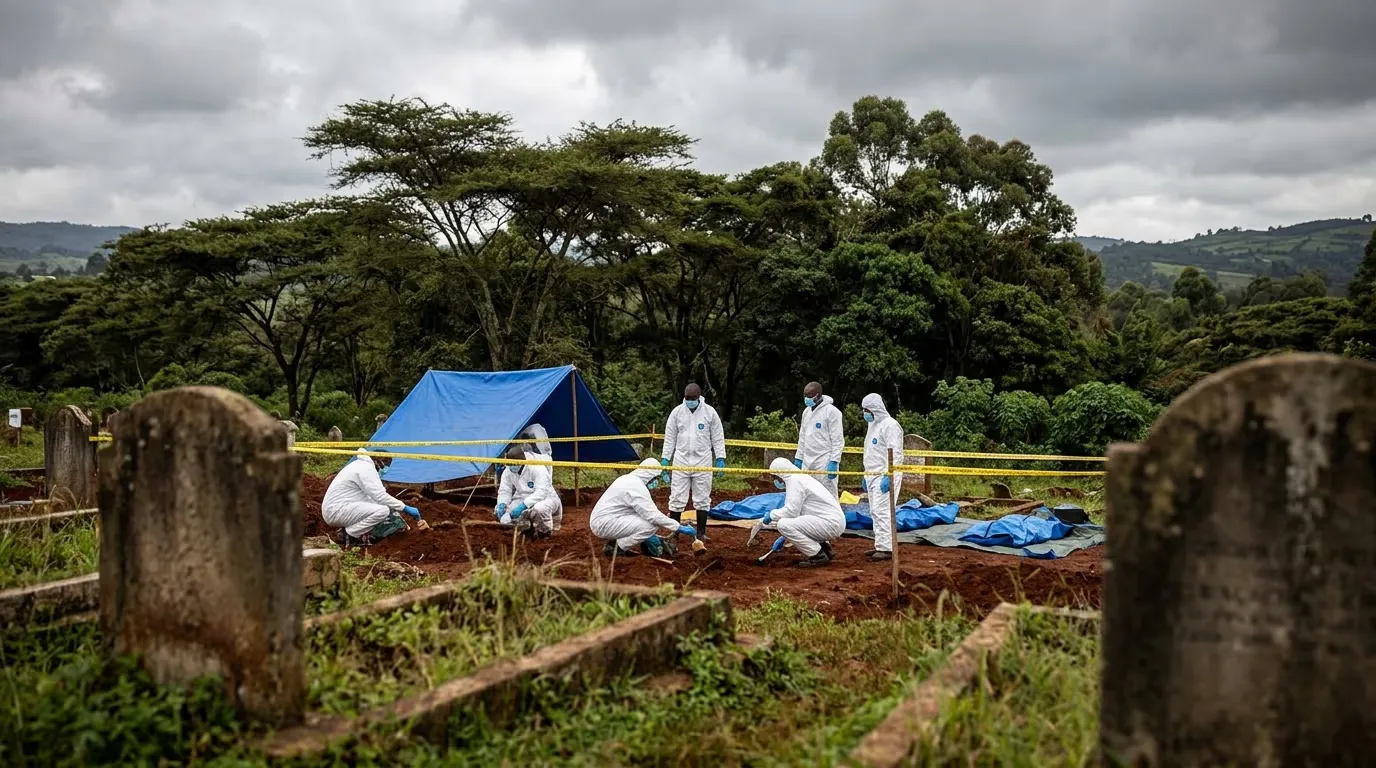
KERICHO, Kenya — A multi-agency team has exhumed 33 bodies from a suspected mass grave at a cemetery in Kericho County, raising urgent questions over the circumstances surrounding the burials.
The operation, initially expected to uncover 14 bodies, revealed a significantly higher number, intensifying concerns among investigators and local authorities.
The exercise was overseen by the Director of Homicide, Martin Nyuguto, alongside a government pathologist representing Chief Government Pathologist Johansen Oduor.
Preliminary findings indicate that the majority of those exhumed are children, with officials confirming that 25 of the bodies are minors, while eight are adults.
The discovery has prompted heightened scrutiny, given the vulnerability of the victims and the unclear circumstances under which they were buried.
Authorities have since begun preparations to transfer the remains to a government mortuary, where post-mortem examinations and forensic analysis will be conducted to establish identities, causes of death, and possible links between the victims.
Investigators are now working to determine whether the burials were lawful and properly documented, or if the site may be connected to criminal activity.
The discrepancy between initial estimates and the number of bodies recovered has further deepened suspicion.
Cases involving mass graves in Kenya have, in recent years, drawn national attention, often highlighting gaps in oversight, documentation, and protection of vulnerable populations.
Authorities are expected to examine burial records, interview witnesses, and analyse forensic evidence as part of the inquiry.
Also Read: Kenyatta National Hospital issues notice to dispose of 480 unclaimed bodies
Officials have not ruled out any line of investigation, including the possibility of negligence, unlawful disposal of bodies, or more serious criminal conduct.
The government is expected to release further details once forensic examinations are complete.
Meanwhile, families with missing relatives may be called upon to assist in identification processes, including DNA testing where necessary.
The discovery underscores the critical need for transparency and accountability in burial practices, particularly where large numbers of vulnerable individuals are involved.