



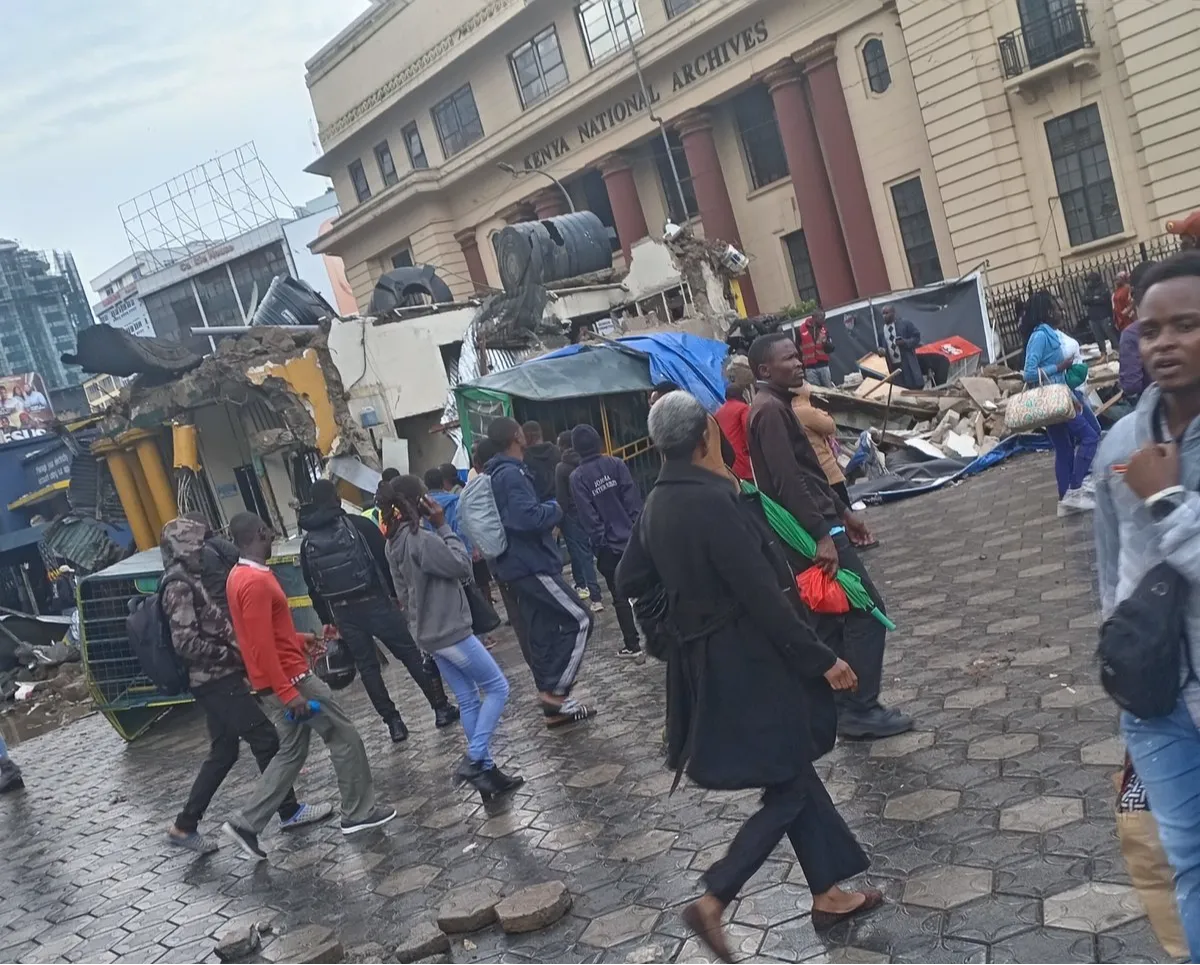
NAIROBI, Kenya — The Nairobi City County Government on Saturday 21, March 2026 demolished public toilets located at the Kenya National Archives as part of ongoing efforts to address flooding in the city centre.
Images from the scene showed that the structure’s roof, doors and windows had been removed, with demolition crews continuing work into the day after the operation reportedly began in the early morning hours.
The exercise also affected several informal businesses operating nearby, including shoe shiners whose workstations were destroyed. Some traders were seen attempting to salvage belongings from the site as the demolition progressed.
Scrap metal collectors later moved in to recover materials from the debris, while affected business owners questioned the timing and manner of the operation. They claimed they had not been consulted prior to the demolition, raising concerns over due process and livelihoods.
Preliminary information suggests the demolition forms part of a broader Nairobi Central Business District (CBD) facelift programme. Other reports indicate the structure stood on a key drainage corridor and had to be removed to facilitate improvements to the city’s stormwater system.
Nairobi has experienced recurrent flooding since the onset of the current rainy season, with major roads and streets sustaining damage and businesses reporting significant losses.
Johnson Sakaja has previously pledged decisive action to restore effective drainage across the CBD and surrounding areas. He warned that any structures located on riparian land or blocking drainage channels would be removed as part of the intervention.
Also Read: Governor Wamatangi businesses near Nyayo Stadium demolished amid land dispute
The demolition has drawn criticism from some political leaders and affected residents. Rigathi Gachagua condemned the overnight operation, arguing that it infringed on the rights of small-scale entrepreneurs.
The county government has faced mounting pressure to act on flooding, which has disrupted transport, damaged infrastructure and led to financial losses for residents and businesses in recent weeks.
As Nairobi continues to grapple with the impact of heavy rains, the incident highlights the tension between urgent urban planning measures and the need to protect livelihoods and ensure public participation in redevelopment efforts.