



NAIROBI, Kenya — Businesses linked to Kiambu Governor Kimani Wamatangi were demolished late Tuesday night near Nyayo National Stadium in Nairobi, marking a second major demolition at the site and intensifying questions about property rights, enforcement procedures, and political accountability in Kenya’s capital.
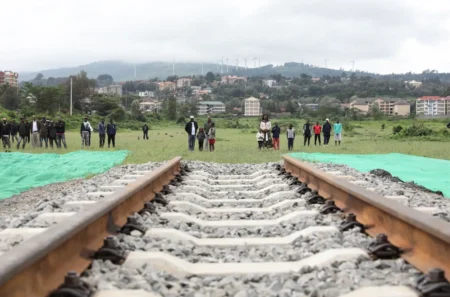
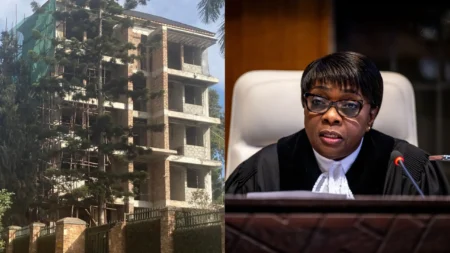
In a pre‑dawn operation conducted under the watch of heavily armed police officers, excavators and bulldozers levelled at least two semi‑permanent buildings, including a car wash facility and a restaurant, and damaged vehicles and other structures along Douglas Wakiihuru Road, off Lang’ata Road.
The demolition blocked the road, causing significant disruption to traffic and local movement. By Thursday morning, debris from the night raid was still visible, with business owners counting losses and assessing damage.
The site is linked to Governor Wamatangi through his company, Superclean Shine Enterprises, which has contested the demolitions in court, arguing that the property is legally leased from Kenya Railways Corporation (KRC) and has been held for more than two decades.
In a petition filed at the Milimani Commercial Magistrates’ Court, Wamatangi states that the land has been lawfully leased, with rent consistently paid and acknowledged by Kenya Railways, affirming a “valid and subsisting tenancy” under which he has operated the business.
“Throughout this period, the Applicant has duly paid rent which has been consistently received and acknowledged by the 1st Respondent,” the petition states.
The court filing argues that Kenya Railways officers issued “verbal threats” around December 17, 2025, warning that demolition and eviction could be carried out as early as December 22, or at any time thereafter, without written notice or due process required under the Land Act.
“They verbally threatened to evict the Applicant from the suit property and demolish the structures and developments erected thereon … or at any time before or thereafter,” the petition says.
The petition contends that these actions violate Wamatangi’s constitutional rights to property and to fair administrative action under Articles 40 and 47 of the Kenyan Constitution and are contrary to mandatory procedures under the Land Act.
Longstanding land tensions and past demolitions
This is not the first eviction involving Wamatangi at this location. In 2019, a similar demolition operation razed a car bazaar opposite Nyayo Stadium, a site previously associated with Wamatangi, drawing public attention to enforcement of railway reserve land and the legality of private developments on public property.
New excavations have revived questions about how the land was repurposed after earlier demolition and whether enforcement is applied evenly.
Critics argue that influential individuals have been able to reinvest and rebuild on parcels near key infrastructure before enforcement action is taken.
Multiple reports indicate that the demolished site had become a hub for dozens of youth employed in car washing, mechanics, carpet cleaning and related services, leaving many without livelihoods following the overnight raid.
Official justifications and alleged plans
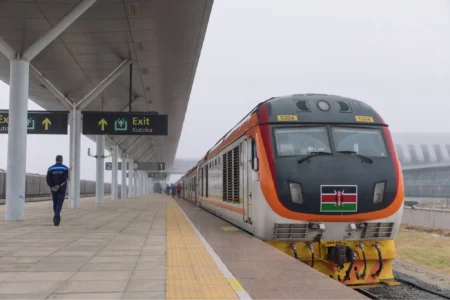
Government sources cited unnamed plans to expand infrastructure in the vicinity, including potential railway upgrades linked to the Talanta Stadium area, and stated that repeated eviction notices had been issued before enforcement.
In the most recent demolition attempt, police said they used teargas to disperse locals who attempted to block the operation, reported by local outlets covering the incident.
Wider legal and political context
The demolition comes amid other legal and political pressures on Governor Wamatangi, whose tenure has previously been dogged by controversy.
In April 2025, the Ethics and Anti‑Corruption Commission (EACC) raided his residence and those of senior officials as part of investigations into county government procurement irregularities, seizing cash and other materials linked to broader graft inquiries.
Also Read: President Ruto delivers first affordable homes in Mukuru, marking ‘new era’ in housing
In another case, the EACC filed a lawsuit seeking to recover more than Ksh.813 million from Wamatangi and others over allegations of improper tender awards during his time as a Senate committee chair.
These ongoing legal challenges intersect with public scrutiny over property rights, enforcement of land laws, and elite influence over prime urban land in Nairobi, issues that have fuelled debates about governance, fairness, and the rule of law in Kenya’s capital.
Court process and next steps
Wamatangi had sought an interim court order to stop any eviction or demolition while the case is pending.
The matter was scheduled for hearing at the Milimani Commercial Court on Wednesday, where legal counsel for both sides were expected to present arguments.
In a statement ahead of the hearing, Wamatangi indicated plans to brief the media on Wednesday morning regarding developments in the case.