


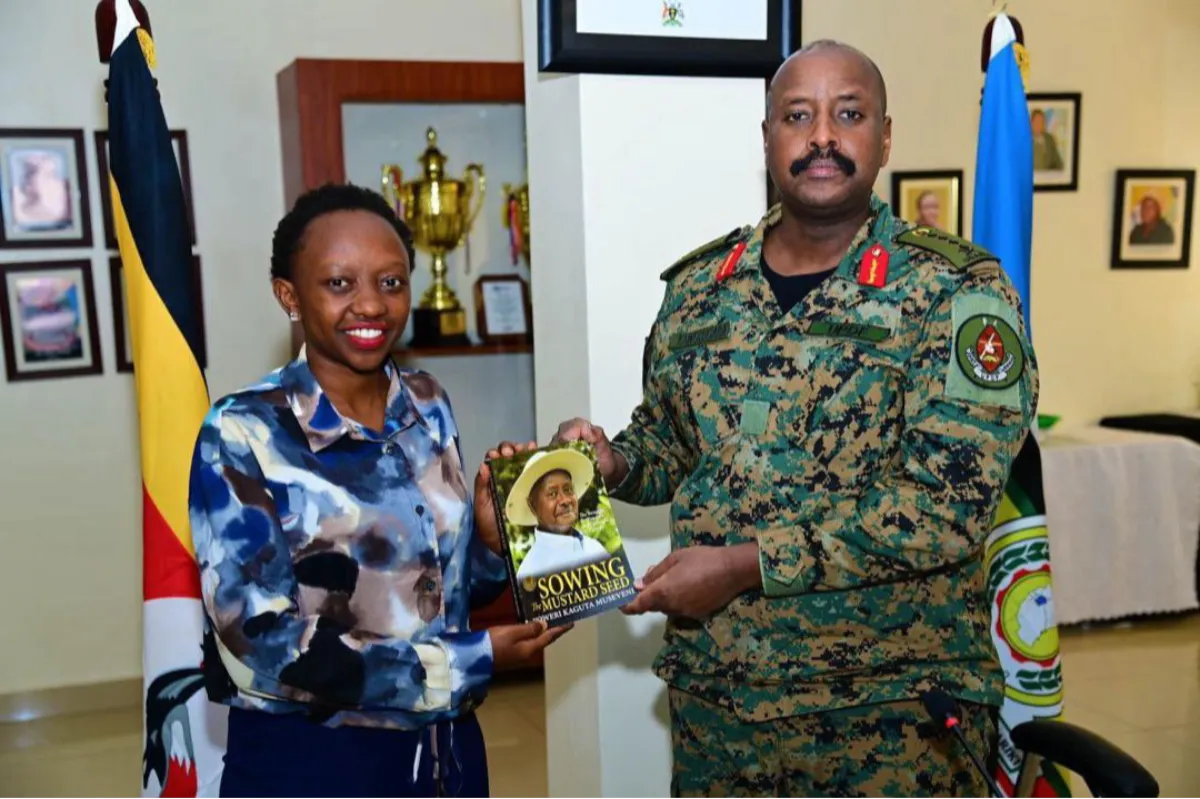
KAMPALA, Uganda —The daughter of Kenyan President William Ruto, Charlene Ruto, visited the Special Forces Command (SFC) headquarters in Entebbe on Wednesday, where she was received by Uganda’s Chief of Defence Forces (CDF), Gen Muhoozi Kainerugaba.
The courtesy call highlighted the continuing diplomatic, security and cultural ties between Uganda and Kenya, two influential members of the East African Community (EAC). Officials framed the meeting as part of broader efforts to sustain cooperation between Kampala and Nairobi across multiple sectors.
Ms Ruto was accompanied by a delegation that included Morocco’s honorary consul George Nkya, Festus Orina, Varsheeni Ragupathy and Jane Frances Acilo.
General Kainerugaba welcomed the delegation and reiterated Uganda’s commitment to strengthening bilateral relations.
“Uganda and Kenya share a brotherhood that goes beyond geography. Our cooperation, whether in security, trade, or people-to-people engagement, remains essential for the stability and prosperity of our region. We are committed to deepening these ties for the benefit of both our nations,” he said.
Ms Ruto thanked the CDF for what she described as a warm reception and hospitality extended to her team.
The visit comes after the Ugandan military chief signalled, via his official social media account, his intention to travel to Kenya and meet President William Ruto in the near future, a move observers say could further reinforce defence and diplomatic coordination between the two countries.
Strategic partnership
Kenya and Uganda maintain one of the region’s most significant bilateral relationships, built on historical ties, shared communities and extensive economic interdependence.
Cross-border populations speak related languages and share cultural traditions, factors that have long supported political cooperation.
Also Read: Kenyan tour agents visit Uganda to promote regional tourism opportunities
The partnership is also economically critical. Kenya remains Uganda’s largest trading partner, with bilateral trade estimated to have exceeded $1.5bn in 2025, driven by energy, manufactured goods and agricultural exchange.
Uganda’s landlocked status makes Kenyan infrastructure particularly vital. The Port of Mombasa continues to serve as the principal gateway for most Ugandan imports and exports, reinforcing the importance of stable diplomatic relations and coordination between key institutions, including defence forces.
Analysts note that high-level engagements involving military leadership and political families often signal broader strategic alignment, especially at a time when regional security cooperation, infrastructure integration and trade corridors remain central priorities for the East African bloc.
