


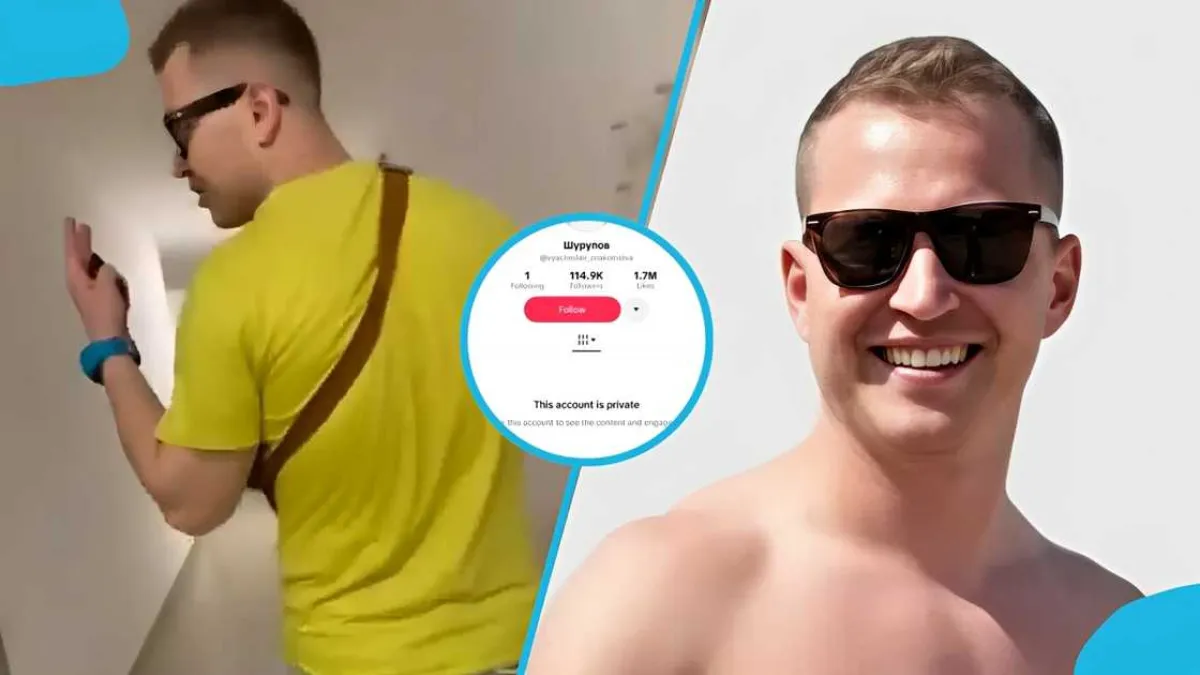
NAIROBI, Kenya — A Russian national living in Kenya has ignited a fierce online debate after videos and images he posted showing intimate encounters with Kenyan women went viral across TikTok, X and Telegram channels.
The content, some of it self-recorded and shared under his own social media accounts, quickly spread beyond his immediate following, triggering widespread backlash, humour, moral outrage and calls for legal action. Within hours, his name was trending across Kenyan digital platforms.
While the man has presented his interactions as consensual and voluntary, the public reaction has focused less on the relationships themselves and more on the decision to publish intimate material involving identifiable individuals.
Publicly accessible social media accounts linked to the individual show multiple posts in which he appears with different Kenyan women in private settings. The videos are accompanied by captions that some online users have described as boastful.

Screenshots and clips, now widely reshared, confirm that the content was posted openly before being redistributed by third parties. There is, however, no official confirmation from authorities that any criminal investigation has been launched.
As of the latest checks, neither the National Police Service nor the Communications Authority of Kenya has issued a formal statement on the matter.
The legal landscape
Kenya’s Data Protection Act (2019) requires consent for the processing and publication of personal data, including images that can identify an individual.
Legal experts note that consent to participate in a private encounter does not automatically extend to consent for public distribution of images or videos.
In addition, Kenya’s Computer Misuse and Cybercrimes Act criminalises the publication of intimate images without consent if it causes harm or distress.
Digital rights advocates caution that enforcement typically depends on a formal complaint by affected individuals.
“If someone believes their privacy has been violated, the law provides mechanisms for redress,” says a Nairobi-based cyber law specialist. “But authorities cannot act in a vacuum without a complainant.”
The social media factor
The episode underscores the speed at which personal content can become a national spectacle. Within hours of the posts surfacing, memes and parody accounts emerged. Influencers and commentators weighed in, amplifying visibility.
Some users framed the situation as a moral issue, criticising what they described as exploitation and objectification. Others treated it as entertainment, creating viral jokes and reaction videos.
But beneath the humour lies a deeper question about digital ethics: when does self-expression cross into public harm?
Social media platforms including TikTok and X maintain policies against non-consensual sexual content.
Whether the original posts violated those rules may depend on consent documentation — something platforms rarely disclose publicly.
A broader pattern?
Kenya has seen a steady rise in cases involving leaked or shared intimate images. Civil society organisations have repeatedly warned that online “clout culture” — the pursuit of visibility through provocative content, can encourage risky digital behaviour.
According to data from digital rights groups, complaints related to privacy breaches and non-consensual sharing of images have increased over the past five years, driven largely by smartphone penetration and widespread social media use.
The current controversy fits within that broader trend: a private act transformed into a public commodity.
Also Read: Exposed without consent: The Marion Naipei scandal and Kenya’s crisis of digital morality
Part of the reason the story has captured attention is the intersection of nationality, gender and power perception. Online discourse has included debate about whether foreign nationals sometimes exploit perceived economic or social imbalances.
There is no verified evidence of coercion in this case. However, the optics, a foreign man publicly displaying encounters with local women, have fuelled strong emotional reactions.
For many commentators, the issue is less about nationality and more about dignity and consent in the digital age.
What happens next?
Unless formal complaints are filed, the matter may remain confined to the court of public opinion. Social media cycles move quickly, and viral figures often fade as rapidly as they rise.
Yet the conversation it has triggered, about privacy, consent, digital responsibility and platform accountability, is unlikely to disappear.
In a country where online platforms increasingly shape public life, the controversy serves as a reminder that digital actions, once shared, rarely remain private.
