


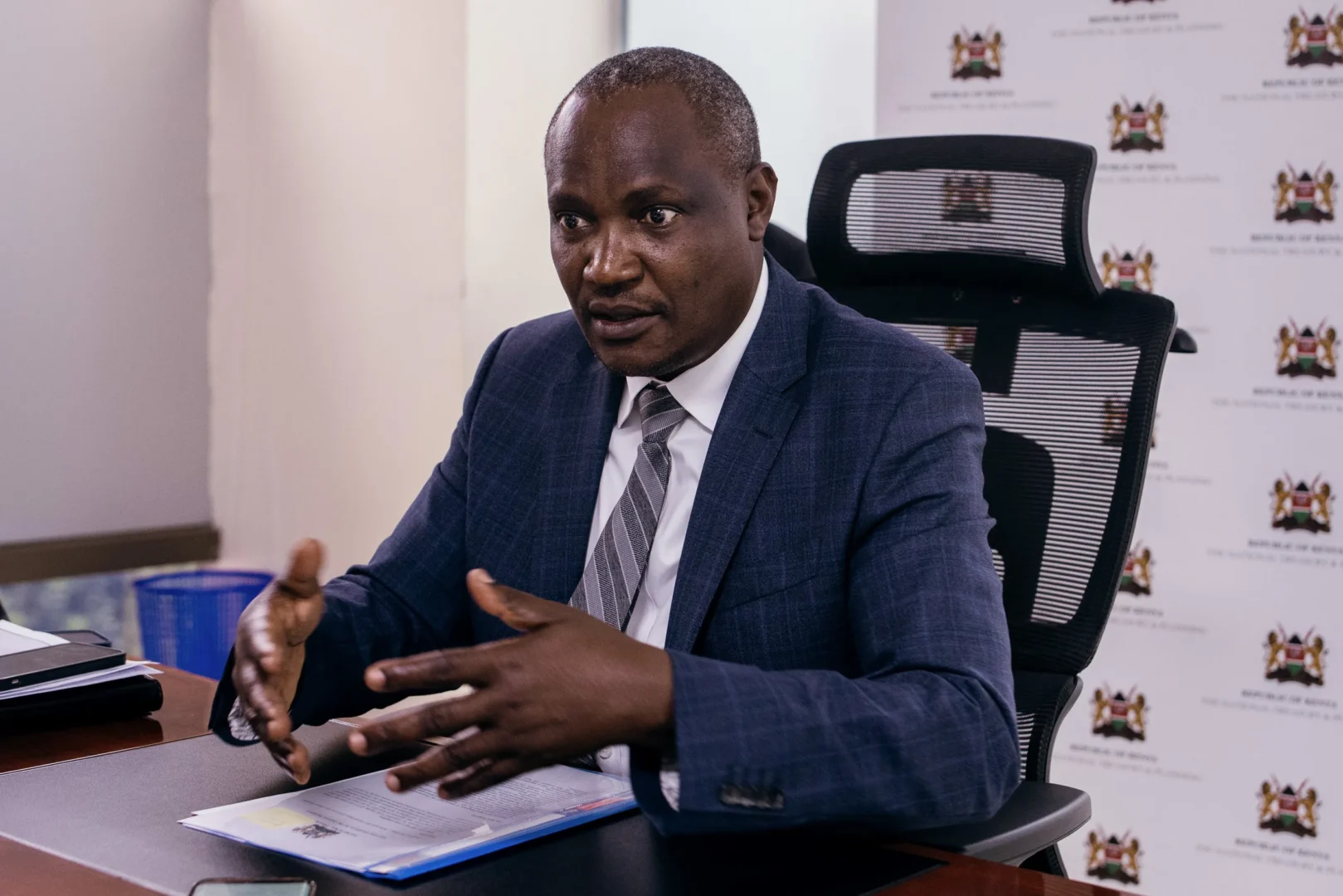
NAIROBI, Kenya — Treasury Cabinet Secretary John Mbadi has defended the Orange Democratic Movement’s (ODM) decision to remove Edwin Sifuna as Secretary General, arguing that party officials are obligated to communicate agreed positions rather than personal views.
Speaking on Citizen TV’s JKLive on Wednesday night, Mbadi dismissed suggestions that the decision was driven by personal differences, instead framing it as a matter of party discipline and constitutional procedure.
“Sifuna is supposed to be the spokesperson of the party. When you are the spokesperson of a political party, you don’t speak your mind to the public contrary to what the party has resolved. What you speak is what the party has resolved. Your mind, you express in the meeting,” Mbadi said.
He added: “Once a decision has been taken at the Central Committee or the National Executive Committee, that decision binds. If you do not want to communicate that position, the best thing, the most honourable thing, to do is to quit that position.”
Due process and party structures
Mbadi, who served as ODM chairperson for more than a decade before joining the Cabinet, maintained that the party acted within its constitutional framework.
“And to me, they have acted within the law, within the constitution of the party. The National Executive Committee has only recommended. Sifuna has been recommended for removal,” he said.
“Once you recommend, you put in place an acting official until the decision is ratified. First, it goes to the National Governing Council, then to the National Delegates Council.”
Under ODM’s internal governance structure, major leadership changes require ratification by higher party organs, meaning the process is not yet fully concluded.
ODM Deputy Secretary General and Busia Woman Representative Catherine Omanyo has been appointed acting Secretary General pending the formal ratification process and election of a substantive office holder.
Warning to other leaders
Mbadi suggested that similar action could be taken against other party members if their conduct undermines collective decisions. He referenced Siaya Governor James Orengo and Embakasi East MP Babu Owino, indicating that holding a substantive party office carries greater responsibility.
“The direction Sifuna had taken, any senior party official in this country, and history is full of examples, who has taken such a trajectory, has never remained in that political party,” Mbadi stated.
“So it was actually a waste of time expecting a miracle, to imagine that Sifuna would still remain in ODM.”
He added, “There are people who do not hold substantive positions in the party. If they do hold substantive positions and their sentiments or remarks are causing disharmony, then of course they should follow. But remember, Sifuna was not just any other member, he is the Secretary General of the party.”
Broader political realignment
Sifuna’s removal followed a National Executive Committee (NEC) meeting in Mombasa chaired by party leader Dr Oburu Oginga. The committee cited concerns about discipline within senior leadership ranks.
Beyond the leadership change, the NEC adopted resolutions empowering Oburu to spearhead negotiations on ODM’s pre-election coalition arrangements, a move widely interpreted as positioning the party for possible political realignments ahead of the 2027 general election.
In a significant shift, the party also resolved to initiate the formal process of withdrawing from the Azimio la Umoja One Kenya Coalition, citing what it described as sustained breaches of the coalition’s Deed of Agreement by some partners.
Also Read: ODM removes Edwin Sifuna as party Secretary General
Political analysts say the developments point to an internal consolidation of authority within ODM as it recalibrates its strategy within Kenya’s evolving opposition landscape. The decision could reshape opposition dynamics if ODM formally exits Azimio and seeks alternative alliances.
Sifuna, who has served as a prominent public voice of the party in Parliament and media platforms, now faces a formal ratification process that will determine whether the recommendation for removal is upheld.
Mbadi’s remarks signal a broader message within ODM: adherence to collective party resolutions is non-negotiable for senior office holders.
The unfolding developments underscore mounting tensions within Kenya’s opposition politics as parties reposition themselves ahead of future coalition negotiations.
