


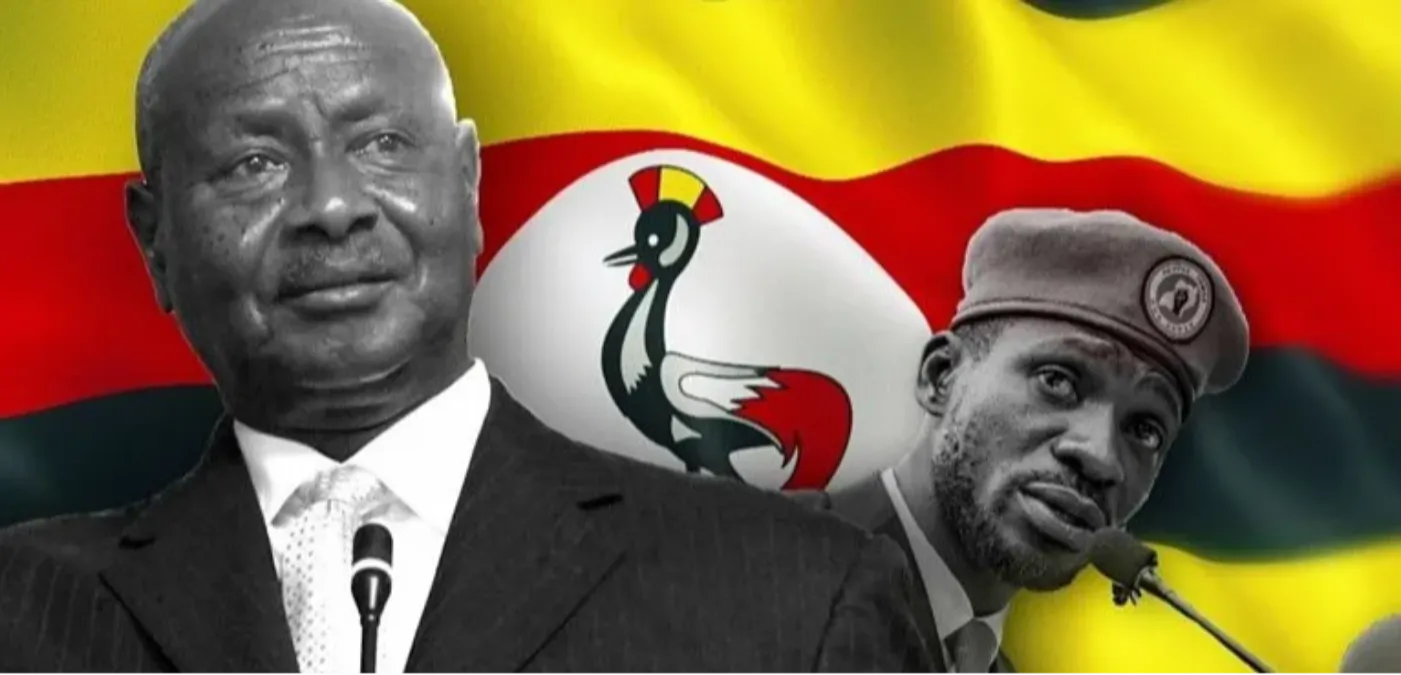
KAMPALA, Uganda — Incumbent President Yoweri Museveni has secured a decisive victory in Uganda’s 2026 presidential election, claiming 71.65% of the vote. Yet, critics warn that the win masks deeper fractures in the country, suggesting that economic stagnation, political tension, and social divides could fuel a turbulent future.
With the results now official, the real story is not just who won—but what the election exposes about Uganda’s shifting political landscape, voter trust, and the growing gap between the authorities’ mandate and opposition claims of illegitimacy.
According to figures announced by the Electoral Commission (EC) chairperson, Justice Simon Mugenyi Byabakama, Museveni secured 7,946,772 votes (71.65%) in the January 15 presidential election, extending a presidency that began in 1986.
His nearest challenger, Robert Kyagulanyi Ssentamu (Bobi Wine) of the National Unity Platform (NUP), finished second with 2,741,238 votes (24.72%).
While the numerical margin appears decisive, analysts note that the political story does not end at the National Tally Centre in Lubowa, Lweza.
Turnout, participation and political fatigue
Out of 21,649,067 registered voters, only 11,366,201 ballots were cast, translating to a 52.50% turnout, a figure that has drawn scrutiny from civil society groups and election observers.
The commission also reported 275,353 invalid ballots (2.42%), suggesting persistent gaps in voter education and confidence in the electoral process.
Compared with previous elections, Museveni’s vote share has fluctuated rather than followed a linear trend.
He won with 58.64% in 2021, 60.62% in 2016, 68.38% in 2011, and 74.33% in 1996, underscoring a long-term pattern in which strong victories coexist with recurring legitimacy disputes.
Opposition performance and structural limits
Behind Kyagulanyi, opposition candidates recorded modest national performances. Nathan Nandala Mafabi (FDC) placed third with 209,039 votes (1.88%), followed by Gregory Mugisha Muntu (ANT) with 59,276 votes (0.53%). Smaller parties collectively accounted for less than two percent of the national vote.
The figures highlight a persistent structural challenge for Uganda’s opposition: fragmentation, uneven national reach, and limited ability to convert urban mobilisation into rural dominance.
Museveni’s defence of continuity
Despite longstanding allegations of electoral manipulation and repression, Museveni has dismissed claims that his longevity is sustained through coercion.
In a recent interview with Vivid Voice News Mr. Museveni blamed opposition actors for undermining electoral credibility and accused rivals of inflating their own vote tallies in past contests.
Responding to criticism about his age and tenure, Museveni rejected suggestions of political obsolescence.
“I’m not dead, I’m not senile, but I am still around and I have some knowledge,” he said.
He has consistently argued that repeated electoral outcomes reflect leadership capability rather than manipulation, maintaining that alternative candidates have failed to convince voters of their readiness to govern.
A parallel contest over legitimacy
While Museveni consolidates institutional power, Kyagulanyi has mounted a parallel challenge to the legitimacy of the results, describing the election as irredeemably compromised.
In a statement issued after the vote, Kyagulanyi detailed a late-night security operation at his home in Magere, alleging that military and police forces cut electricity, disabled CCTV cameras, and deployed helicopters overhead. He said he escaped, while his wife and family members remained under what he described as house arrest.
He attributed confusion over his whereabouts to a nationwide internet shutdown and heavy security deployment, which he said fuelled rumours of abduction.
The two-time presidential candidate reiterated his “complete rejection” of what he called “fake election results” announced by the EC, citing alleged ballot stuffing, military interference, detention of opposition figures, and the killing of citizens who attempted to protest peacefully.
Security state Vs. Civil dissent
Police have rejected claims that Kyagulanyi is under arrest. Assistant Commissioner of Police Kituuma Rusoke said the opposition leader was free to move, though access to his residence was restricted.
“It should not surprise you when we have a pickup or two near the residence of Kyagulanyi,” Rusoke said, arguing that the measures were intended to prevent incitement rather than suppress dissent.
The competing narratives, state order versus popular resistance, have once again placed Uganda under regional and international scrutiny, particularly regarding the use of security forces during electoral periods.
Forty Years On: Stability or Stagnation?
Museveni now stands poised to extend a rule approaching four decades, having come to power in 1986, after a five-year guerrilla war that ended years of coups and civil conflict.
He has long presented himself as a stabilising reformer who rebuilt institutions, restored security and anchored Uganda within regional geopolitics.
Yet critics argue that the same stability has hardened into political immobility, with shrinking democratic space and generational frustration increasingly visible.
As Uganda moves beyond election day, the defining contest may no longer be between candidates on a ballot paper, but between institutional authority and public trust, a struggle likely to shape the country’s politics long after the votes are counted.
Here is a clear table summarizing the final vote count for each presidential candidate in Uganda’s 2026 election as released by the Electoral Commission (EC):
| Candidate | Party | Votes Received |
|---|
| Yoweri Museveni | National Resistance Movement (NRM) | 7,946,772 – (71.65%) |
| Robert Kyagulanyi Ssentamu (Bobi Wine) | National Unity Platform (NUP) | 2,741,238 – (24.72%) |
| James Nathan Nandala Mafabi | Forum for Democratic Change (FDC) | 209,039 – (1.88%) |
| Gregory Mugisha Muntu | Alliance for National Transformation (ANT) | 59,276 – (0.53%) |
| Frank Bulira Kabinga | Revolutionary People’s Party (RPP) | 45,959 – (0.41%) |
| Robert Kasibante | National Peasants Party (NPP) | 33,440 – (0.30%) |
| Mubarak Munyagwa | Common Man’s Party (CMP) | 31,666 – (0.29%) |
| Joseph Mabirizi | Conservative Party (CP) | 23,458 – (0.21%) |
