


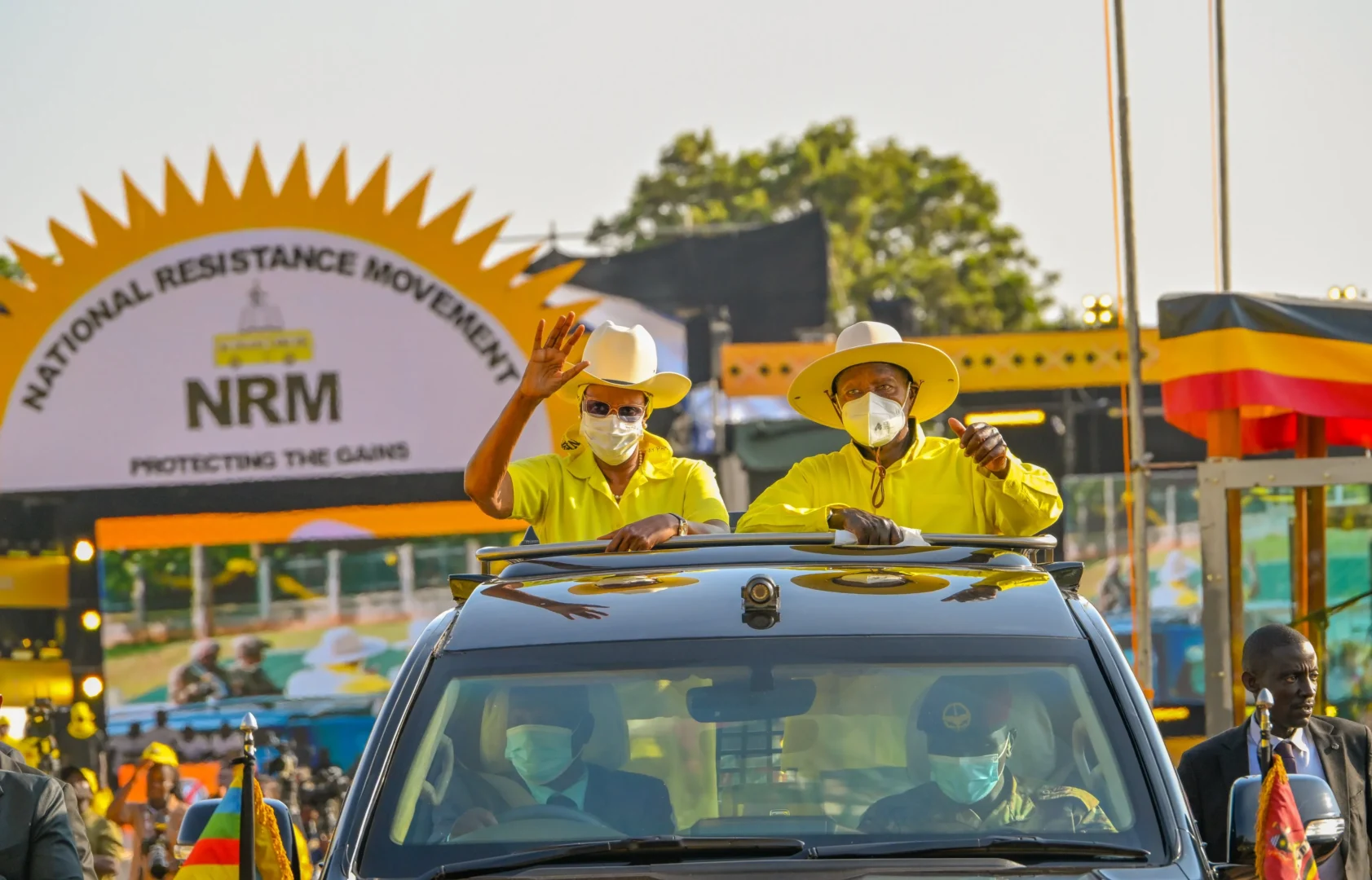
KAMPALA, Uganda — President Yoweri Museveni has rejected assertions that his National Resistance Movement (NRM) government has failed Ugandans, calling such criticisms “misleading” and hostile to national progress, even as the political atmosphere ahead of the January 15 elections intensifies with mounting allegations of repression and democratic backsliding.
Speaking at his final major campaign rally at Kololo Independence Grounds on Tuesday, Museveni vowed that critiques of the ruling party’s record were unfounded and simplistic.
“There is a way for everybody to get out of poverty. Because of all this, in spite of some weaknesses here and there, Uganda is the fifth fastest-growing country in the world,” Museveni said.
“Anyone who wants to commit suicide because of this fact should do so. It is not only in Africa but in the entire world that we are the fifth fastest-growing economy.”
He added that critics who deny the country’s progress are enemies seeking to divert Ugandans from development.
“When you hear some people say NRM has done nothing, they are our enemies. Those without eyes to see the factories are our enemies who want to divert us.”
Museveni further touted Uganda’s growth trajectory, saying it will improve once oil production begins.
“It looks like Uganda may even be number one in the whole world because the countries growing faster than us, such as Guyana, South Sudan, Guinea and Sudan—are benefiting from oil or minerals. Uganda is number five, growing at 7.6 percent before exploiting oil. When we start exploiting our oil, we shall be number one.”
He traced the country’s economic expansion to the NRM’s long rule since 1986, asserting significant improvements in wealth creation and infrastructure.
“Uganda is now 17 times richer than it was in 1986. At that time, the economy was worth 3.9 billion dollars. By June this year, it will be 68.4 billion dollars using the exchange-rate method,” Museveni said, listing commercial agriculture, industry, hotels and tourism, artisanal production and ICT as key growth sectors.
NRM programs and broader echoes
Museveni highlighted government initiatives such as Operation Wealth Creation, Emyooga, Entandikwa and the Parish Development Model (PDM) as deliberate efforts to expand economic inclusion beyond urban elites.
“The money given to banana vendors, mechanics, boda boda riders, ghetto dwellers and university leavers targets people who do not have savings and cannot borrow from banks,” he said.
His remarks mirror ongoing official narratives emphasising wealth creation policies as central to the NRM’s legitimacy, including recent government updates emphasising industrial parks, export diversification and liberalisation reforms as foundations for continued economic expansion.
However, independent reports and audits have flagged implementation challenges and uneven impact, particularly with the ambitious PDM, including incomplete household data capture and administrative gaps that critics say undermine its effectiveness.
Political context and rising tensions
Museveni’s defence of his record comes amid heightened political tensions in the lead-up to the January 15 election. Observers and rights organisations have raised alarms over crackdowns on civil society, media restrictions, and obstacles facing opposition campaigns.
Just days before the vote, the government ordered two human rights organisations to cease operations, citing national security concerns, a move widely condemned by international rights groups and analytical bodies.
Ugandan security forces have also been deployed more visibly in urban centres, reinforcing perceptions of a securitised electoral environment.
Museveni, who has been in power since 1986 and is seeking a seventh term, has previously amended the constitution to remove age and term limits, consolidating his grip on executive power.
Opposition figures, notably pop star-turned-politician Robert Kyagulanyi Ssentamu (Bobi Wine), command a significant youth following and campaign on platforms of political freedoms, economic inclusion and anti-corruption, but say their efforts are routinely undermined by state pressure and limited media access.
Public reception and economic realities
Despite official claims of growth, many Ugandans lament persistent economic challenges, including high unemployment, inflationary pressures and uneven public services.
Public commentary across digital platforms reflects deep frustration among citizens who argue that wealth measures have not translated into tangible improvements for ordinary households.
Also Read: Love him or loathe him: Museveni’s 40 years in power and the battle to ‘Protect the Gains’
Critics also question the longevity and sustainability of growth claims given Uganda’s demographics and labour market constraints; recent government data underscores a rapidly growing population that could, if harnessed well, become a demographic dividend, yet it must be matched with quality jobs and structural reforms.
First Lady’s appeal and the NRM campaign push
At the same rally, First Lady and Education Minister Janet Museveni urged citizens to turn out and vote for the NRM.
“Our responsibility is to go out and vote because our vote is a contribution to building Uganda. If you do not vote, you have not played your role,” she said.
“I remind everybody listening to me to vote for President Museveni and all NRM flag bearers.”
Her appeal underscores the ruling party’s drive to project continuity and stability, even as the broader political landscape polarises and international scrutiny of Uganda’s electoral conduct intensifies.
