

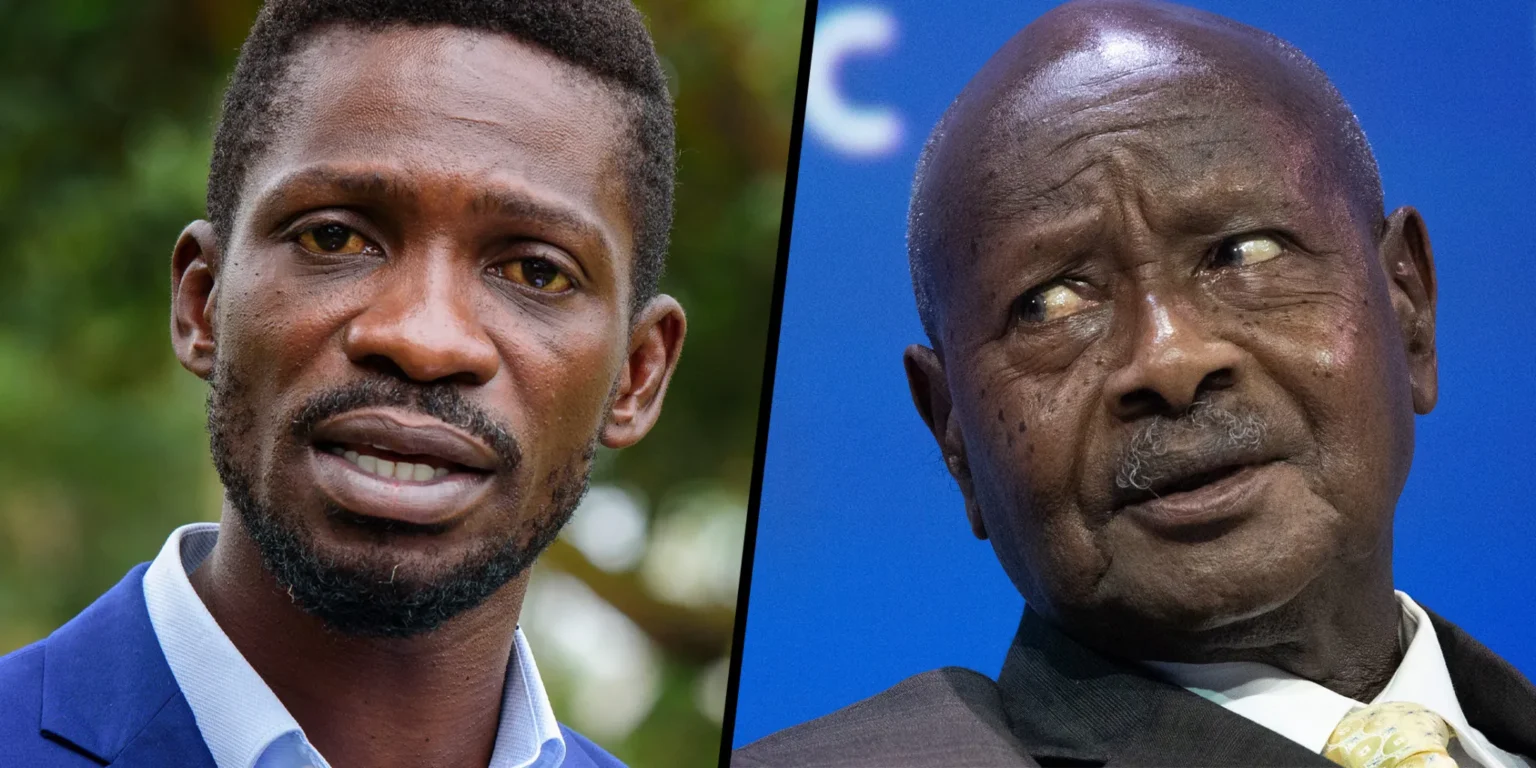
KAMPALA, Uganda — As Uganda approaches its 15 January 2026 presidential election, analysts and rights groups warn that the country’s political balance remains skewed in favour of the incumbent, President Yoweri Museveni, who has ruled since 1986.
Despite hopes for change among large segments of the electorate, particularly young people, Mr. Museveni is widely expected to secure another term, a pattern that mirrors the controversial 2021 vote.
In the past decade, Mr. Museveni has reshaped the electoral framework to remove age and term limits, enabling him to stand again at 81 years old.
Critics argue that the political environment ahead of the 2026 poll shows continued erosion of democratic norms, including restrictions on media, political repression, and the expanded role of security forces in governance.
Bobi Wine: The face of opposition
Robert Kyagulanyi Ssentamu, better known as Bobi Wine, remains the most prominent challenger to Museveni’s 40-year rule.
The former pop star entered politics in 2017 and quickly became a symbol of youthful dissent, leveraging both cultural appeal and grassroots networks.
His National Unity Platform (NUP) grew rapidly, winning 57 seats in the 2021 parliament and becoming the leading opposition party.
Wine’s appeal crosses urban and rural divides, especially among young voters who face unemployment and limited economic opportunities.
His manifesto for 2026 has promised expansive reforms, including jobs creation, human rights protections, anti‑corruption measures, and a modern economy built on technology, tourism, and sustainable industry.
Wine has not softened his rhetoric. As he campaigns, he frames the 2026 election as a broader struggle:
“This is not politics. It is a rebellion. A mission for freedom,” he has said, urging citizens to turn their ballots into a protest vote against corruption and injustice.
Yet his campaign has faced intense pressure. Security forces have repeatedly disrupted his rallies, deploying tear gas, pepper spray and forceful tactics that Amnesty International and other groups describe as a “brutal campaign of repression”.
Wine and his supporters have worn protective gear to campaign amid repeated confrontations with police and military personnel.
In some instances, he alleges, supporters have been killed at political events, a charge that government forces dispute.
State repression and political manoeuvring
The widespread use of state security apparatus underscores the asymmetry in Uganda’s political contest.
Police and military units, long embedded within the ruling National Resistance Movement (NRM) machinery, play a dual role: enforcing public order and reinforcing the party’s political dominance.
Analysts note that these forces not only contain protests but also mobilise support for the incumbent and enforce loyalty at grassroots levels.
In the run‑up to the 2026 election, the government also imposed restrictions on media coverage, including a ban on live broadcasts of riots and “unlawful processions”, which critics say will curb transparency during political unrest.
Rights groups, including Amnesty International, have condemned these measures as efforts to suppress dissent and limit independent reporting.
Beyond use of force, political co‑optation has weakened the broader opposition landscape.
High‑profile figures from other parties have been drawn into government roles or sidelined, fueling divisions that undercut a united challenge to Museveni’s rule.
The Muhoozi succession question
While Museveni appears poised to win another term, significant questions persist about who may succeed him and what that transition might look like.
Attention has increasingly focused on his son, Gen Muhoozi Kainerugaba, the commander of the Uganda People’s Defence Forces (UPDF), widely perceived as the architect of political and military strategy within the regime.
Analysts see growing consolidation of influence around Gen Muhoozi, with loyalists replacing older NRM figures in key party committees and government roles, suggesting strategic groundwork for future leadership.
Observers point out that while Museveni’s victory in January may be almost certain, the politics of succession are not, with longer‑term implications for governance and stability.
The handling of internal party dynamics and the role of the military in politics will shape Uganda’s trajectory beyond the ballot box.
International and institutional pressures
Uganda’s political climate has also drawn scrutiny from regional and international actors.
Various human rights and legal bodies have expressed concern over tensions between state institutions and civil liberties, including arbitrary arrests, detention of civic leaders, and restricted civic space.
Also Read: How Uganda can fix its digital news system before, and after the 2026 elections
In a rare move, legal professional bodies have at times broken tradition to voice support for opposition figures, signalling broader unease with current political conditions.
Nevertheless, relations with external partners remain complex. Uganda continues to position itself as a key regional security partner, contributing forces to African Union (AU) and United Nations (UN) missions while balancing geopolitical ties with Western and non‑Western powers alike.
Looking ahead
The 2026 election in Uganda is likely to reaffirm existing power structures, but the broader context is markedly different from previous cycles.
Opposition resilience, growing youth mobilisation, entrenched state repression, and the unresolved succession question combine to make the post‑election political environment unpredictable.
How Museveni’s government manages these tensions, and whether it permits even limited political competition, will have consequences that reverberate well beyond January 15.