


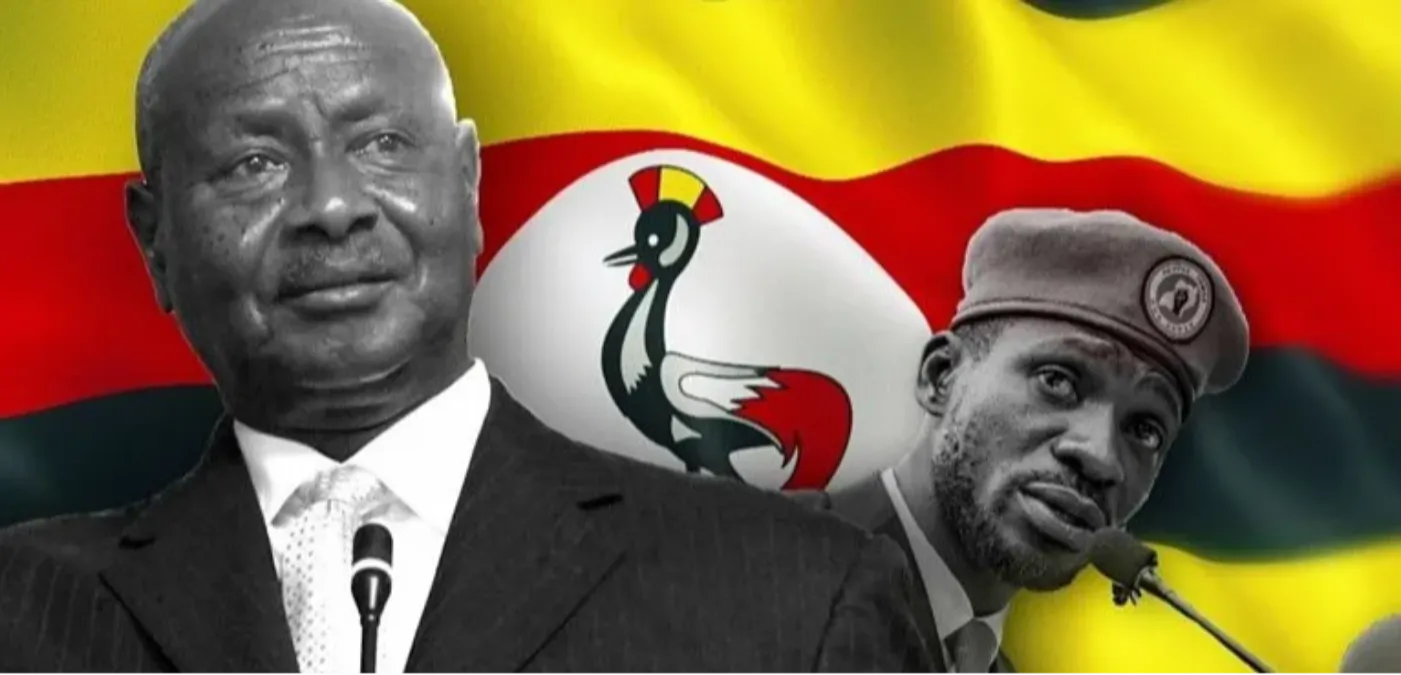
KAMPALA, Uganda — What is ordinarily a unifying national symbol has become a potent and contentious emblem in Uganda’s 2026 election campaign, with the national flag emerging as a flashpoint in political mobilisation and state enforcement.
Since late 2025, the Uganda national flag, traditionally displayed at state functions, schools and national ceremonies, has been embraced by supporters of National Unity Platform (NUP) presidential candidate Robert Kyagulanyi Ssentamu (popularly known as Bobi Wine) as a symbol of patriotism and resistance.
Flag as electoral identity
On September 23, 2023, during Kyagulanyi’s nomination for the 2026 presidential race, he appeared holding Uganda’s black, yellow and red flag under a heavy downpour, a moment that would later seed a broader campaign strategy.
Supporters at his rallies and across urban and rural communities began carrying and hoisting the national flag in high visibility, from market stalls to boda bodas, framing it as a sign of national pride and unity behind calls for political change.
In a video shared on social media, Kyagulanyi urged supporters:
“I appeal to whoever can, to come with the national flag. …This will be a sign that we are patriotic and we are ready to do everything that we can to take it to the right path,” he said, positioning the flag as a unifying emblem.
Political analysts say this deployment was strategic: by adopting the national flag as a central motif in rallies and demonstrations, the opposition sought a “protest vote” identity that could transcend traditional party colours and appeal directly to widespread calls for national renewal.
State pushback and legal debate
The popularisation of the flag by opposition supporters quickly drew official attention. Government officials and security agencies have increasingly framed the public display of the national flag in political contexts as a potential misuse of a protected symbol.
Helen Seku, Commissioner of the National Secretariat for Patriotism Corps (NSPC), has warned that hoisting the flag outside sanctioned events requires state permission.
Police spokesperson Rusoke Kituuma has reminded the public that the National Flag and Armorial Ensigns Act regulates its use:
“There are growing public concerns about the misuse of the Uganda National Flag…. Anyone who wishes to use the flag should do so within the law,” Kituuma said, citing legal requirements for authorised display.
The Act’s Section 4 prohibits the use of the national flag in connection with business, trade, calling or profession and makes unauthorised political use punishable by fines or imprisonment.
In related developments, the police have reportedly warned against the unauthorised use of the flag at campaign events, reaffirming that national symbols must be respected and regulated even during politically charged seasons.
Human rights lawyers, however, argue that the law has been selectively invoked to suppress political expression rather than protect national dignity.
Violence and backlash
The increasing visibility of the flag at rallies has also been met with violence. In one documented instance near Entebbe, four Uganda People’s Defence Forces (UPDF) soldiers allegedly confronted and beat a supporter holding the flag, prompting public outcry and further politicisation of the symbol.
Buganda Kingdom Katikkiro Charles Peter Mayiga criticised the escalation, urging security agencies to maintain order without partisanship and emphasising that political rallies are inherently spirited yet should not escalate to violent suppression of national symbols.
History and meaning of the flag
The flag’s design dates back to Uganda’s independence in 1962, when leaders selected black, yellow and red horizontal stripes — symbolising the people, sunshine, and African brotherhood — with the grey crowned crane at the centre representing forward movement.
An earlier proposed design featuring green, blue and gold was replaced after political contestation at the time of independence.
Also Read: Bobi Wine urges Ugandans to download Bitchat amid fears of election internet shutdown
Article 8 of Uganda’s Constitution recognises the national flag and other sovereign symbols, and Article 17 obligates citizens to respect these elements of nationhood.
Political significance
For the government and ruling party supporters, critics claim, the heightened emphasis on legal constraints reflects discomfort with the opposition’s ability to wield national symbols to galvanise popular support.
Opposition leaders maintain that their use of the flag is patriotic, not unlawful, aiming to reconnect citizens with national identity and the promise of democratic change.
As the campaign season intensifies ahead of January 15, 2026, the national flag — once a neutral emblem of sovereignty — has become a powerful lens through which political loyalty, civic expression and legal boundaries are being contested on Uganda’s public stage.
