

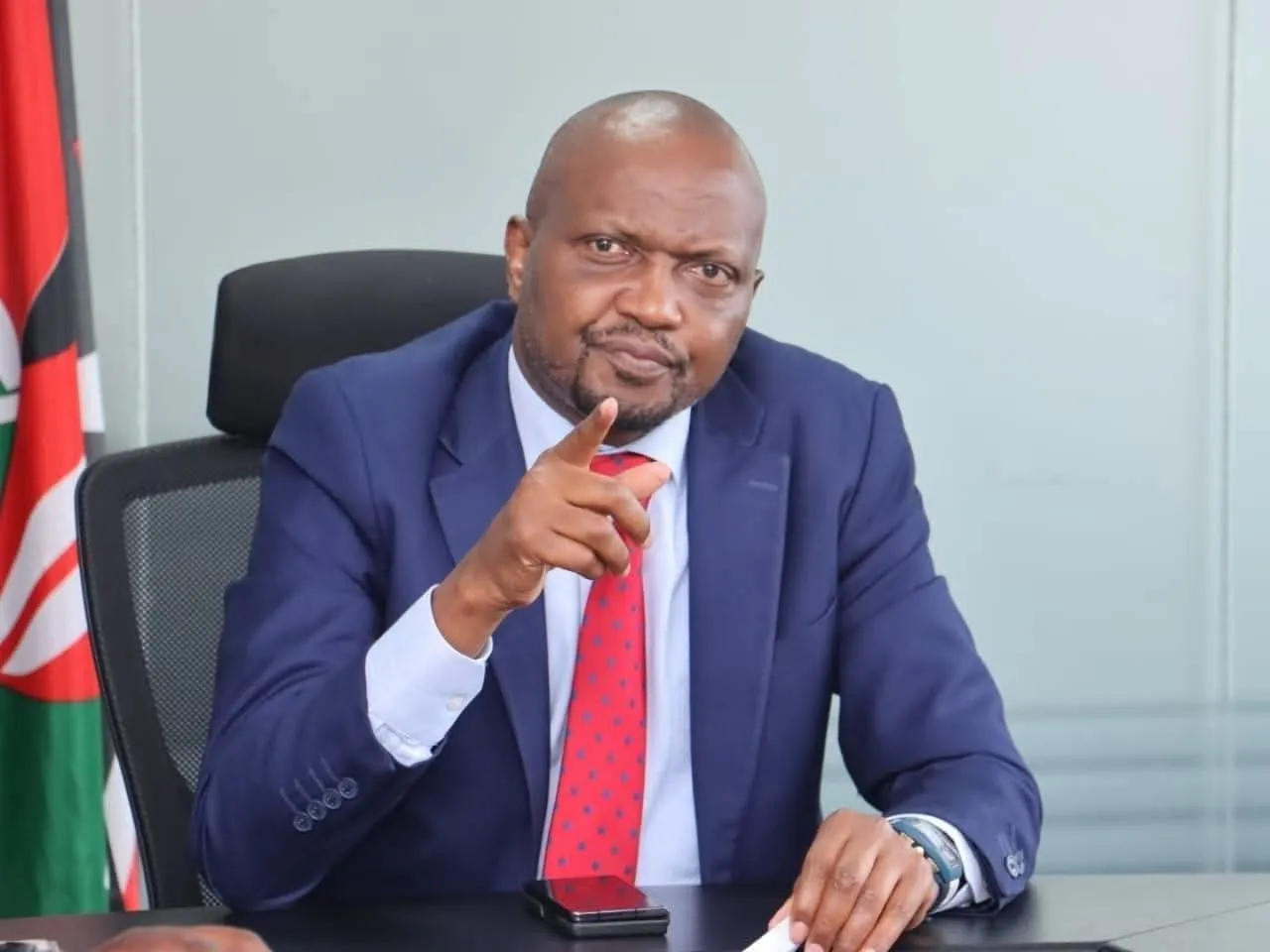
NAIROBI, Kenya — Former Cabinet Minister Moses Kuria has called on the Luo community to reject the long-standing “devil narrative” directed at former President Uhuru Kenyatta and the Kikuyu community, urging reconciliation instead of perpetuating inter-ethnic political divisions.
Speaking days after renewed criticisms from some Nyanza leaders, Kuria cautioned that continuing such narratives risks prolonging decades of political rivalry.
“For 60 years, Kikuyus were sold the devil’s portrait in the name of Jaramogi Oginga Odinga and Raila Odinga. This worked magic as a tool of political mobilisation. It was wrong,” Kuria said, offering an unqualified apology to the Luo Nation on behalf of the Kikuyu community.
He urged the Luo community, a Nilotic-speaking ethnic group native to western Kenya, to focus on building stronger relations and healing historical wounds.
“Neither Uhuru Kenyatta nor Kikuyus are an enemy of the Luo Nation. Do not allow us to be turned into a tool of political mobilisation. We can’t sustain a devil narrative for another 60 years,” Kuria added.
Political tensions amid ODM accusations
Kuria’s statement comes amid growing tensions within the Orange Democratic Movement (ODM), following accusations by party leaders that Kenyatta has attempted to influence internal party affairs.
On Tuesday, Uhuru Kenyatta distanced himself from these claims, urging President William Ruto’s administration to focus on advancing its development agenda rather than engaging in political manoeuvres against rival parties. He emphasized the importance of issue-based politics, mutual respect, and preserving democratic competition.
Also Read: Edwin Sifuna apologizes to Uhuru Kenyatta as ODM grapples with post-Raila divisions
Over the weekend, ODM Chairperson Gladys Wanga publicly accused Kenyatta of using proxies to destabilize the party. “We want to tell President Uhuru Kenyatta that we are friends, but we will not accept you using moles to destabilize the ODM party,” Wanga stated.
Similarly, Minority Whip Junet Mohamed alleged that certain ODM members were “on the payroll” of the former president and warned that January would witness a political battle aimed at expelling these so-called party rebels.
These exchanges underscore a deepening crisis within ODM, marking one of the most significant leadership challenges the party has faced in its two-decade history.