


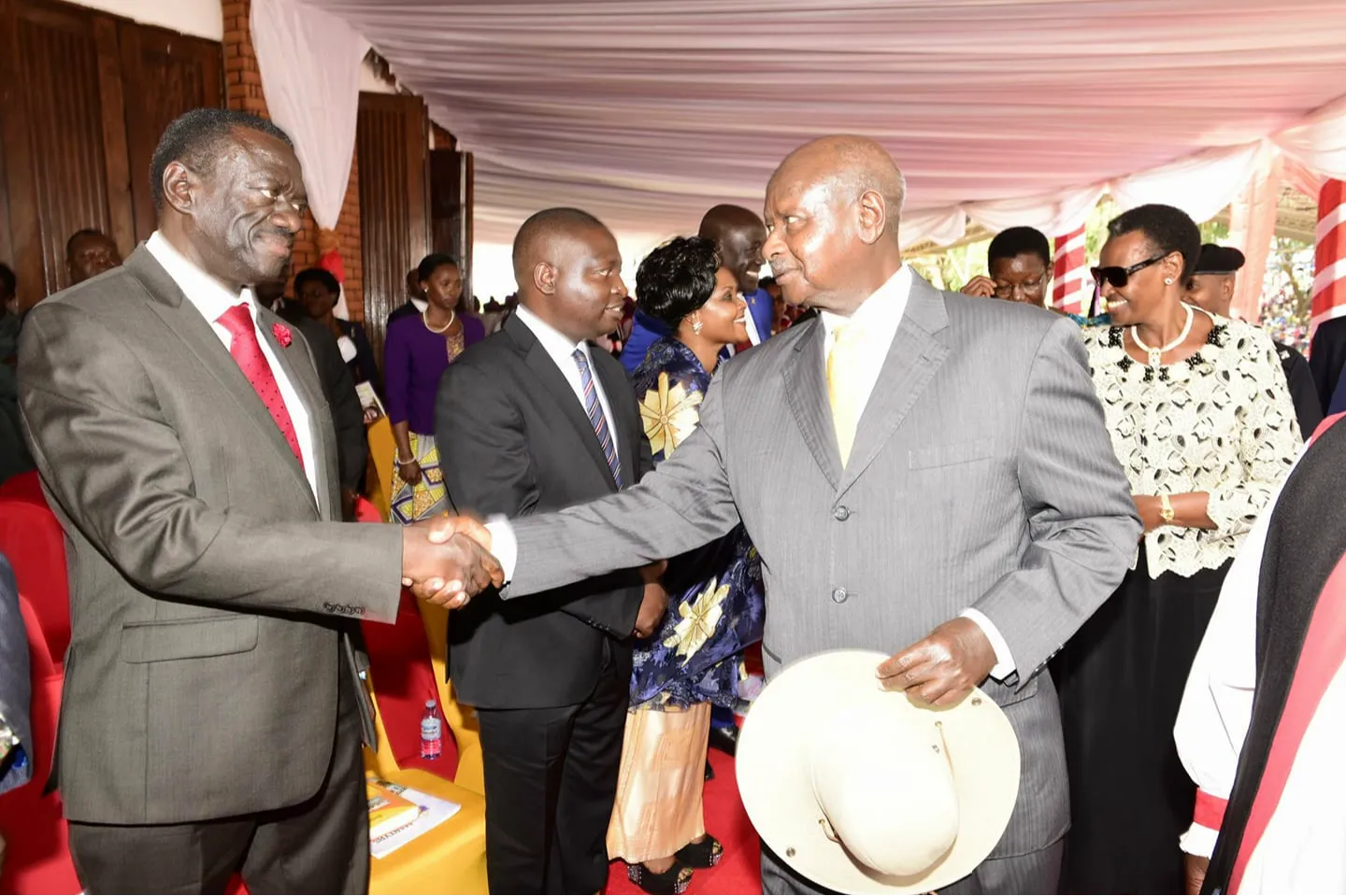
KAMPALA, Uganda — President Yoweri Museveni has expressed personal dissatisfaction regarding the prolonged detention of his long-time political rival, Dr. Kizza Besigye, while simultaneously defending the legal basis for his arrest.
Speaking as the nation approaches a critical election year, the President addressed mounting local and international pressure over the status of the four-time presidential candidate, who has been in custody since his controversial abduction from Nairobi in late 2024.
Despite the ongoing legal deadlock, Museveni sought to distance the executive branch from the delays in the judiciary, framing the issue as a matter of procedural efficiency rather than political persecution. He emphasized that the focus should remain on the gravity of the allegations against Dr. Besigye rather than the duration of his remand.
“If you want a stable country, the more correct question should be: Why was Dr Besigye arrested?” Museveni stated in a recent address. “The answer to that is a quick trial so that facts come out.”
Legal tug-of-war
The case of Dr. Besigye has become a symbol of the friction between Uganda’s military and civilian judicial systems. After being repatriated from Kenya, Dr. Besigye was initially arraigned before a military court-martial on charges of treachery and illegal possession of firearms. This move was met with a landmark Supreme Court ruling in early 2025, which declared the trial of civilians in military courts unconstitutional.
However, the transition to a civilian trial has been marred by what critics describe as “bureaucratic stalling.” While the President claims to be “not happy with the continued detention,” he has consistently pushed back against calls for an unconditional release, arguing that accountability is essential for national stability.
“How can you be accused of serious crimes and then your response is a hunger strike to generate sympathy for getting bail? Why don’t you demand a quick trial?” Museveni asked, referring to Besigye’s previous protests over his incarceration conditions.
Political climate and 2026 outlook
The timing of Museveni’s remarks is significant. With the 81-year-old leader currently on the campaign trail seeking re-election, the detention of his most prominent critic remains a polarizing issue.
Supporters of Besigye’s People’s Front for Freedom (PFF) have categorized the detention as “political blackmail,” aimed at neutralizing the opposition before the polls.
Also Read: The betrayal of a comrade: Why Museveni must end the ‘endless injustice’ against Besigye
Conversely, the state maintains that Besigye and his co-accused were involved in cross-border plots to undermine the security of the Ugandan armed forces, claims the veteran leader has vehemently denied as “fabricated.”
As the “Epstein Library” of Ugandan political history grows more complex, the spotlight remains on the High Court to determine if a “quick trial” is truly on the horizon or if Besigye will remain a symbol of the country’s contested democracy from behind bars.