


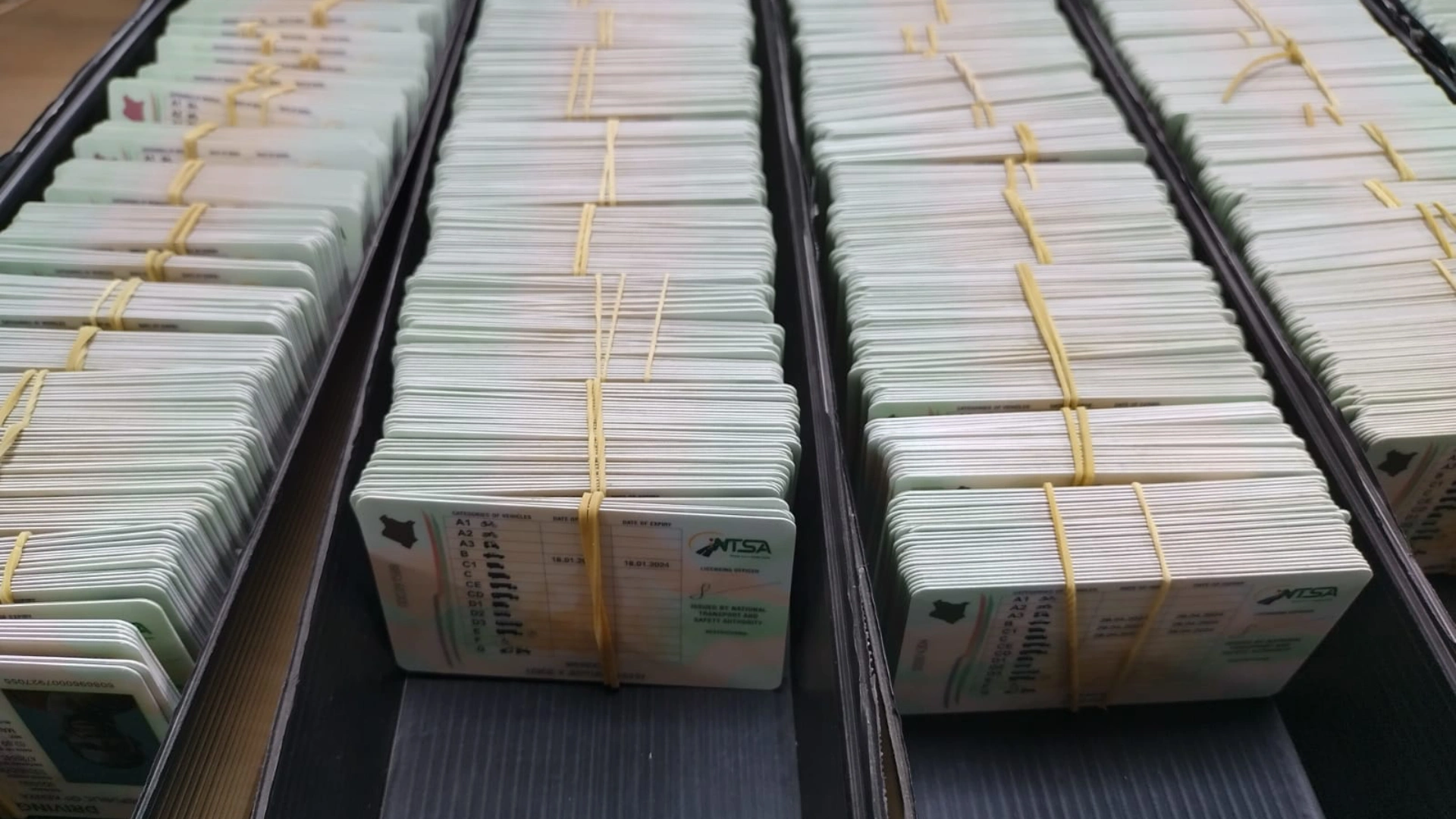
NAIROBI, Kenya — In a decisive move to reform the country’s transport digitisation efforts, the Kenyan Cabinet has approved a Public-Private Partnership (PPP) model for the implementation of second-generation smart driving licenses.
This policy shift effectively ends the National Transport and Safety Authority’s (NTSA) sole management of the program, following nearly a decade of missed benchmarks and logistical hurdles.
Launched in 2017 with an ambitious goal to issue 5 million cards, the smart license initiative has struggled to gain momentum. Eight years post-launch, only 2.1 million licenses have reached motorists.
The NTSA’s recent performance reflects these ongoing challenges; in the fiscal year ending June 2025, the authority produced 342,492 licenses, missing its modest target of 400,000 by approximately 15%.
The operational failures are further highlighted by a recent Auditor General’s report, which uncovered significant resource mismanagement:
“572,674 unprinted cards worth KES 176 million sitting unused in NTSA stores, with no clear deployment plan.”
While NTSA officials argue that slow adoption stems from motorists preferring annual electronic renewals over the three-year smart cards, the government’s pivot toward private investors suggests a loss of confidence in the current administrative framework.
The second-generation vision
The transition to a PPP model aims to introduce a more sophisticated, “second-generation” system designed to overhaul road safety and compliance.
The new infrastructure will integrate three transformative pillars:
- Instant fines system: Transitioning from manual ticketing to immediate digital levies linked to driver records.
- Mobile license wallet: A digital credential system allowing motorists to present valid identification via smartphone.
- Merit and demerit points: A behavioral tracking system that rewards safe driving while penalizing repeat offenders with potential license suspensions.
The chip-embedded cards will serve as a comprehensive digital ledger, storing personal data, violation history, and digital signatures.
Also Read: NTSA launches nationwide compliance checks for drivers and passengers
This ecosystem is intended to facilitate real-time verification and automated enforcement—capabilities that the NTSA has struggled to scale independently.
The road ahead
By involving the private sector, the government expects to bypass the bureaucratic bottlenecks and procurement delays that have historically hindered the program.
For the private partner, the challenge will be mobilizing the 4 million blank cards currently held by Access Bank (formerly National Bank of Kenya) and converting them into an active, revenue-generating digital network.
For millions of Kenyan drivers, the success of this partnership represents more than just a technological upgrade; it is a long-overdue promise of efficiency in a system that has remained in low gear for far too long.
