


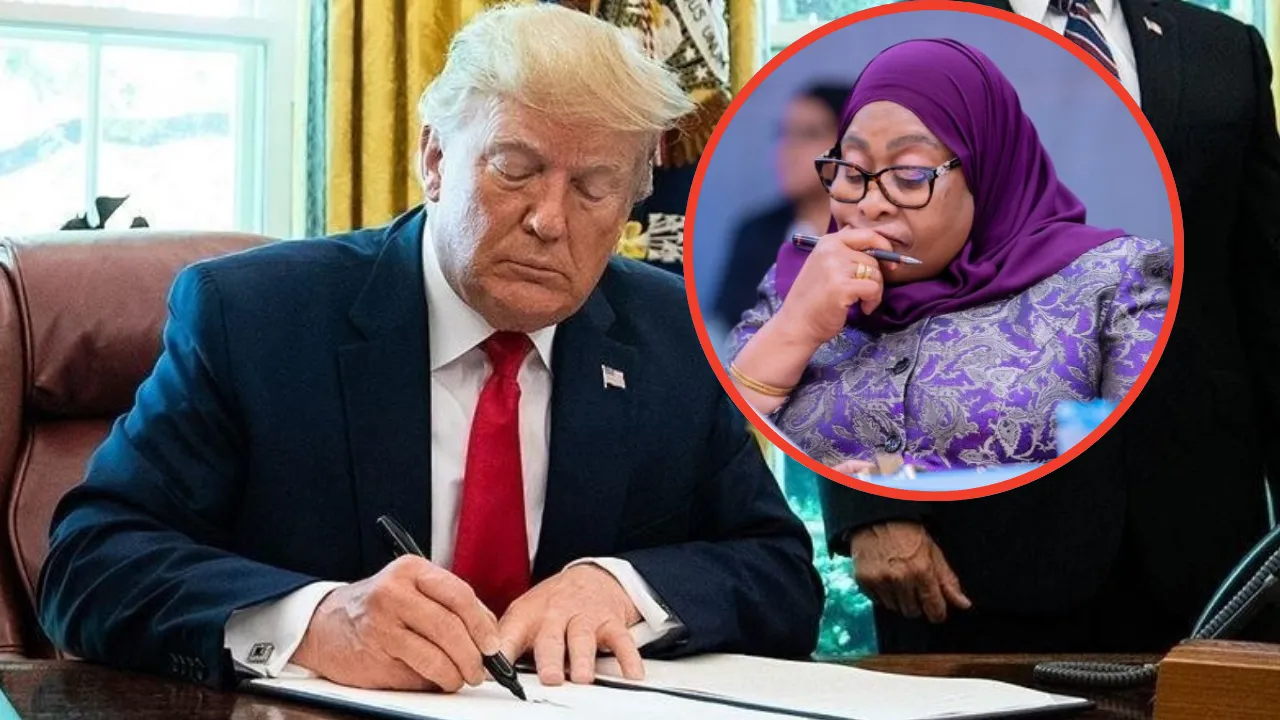
WASHINGTON D.C., United States — President Donald Trump has officially added Tanzania to a list of 39 nations whose citizens now face heightened travel restrictions to the United States. In a new executive proclamation dated December 16, 2025, the administration expanded existing entry limitations, citing national security concerns and deficiencies in international information-sharing.
The White House released a statement on Tuesday clarifying the intent behind the expansion:
“President Donald Trump signed a Proclamation expanding and strengthening entry restrictions on nationals from countries with demonstrated, persistent, and severe deficiencies in screening, vetting, and information-sharing to protect the Nation from national security and public safety threats.”
According to the White House, the latest update “adds partial restrictions and entry limitations on 15 additional countries: Angola, Antigua and Barbuda, Benin, Cote d’Ivoire, Dominica, Gabon, The Gambia, Malawi, Mauritania, Nigeria, Senegal, Tanzania, Tonga, Zambia, and Zimbabwe.”
The December proclamation builds upon Proclamation 10949, which established full restrictions on 12 high-risk nations earlier this year, including Afghanistan, Burma, Chad, and others. Under the new guidelines, the administration has:
- Added five countries to the “full restriction” list: Burkina Faso, Mali, Niger, South Sudan, and Syria.
- Escalated two nations from partial to full restrictions: Laos and Sierra Leone.
- Imposed a full ban on individuals using travel documents issued by the Palestinian Authority.
- Maintained partial restrictions on four original countries: “The Proclamation continues partial restrictions of nationals from 4 of the 7 original high-risk countries: Burundi, Cuba, Togo, and Venezuela,” the White House stated.
Justification and overstay data
The administration argued that these measures are vital for national safety. The White House explained:
“The restrictions and limitations imposed by the Proclamation are necessary to prevent the entry of foreign nationals about whom the United States lacks sufficient information to assess the risks they pose, garner cooperation from foreign governments, enforce our immigration laws, and advance other important foreign policy, national security, and counterterrorism objectives.”
A primary factor for Tanzania’s inclusion involves visa compliance. “According to the Overstay Report, Tanzania had a B-1/B-2 visa overstay rate of 8.30 per cent and an F, M, and J visa overstay rate of 13.97 per cent,” the report noted. Similar concerns were raised regarding Nigeria, which recorded a B-1/B-2 overstay rate of 5.56% and a student visa overstay rate of 11.90%.
Also Read: Trump bans travel from 12 countries to the US
Furthermore, the White House cited systemic issues such as “widespread corruption” and “unreliable civil documents” in many of the restricted nations.
The administration also expressed concern that “terrorist presence, criminal activity, and extremist activity in several listed countries result in a general lack of stability and government control, which causes deficient vetting capabilities and poses direct risks to American citizens and interests when nationals from these countries are admitted to the United States.”
Exceptions and implementation
Despite the broad nature of the order, several exceptions remain in place. These apply to:
- Lawful permanent residents (Green Card holders).
- Current valid visa holders.
- Specific categories such as diplomats and professional athletes.
- Individuals whose entry is deemed to be in the “U.S. national interest.”
This move marks a significant intensification of the travel policies reinstated in June 2025, which aimed to restore first-term security assessments while incorporating updated global risk data.
