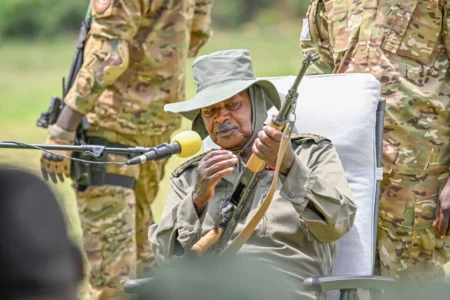


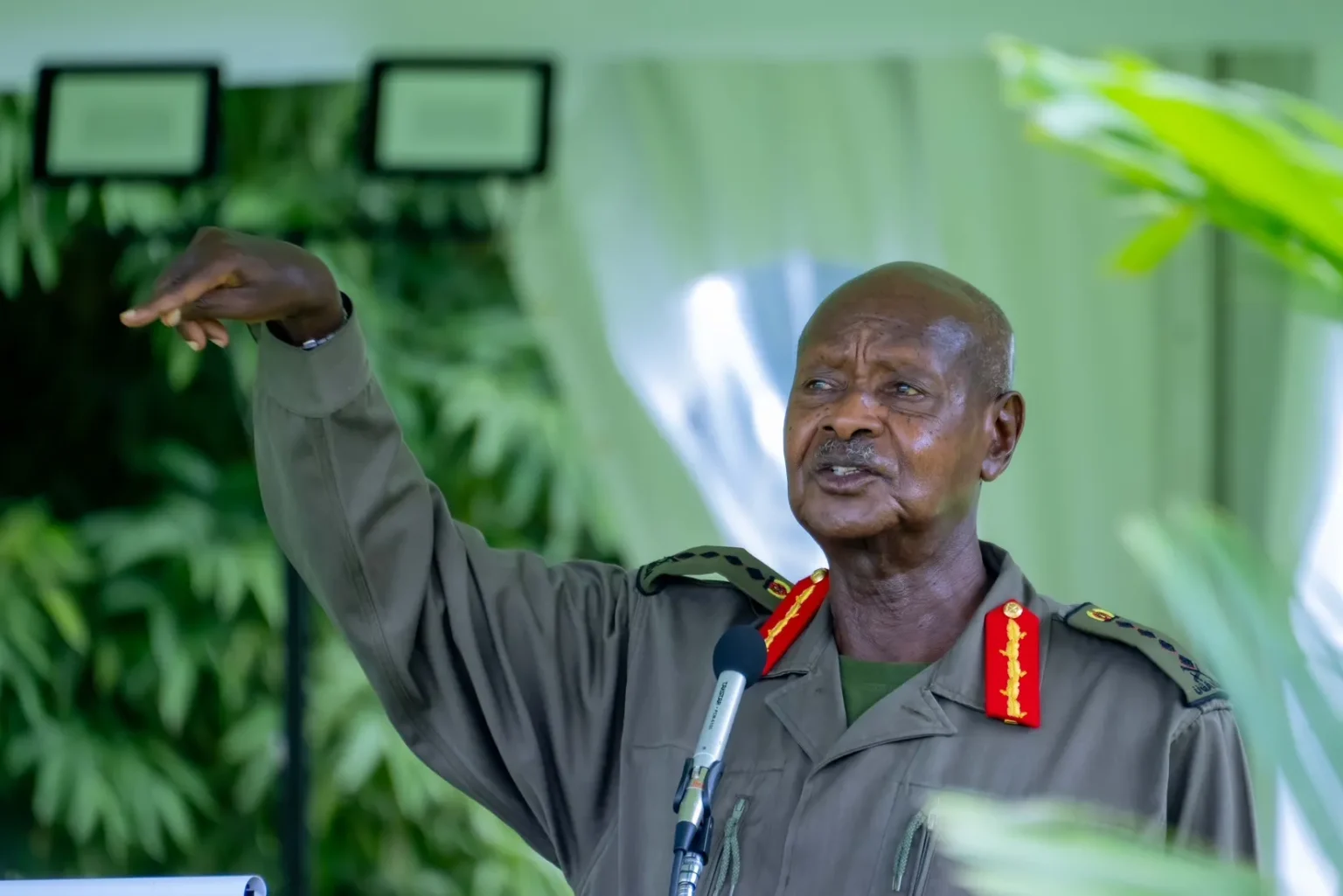
BULIISA, Uganda — President Yoweri Museveni has reaffirmed that the Uganda People’s Defence Forces (UPDF) will remain deployed on the country’s major lakes, insisting that their presence is essential to safeguard local communities from cross-border threats and preserve fish stocks.
The decision, announced during his campaign stop in Buliisa District on Thursday, comes amid calls from fishermen to remove troops assigned under the Fisheries Protection Unit (FPU), who they say have intimidated and harassed them.
Museveni, who is also the ruling National Resistance Movement (NRM) presidential candidate ahead of the January 2026 polls, said withdrawing soldiers from water bodies would open the door for “invaders” from neighbouring countries where instability persists.
“The soldiers will not be taken away from the lake. If we do so, the invaders, because of chaos in DR Congo and Tanzania, will come back,” he stated, emphasising that the military deployment will now align with the government’s broader strategy for the region.
While some local residents have appealed for the withdrawal of armed forces, arguing that the soldiers have been confiscating boats, nets and engines under the pretext of enforcing fishing regulations, Museveni stressed that these measures were necessary to counter long-standing threats.
He acknowledged reports of abuse by security personnel and warned that corrupt practices among soldiers would be addressed.
“I have received numerous reports from districts like Ntoroko, where soldiers have been confiscating motorcycles and immature fish, and threatening anyone who attempts to reclaim their property. These will be dealt with,” Museveni said, underscoring the need for discipline and accountability within the ranks.
The president traced the origins of the military deployment to 2017, when the FPU was first sent to combat widespread illegal fishing practices that had severely depleted fish stocks on Uganda’s lakes.
He noted that at the time, local communities lacked the capacity to protect waters from foreign poachers and unregulated methods that threatened both livelihoods and the environment.
Also Read: Kenya, Uganda and Tanzania eye joint fishing licence for Lake Victoria
Museveni defended the continued presence of the army as part of a long-term effort to restore the health of the fisheries and support wealth creation in lake-dependent regions.
He also pledged to consult cultural leaders from Buliisa and Pakwach districts to integrate traditional knowledge into conservation efforts.
The president further warned of ecological consequences should fish populations collapse, including oxygen depletion in the lakes and an increase in pests such as mosquitoes and lake flies.
He reiterated that protecting the lakes is critical not only for economic reasons but also for environmental stability and community well-being.