


JERUSALEM, Israel — Israeli Prime Minister Benjamin Netanyahu has indicated that the second phase of the US-brokered plan for ending the conflict in Gaza is imminent, though he stressed that several critical issues remain unresolved.
The framework for this second phase, outlined by President Donald Trump’s administration, stipulates a further withdrawal of Israeli forces from Gaza, the establishment of a transitional governance authority, and the deployment of an international security force.
Crucially, this phase is meant to include the disarmament of Hamas and the commencement of reconstruction efforts in the territory.
A central outstanding question revolves around the disarmament of Hamas. However, a senior official within the group has recently proposed a potential compromise, suggesting a readiness to consider “freezing or storing” their remaining weaponry.
The United States and other mediating parties are intensifying pressure on both sides to progress to the subsequent stages of the Trump plan.
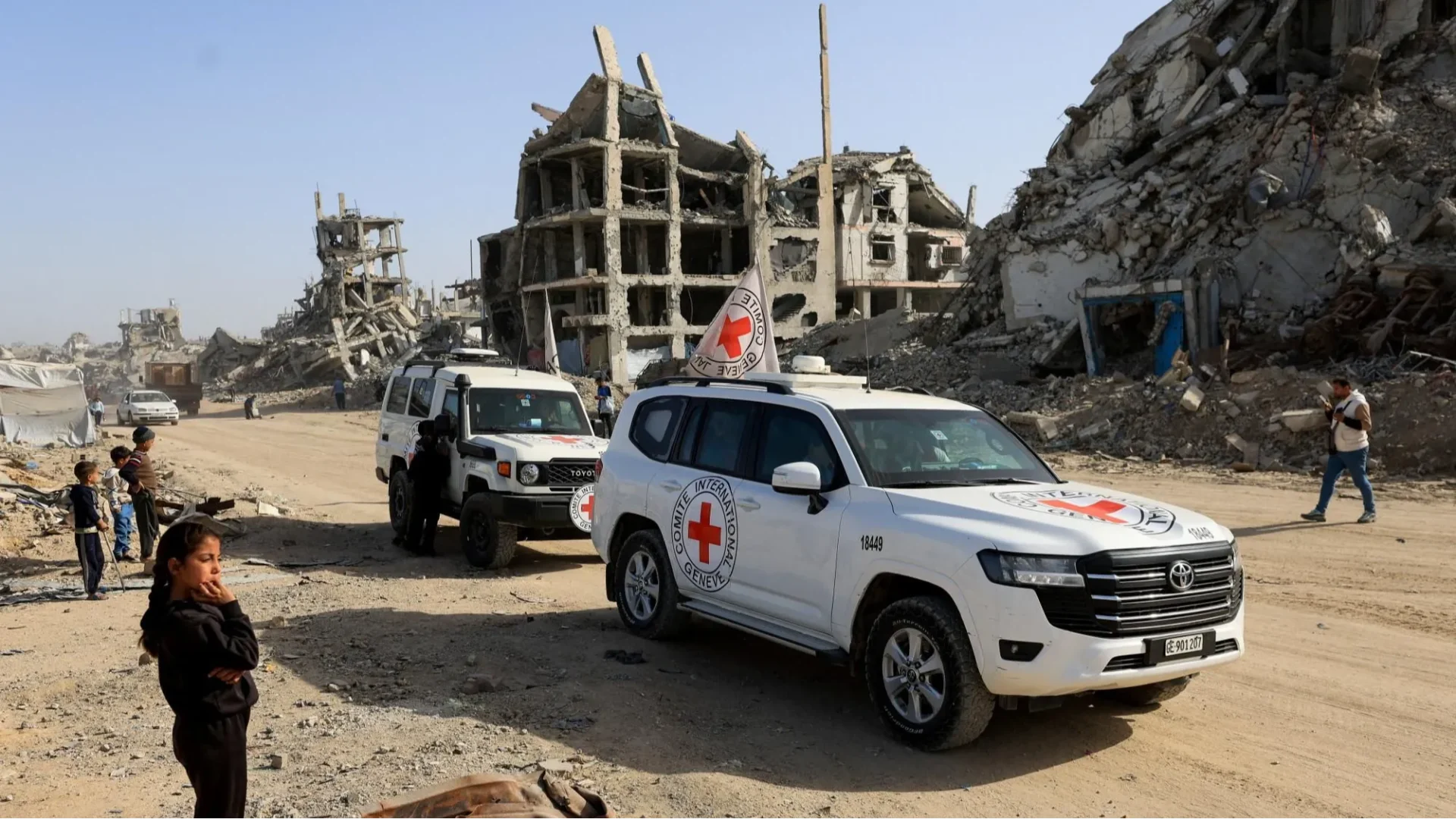
Concurrently, Arab media sources report that a joint team, comprising members of the Red Cross and Hamas’s armed wing, has resumed search operations in the Zeitoun area of Gaza City for the last deceased Israeli hostage, police officer Sergeant Ran Gvili.
Sergeant Gvili was killed during the Hamas-led attacks of October 7, 2023, and his remains are mandated for return under the initial ceasefire agreement between Israel and Hamas.
Regarding the recovery of the body, Prime Minister Netanyahu stated at a news conference on Sunday: “We’ll get him out”.
Persistent tensions and disarmament concerns
Two months after the ceasefire took effect, both parties continue to exchange accusations of almost daily violations. Israeli forces maintain control over more than half of the Gaza Strip, while Hamas has largely re-established a presence in the remaining area.
Addressing journalists, Prime Minister Netanyahu announced that he would hold key discussions with President Trump at the end of the month to strategize on implementing the second phase of the plan. An Israeli government spokeswoman confirmed on Monday that the meeting is scheduled for December 29th.
Following a meeting with German Chancellor Friedrich Merz in Jerusalem on Sunday, Prime Minister Netanyahu reiterated that Hamas rule in Gaza must cease and that the armed group must fulfill “their commitment” to surrender their weapons and achieve the territory’s demilitarization.
Later, during a meeting with Israeli ambassadors and diplomats, he expressed skepticism regarding the proposed multinational force’s capacity to effectively disarm Hamas.
The Prime Minister questioned the viability of international military intervention for disarmament, saying: “Now there is a question here: our friends in America want to try to establish an international force that will do the job. I said – please. Are there volunteers here? Please, on the contrary,” He elaborated on the force’s limitations, stating: “And we know that there are certain tasks that this force can do. I don’t want to go into detail, they can’t do everything, and maybe they can’t do the main thing, but we’ll see.”
He concluded by reaffirming Israel’s commitment to ensuring disarmament, asserting: “It can be done the easy way, it can be done the hard way. But eventually it will be done.”
Hamas position and humanitarian concerns
In an interview with the Associated Press, top Hamas official Bassem Naim proposed that the group is open to discussions on “freezing or storing” its weapons arsenal, suggesting a potential avenue for resolving this critical obstacle.
Naim, a member of the Hamas political bureau, stated in Qatar, where much of the group’s leadership is based: “We are open to have a comprehensive approach in order to avoid further escalations or in order to avoid any further clashes or explosions.”
Hamas has historically resisted disarming without the prerequisite establishment of an independent Palestinian state.
Naim also contended that Israel has failed to honor key ceasefire commitments, specifically citing inadequate delivery of aid into Gaza and the continued closure of the Rafah border crossing with Egypt.
While humanitarian agencies report a significant increase in supplies entering Gaza, they continue to face restrictions on their operations from Israel and widespread insecurity.
Last week, Israel indicated a willingness to reopen the Rafah crossing—Gaza’s primary gateway—but only for outbound travel. This condition was rejected by both Egypt and the Palestinians, who insist that Israel is obligated to open the crossing for traffic in both directions.
Ceasefire context and hostage exchange
The current ceasefire halted a two-year Israeli offensive in Gaza, which was initiated following the devastating Hamas attacks and mass hostage-taking in southern Israel.
The first stage of the peace plan involved the return of 20 living hostages and the remains of 28 deceased hostages held in Gaza. In exchange, Israel released nearly 2,000 Palestinian detainees.
Furthermore, for each Israeli hostage’s remains returned, Israel has been repatriating the bodies of 15 Palestinians. Israel has accused Hamas of delaying the return of the deceased hostages.
Also Read: Israel shuts global embassies after attack on Iran, urges citizen vigilance
The Hamas-run health ministry in Gaza reports that Israeli fire has resulted in over 370 Palestinian deaths since the ceasefire began. Israel defends its strikes as responses to Palestinian violations, including incursions into Israeli-held areas of Gaza.
Additionally, three Israeli soldiers have been killed in clashes, with dozens of Hamas operatives reportedly still sheltered in underground tunnels in the southernmost part of Gaza.
The prospect of advancing to the next stage has received international support, with President Trump stating last week that the second phase was “going to happen pretty soon”.
On Saturday, Qatari Prime Minister Sheikh Mohammed bin Abdul Rahman Al Thani commented that the negotiations had reached “a critical moment.”
