


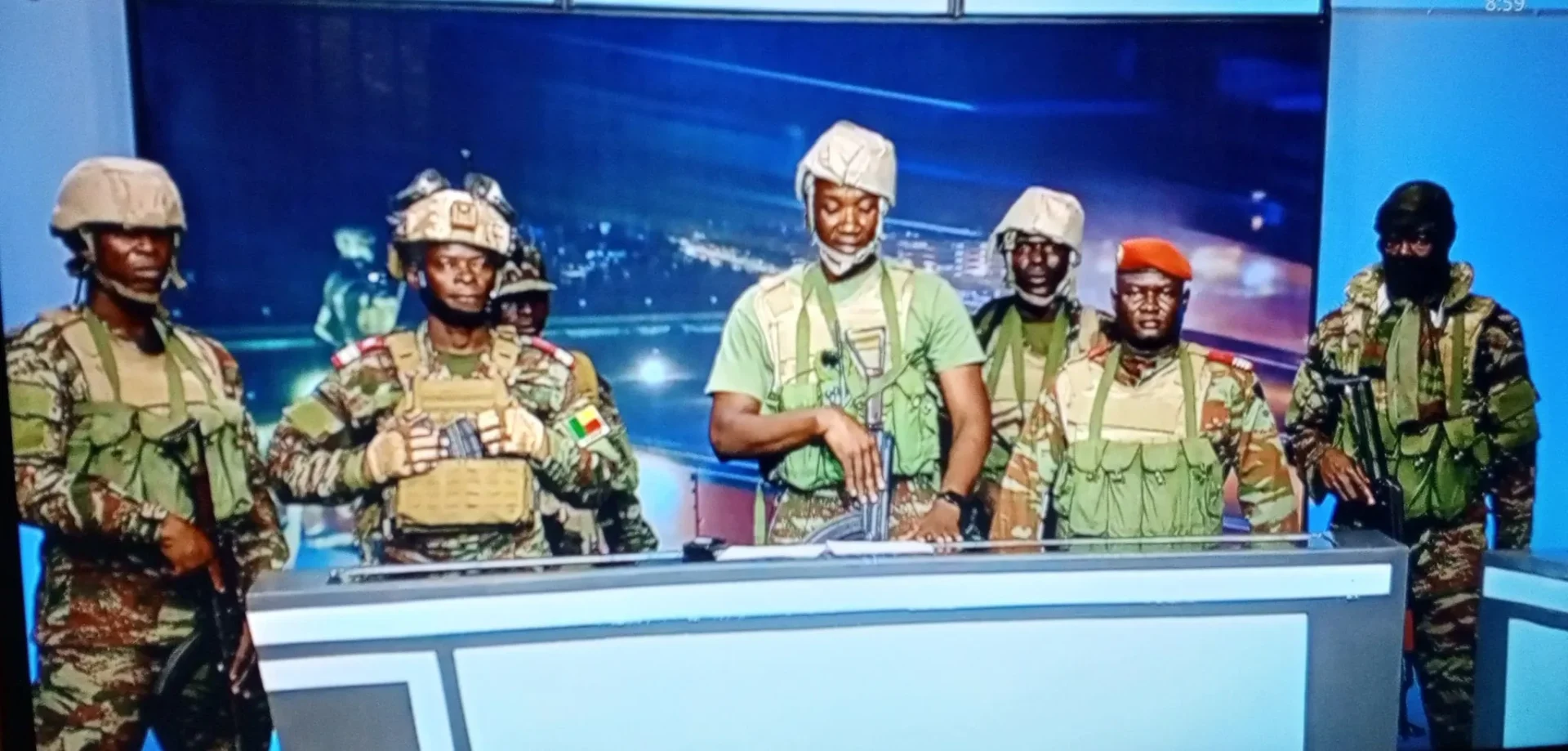
COTONOU, Benin — Soldiers in the West African nation of Benin appeared on national television Friday to announce that they had successfully seized power and overthrown President Patrice Talon.
The military faction declared the suspension of the constitution, the closure of all land borders, and the grounding of flights across the country’s airspace.
The development follows reports of heavy unrest near the capital. The French embassy in Benin confirmed the tension, issuing a message to its citizens stating that gunfire had been reported near the residence of the president in the main city of Cotonou.
Conflicting reports of control
Despite the televised announcement by the military, officials close to President Talon, 67, swiftly issued statements claiming the situation was contained and that the attempted takeover lacked broad military support.
Foreign Minister Shegun Adjadi Bakari told Reuters news agency that the vast majority of the military remained loyal:
“The situation is under control. A large part of the army is still loyalist – and we are taking over the situation,” Bakari stated.
Similarly, an unnamed person within the presidency sought to minimize the significance of the takeover to the AFP news agency:
“This is a small group of people who only control the television. The city and the country are completely secure,” the source asserted.
The soldiers, who read out a statement justifying their actions by criticizing President Talon’s management of the country, named Lieutenant-Colonel Tigri Pascal as the head of a new military transition council.
Regional instability and political context
The apparent coup in Benin, long considered one of Africa’s more stable democracies, follows a trend of military takeovers that have destabilized the West African region.
This incident occurs just over a week after President Umaro Sissoco Embaló was overthrown in neighboring Guinea-Bissau.
In recent years, coups have also occurred in Burkina Faso, Guinea, Mali, and Niger, raising significant regional security concerns.
Also Read: General Horta N’Tam named new Guinea-Bissau leader a day after coup
The French Embassy has urged its citizens residing in Benin to remain indoors for their safety.
Talon, a wealthy businessman known as the “king of cotton” (Benin is the continent’s largest cotton producer, despite being one of the world’s poorest countries), first won power in 2016.
He is currently serving his second term and is constitutionally due to step down next year, with elections scheduled for April, having previously promised not to seek a third term.
Adding to the regional tension, Benin has recently seen a rise in jihadist activity as groups linked to Islamic State and al-Qaeda extend their influence southwards.
