


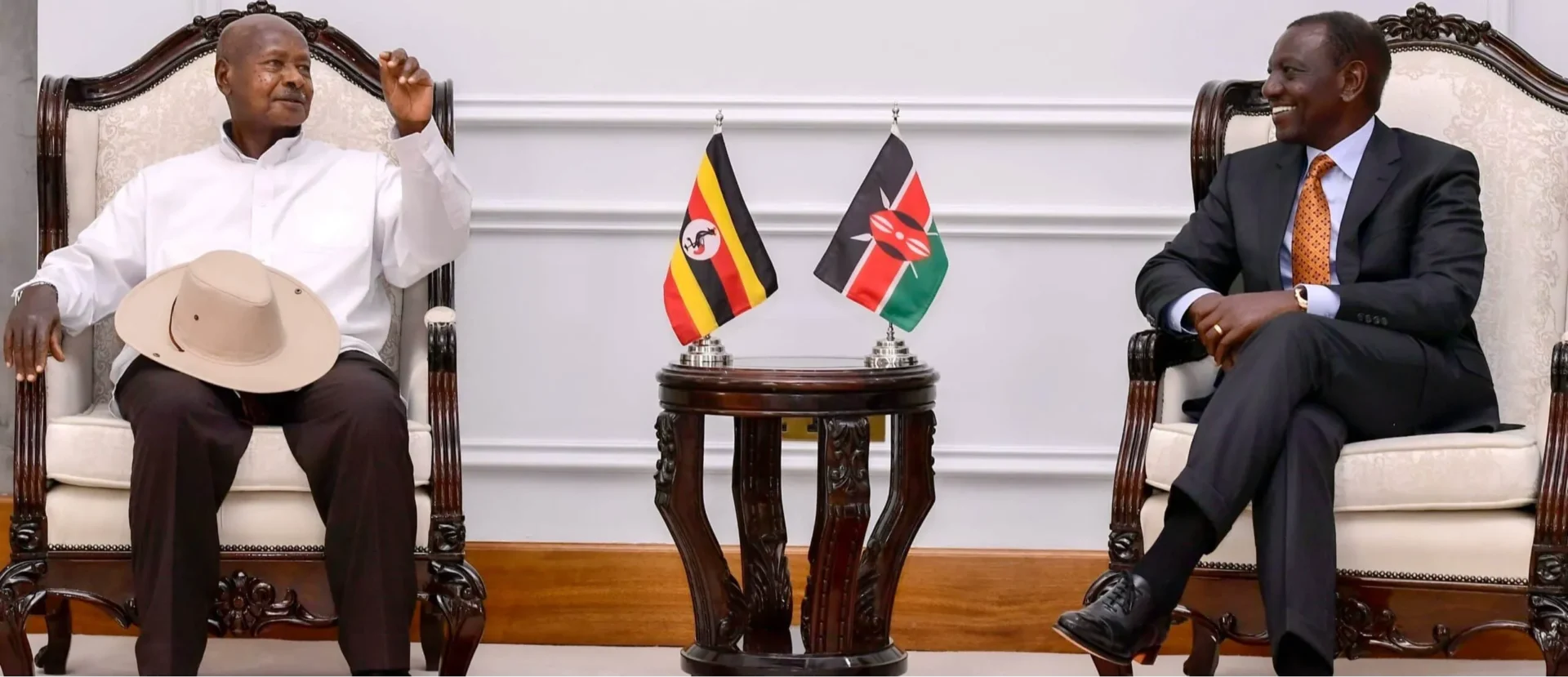
TORORO, Uganda — President William Ruto has officially announced that the construction of the Standard Gauge Railway (SGR) extension from Naivasha to Kampala will commence early next year, setting a definitive timeline for a project designed to revolutionize transport across the Great Lakes region.
Speaking in Osukuru, Tororo District, on Sunday, the President confirmed that the joint Kenyan-Ugandan infrastructure push is set to launch in January 2026, with the ultimate goal of connecting Rwanda and the Democratic Republic of Congo (DRC).
”In January, we will be launching the extension of the SGR from Naivasha to Kampala to connect with Malaba-Kampala line and later to DRC,” President Ruto declared.
Pipeline privatization and regional integration
Beyond the railway, President Ruto unveiled a major shift in energy infrastructure policy. He announced that Kenya and Uganda will jointly extend the petroleum pipeline into the region to boost trade.
To facilitate this and ensure regional ownership, the Government of Kenya is divesting 65 per cent of its shareholding in the Kenya Pipeline Company (KPC) through the Nairobi Securities Exchange (NSE).
The President explicitly encouraged public and private entities, as well as citizens across the East African Community (EAC), to purchase shares. He noted that during a recent joint ministerial meeting in Nairobi, both governments ratified frameworks for joint ownership of the infrastructure.
”I thank you, Mr President, for agreeing to work with us. The ministers were in Nairobi last week and I have given the necessary guidance on the need for Uganda and Kenya, both public and private, to jointly own the Kenya Pipeline Company,” Ruto told his host, President Yoweri Museveni.
He emphasized that these projects, alongside the dualling of the Rironi-Nakuru-Eldoret-Malaba road, are critical for connecting the Indian Ocean to the hinterland.
Steel and industrial self-sufficiency
The announcements were made during the groundbreaking ceremony of the Devki Mega Steel Project, a massive investment by the Devki Group.
President Ruto championed the project as a model for cross-border collaboration that enhances African self-sufficiency.
“This project will provide jobs for our young people, build new value chains for small and medium enterprises, and create opportunities that extend far beyond Uganda’s borders,” Mr. Ruto explained.
He praised Devki Group Chairman Dr. Narendra Raval for his vision, noting that the Tororo facility already employs over 400 workers, with ambitious plans to expand the workforce to 20,000 by 2027 across East African operations.
“The establishment of the Tororo Steel Industry sends a powerful message that our countries possess both the capacity and the courage to build globally competitive industries that drive Africa transformation,” the President noted.
Also Read: Uganda to hire locomotives from Kenya in new railway partnership
Citing market data, Ruto added: “Africa’s steel market reached a volume of 39.5 million tonnes in 2024, and is expected to reach a projected 52 million tonnes by 2034, driven by bolstering infrastructure and advancing industrialisation.”
Museveni on value addition
Ugandan President Yoweri Museveni welcomed the investment, framing it as a necessary step to liberate Africa from the economic trap of exporting raw materials. He drew a stark comparison between African economies and the United States.
“It’s sad that the GDP of a country like the US is three times that of all the African countries combined yet we have rich resources that can uplift the economy of the continent if raw materials undergo value addition before being exported,” Mr. Museveni said.
Dr. Raval reaffirmed his company’s commitment to the local community, promising that the project would create 15,000 direct jobs for Ugandans.
“I want to assure the community here that 90 per cent of the jobs will be preserved for the people around here,” Dr. Raval stated.
