


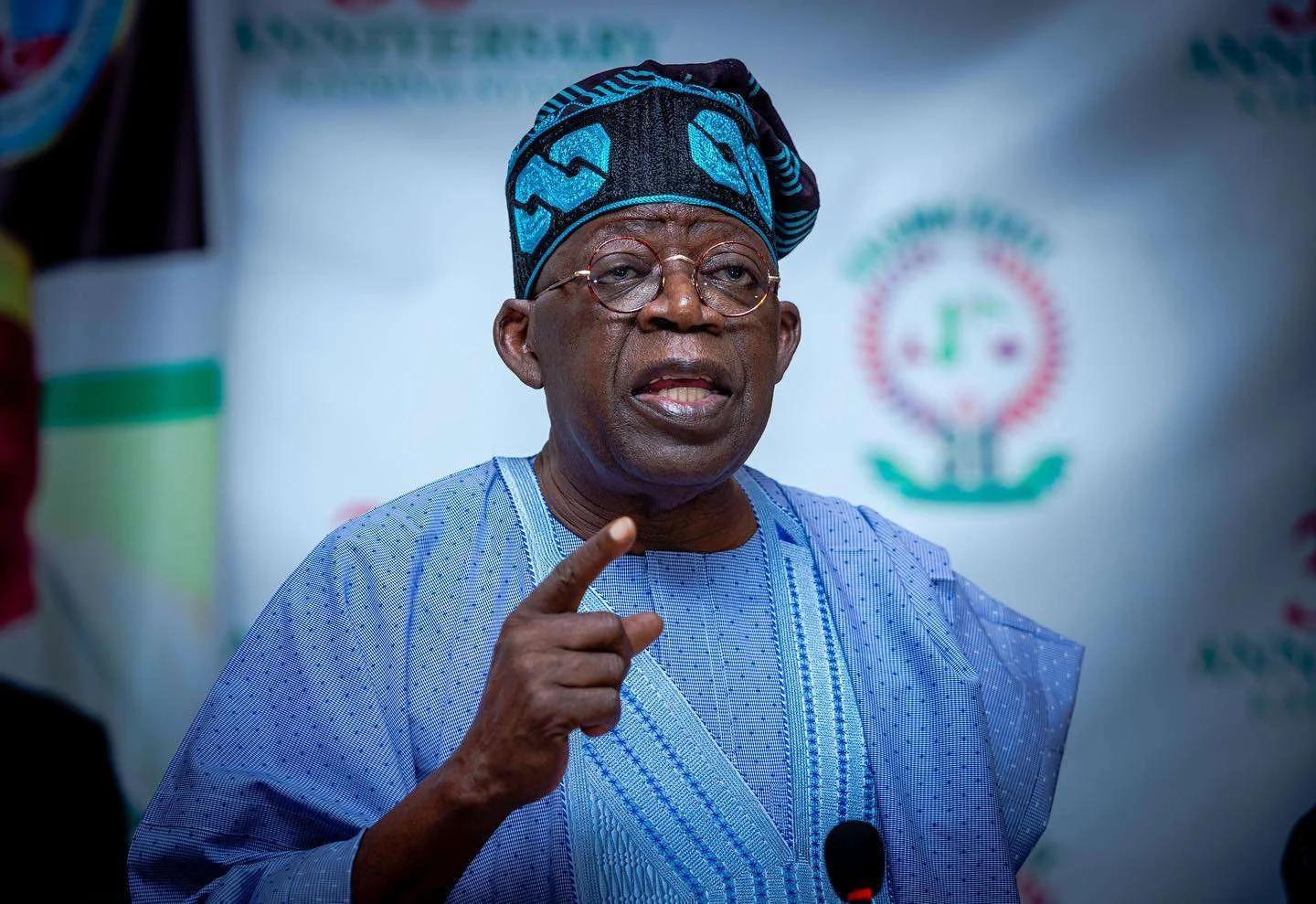
ABUJA, Nigeria — Nigeria announced on Sunday it would welcome United States assistance in fighting Islamist insurgents, but stipulated that any cooperation must respect its territorial integrity.
The statement was made in direct response to threats of military action issued by President Donald Trump, who cited what he called the ill-treatment of Christians in the West African nation.
Trump, on Saturday, had publicly stated that he had asked the U.S. Defense Department to prepare for possible “fast, vicious” military action in Nigeria if the country failed to crack down on the killing of Christians.
Daniel Bwala, an adviser to Nigerian President Bola Tinubu, confirmed the willingness to accept assistance. “We welcome U.S. assistance as long as it recognises our territorial integrity,” Bwala told this publication. He sought to de-escalate tensions, despite Trump having publicly referred to Nigeria as a “disgraced country.”
Bwala expressed optimism for future collaboration, adding, “I am sure by the time these two leaders meet and sit, there would be better outcomes in our joint resolve to fight terrorism.”
The complex reality of conflict
The former U.S. President’s threat came a day after his administration added Nigeria back to a “Countries of Particular Concern” list—a designation for nations the U.S. says have violated religious freedoms.
Nigeria, with a population of over 200 million people and roughly 200 ethnic groups, is split between a predominantly Muslim north and a mostly Christian south.
Islamist insurgent groups, including Boko Haram and Islamic State West Africa Province (ISWAP), have caused havoc for more than 15 years, primarily in the Muslim-majority northeast.
Security analysts caution against framing the conflict solely along religious lines, noting the complexity of the violence.
“Insurgent groups such as Boko Haram and Islamic State West Africa often present their campaigns as anti-Christian, but in practice their violence is indiscriminate and devastates entire communities,” said Ladd Serwat, senior Africa analyst at U.S. crisis-monitoring group ACLED.
ACLED research indicates that the vast majority of victims in the insurgency are Muslims, with violence being driven by a complex mix of political power struggles, land disputes between mostly Muslim herders and mainly Christian farmers, ethnicity, and banditry.
ACLED research further highlights that out of 1,923 attacks on civilians in Nigeria so far this year, the number of those targeting Christians because of their religion stood at 50. Serwat added that recent claims circulating in some U.S. circles that as many as 100,000 Christians had been killed in Nigeria since 2009 are not supported by available data.
Nigerian Defences and Public Reaction
President Tinubu, a Muslim married to a Christian pastor, has publicly rejected allegations of religious intolerance, defending his country’s constitutional guarantees for religious freedom.
His administration has also sought to ensure a balance of representation in key government and military appointments, recently appointing a Christian as the new defence chief.
Also Read: US revokes visa of Nigerian Nobel laureate Wole Soyinka
Despite the government’s cautious response, some Nigerian Christians expressed support for U.S. intervention.
“I feel if Donald Trump said they want to come in, they should come in and there is nothing wrong with that,” said Abuja businesswoman Juliet Sur after Sunday Mass.
Security experts, however, caution that any U.S. airstrikes would face challenges in targeting small, scattered groups across a vast territory.
They suggest that the success of any military operation would require the cooperation of the Nigerian military and government—assistance that Trump had threatened to withdraw.
