


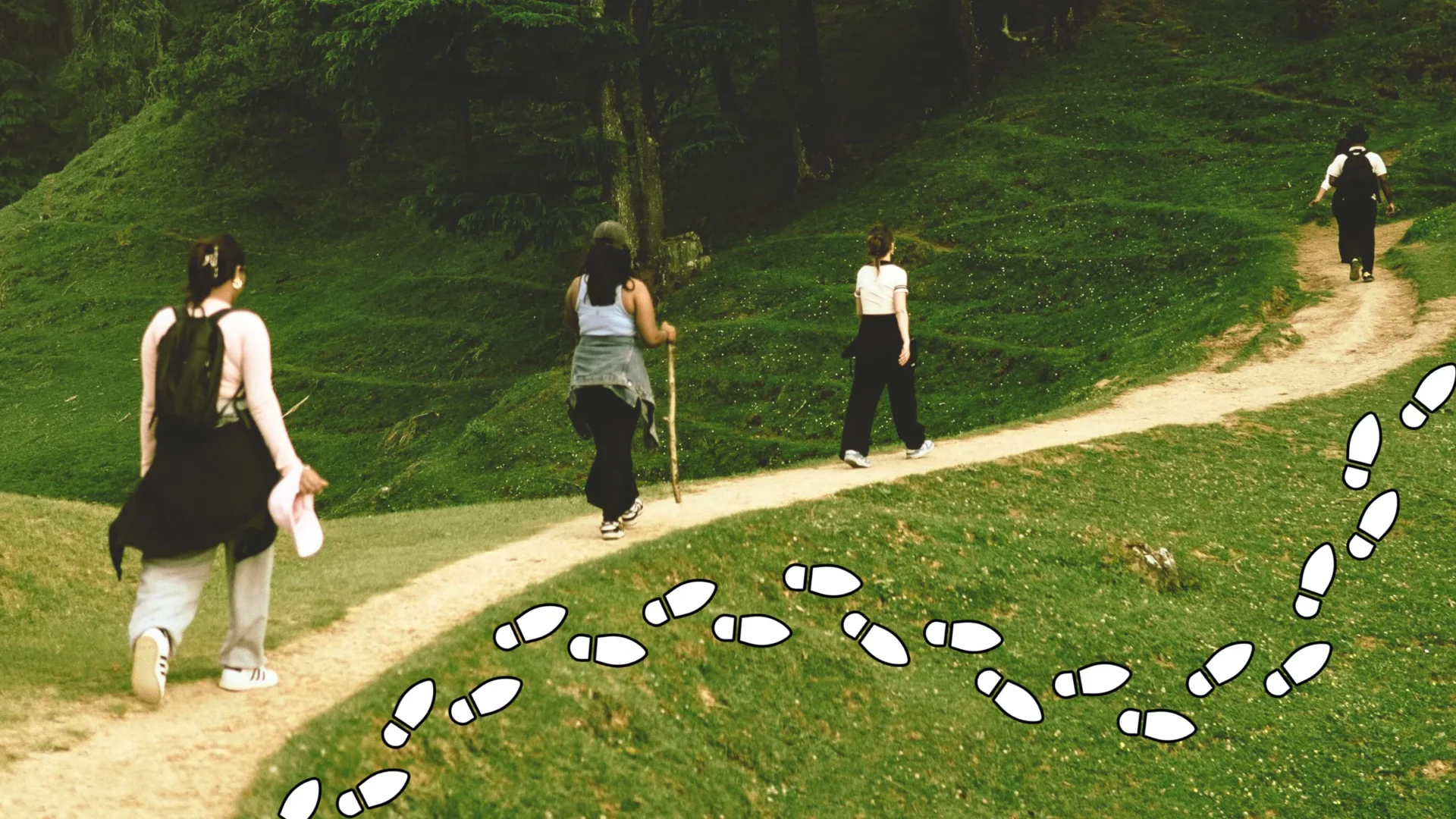
Gym-goers often debate their routines, but a new study confirms that one of the simplest forms of exercise—the continuous, long walk—may be a hidden secret to longevity, particularly for less active adults.
Research published in the journal Annals of Internal Medicine suggests that adults who walk for uninterrupted periods, defined by researchers as sessions longer than 10 minutes, had a substantially lower risk of cardiovascular disease and premature death compared to those who accumulate steps in shorter, scattered bursts.
The findings challenge the focus on total daily step count, adding a layer of nuance to fitness recommendations.
The value of continuous movement
Dr. Borja del Pozo Cruz, the study’s first author, explained the significance of the duration over the sheer quantity of steps.
“Most studies focus on the total number of daily steps (including our previous studies), but ours shows that how you accumulate those steps matters too — especially for less active individuals,” he stated in an email.
He elaborated on how this refines popular fitness goals: “This adds nuance to the ‘10,000 steps a day’ idea: even if you don’t reach that number, taking a few longer walks rather than many short, scattered steps can make a real difference for heart health and longevity.”
This advice is especially relevant given that nearly 31% of the world’s adult population remains physically inactive, failing to meet the global recommendation of 150 minutes of exercise per week—a lifestyle linked to higher risks of insomnia, mortality, and cardiovascular disease.
Dr. del Pozo Cruz, an associate professor and senior researcher at the Faculty of Medicine, Health, and Sports, Universidad Europea de Madrid, emphasised the target demographic for the findings.
“Everyone can benefit from walking — there’s really no group for whom walking is harmful. But these particular findings are most relevant for people who are sedentary or take fewer than about 8,000 steps a day,” he said.
Building ‘cardiac strength’
The biological benefit of a longer walk is rooted in its effect on the heart and circulatory system.
“Longer walks likely help by improving blood circulation, lowering blood pressure, and supporting glucose control — all key for heart health,” del Pozo Cruz noted, adding that prolonged movement may also increase the volume of heart stimulation needed to fully activate muscles.
Dr. Andrew Freeman, director of cardiovascular prevention and wellness at National Jewish Health in Denver, who was not involved in the study, stressed that building the capacity for these longer sessions is an exercise in itself.
Also Read: After 40, cardio or weights first? A fitness dilemma for the over‑40s
“Most people can walk for a minute or two or five without much issue. But when you start getting to … 20 and 30 and 40 and 60 minutes in, it becomes a lot harder for folks, and that’s the capacity we’re really trying to build,” said Dr. Freeman.
He compared the challenge to strength training: “I couldn’t just go over and do it from the get-go. I’d have to build up the capacity, build up the muscle strength to get there. And the same thing is true for cardiac strength and cardio.”
Focus on duration over counting
The study, based on an analysis of data from over 33,000 relatively inactive adults in the UK Biobank, suggests individuals should shift their focus from tracking every step to creating sustained periods of movement.
“Pace still matters, but duration and consistency of walking bouts seem to be powerful factors. So, instead of counting every single step, people might focus on carving out short sessions of continuous walking during their day,” del Pozo Cruz advised.
The ultimate goal, according to Dr. Freeman, remains “roughly 30 minutes a day of breathless physical activity, which is an intense level for most folks.”
This level of activity—where one can talk but not sing—builds the cardiac reserve and physical strength that serve as “pretty amazing preventatives when it comes to all sorts of heart disease, including coronary disease and high blood pressure.”
