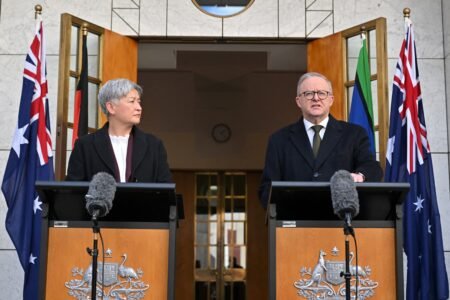





LONDON, United Kingdom — In a significant shift in foreign policy, the UK has formally recognized a Palestinian state, a move announced by Prime Minister Sir Keir Starmer on Sunday. The declaration, made alongside Canada, Australia, and Portugal, has been described as a way to “revive the hope of peace and a two-state solution.”
Following the announcement, Foreign Secretary Yvette Cooper stated she has warned Israel against retaliating by annexing parts of the West Bank. Speaking to the BBC before a UN conference, Cooper emphasized the UK’s position.
“We have been clear that this decision that we are taking is about the best way to respect the security for Israel as well as the security for Palestinians,” she said. “It’s about protecting peace and justice and crucially security for the Middle East and we will continue to work with everyone across the region in order to be able to do that.”
Cooper highlighted that the UK has a moral obligation to revive the prospect of a two-state solution, arguing that walking away from the issue would be wrong given the ongoing suffering in the region.
“The easy thing to do would be to just walk away and to say well it is all just too hard,” Cooper said. “We just think that is wrong when we’ve seen such devastation, such suffering.”
She added, “Just as we recognise Israel, the state of Israel … so we must also recognise the rights for the Palestinians to a state of their own as well.”
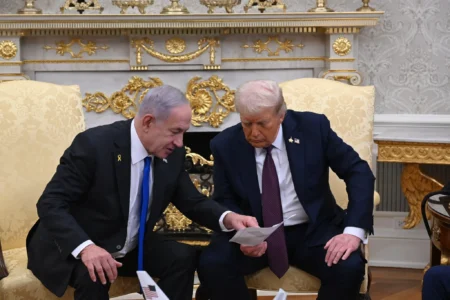
The decision drew immediate condemnation from Israeli Prime Minister Benjamin Netanyahu, who said that Palestinian statehood “will not happen” and called the move a “huge reward to terrorism.”
Israeli government spokesperson David Mencer, speaking to BBC Radio 4, accused Sir Keir of “abandonment,” stating that “the Jewish community will never forgive Labour for this betrayal.” The US also described the move as a diplomatic gift to Hamas following its attack on Israel on October 7, 2023.
In response, Sir Keir Starmer stressed that the recognition was not a reward for the militant group and that its terms mean Hamas can have “no future, no role in government, no role in security.”
A statement from the Foreign Office echoed this, saying the foreign secretary would use a UN meeting to “ensure violent terrorists like Hamas have no role to play in the future of a Palestinian state.”
The prime minister called the decision a “pledge to the Palestinian and Israeli people that there can be a better future,” adding that the “starvation and devastation [in Gaza] are utterly intolerable.”
The minister for the Middle East, Hamish Falconer, told BBC Breakfast that “the time is right now because a two-state solution is under peril like never before,” warning that “the threat to two states living in peace, side-by-side has got worse and worse.”
Reactions from other parties reflected the deep division. Hamas welcomed the recognition as an “important step in affirming the right of our Palestinian people to their land and holy sites” but said it must be accompanied by “practical measures” that would lead to an “immediate end” to the war.
The Conservatives’ deputy chair, Matt Vickers, accused the prime minister of “rewarding Hamas,” claiming, “Hamas has already said this is a victory for them and the evil things they did on October 7.”
In contrast, Liberal Democrats leader Sir Ed Davey called the move “an essential path” towards a two-state solution but stressed that “this is only a first step.” He added, “We need to put pressure on the Netanyahu government to stop the killing, to bring food in for the people of Gaza, and also to get the hostages out.”
Also Read: Australia to recognize Palestinian state in September
The UK’s decision comes amid a dire humanitarian crisis. A UN commission of inquiry recently found that Israel had committed genocide in Gaza, a report the Israeli Foreign Ministry rejected as based on “Hamas lies” and being “an embarrassment to the legal profession.” Israeli Prime Minister Netanyahu has also repeatedly denied that starvation is occurring in Gaza.
In the occupied West Bank, the mayor of Jenin, Mohammed Jarrar, said that “this Israeli government wants to annex the West Bank” but that the recognition was important as “it confirms the fact that the Palestinian people possess a state, even if it is under occupation.”
Netanyahu has previously stated his intention to continue settlement expansion, saying, “we doubled Jewish settlement in Judea and Samaria [the West Bank] and we will continue on this path.” A far-right Israeli minister, Itamar Ben Gvir, called for Israel to annex the West Bank in response to the news.
Palestinian Authority President Mahmoud Abbas welcomed the UK’s decision, saying it would help pave the way for the “state of Palestine to live side by side with the state of Israel in security, peace and good neighbourliness.”
Palestine is currently recognized as a state by around 75% of UN member states, but without internationally agreed boundaries, capital, or army, the recognition remains largely symbolic.