


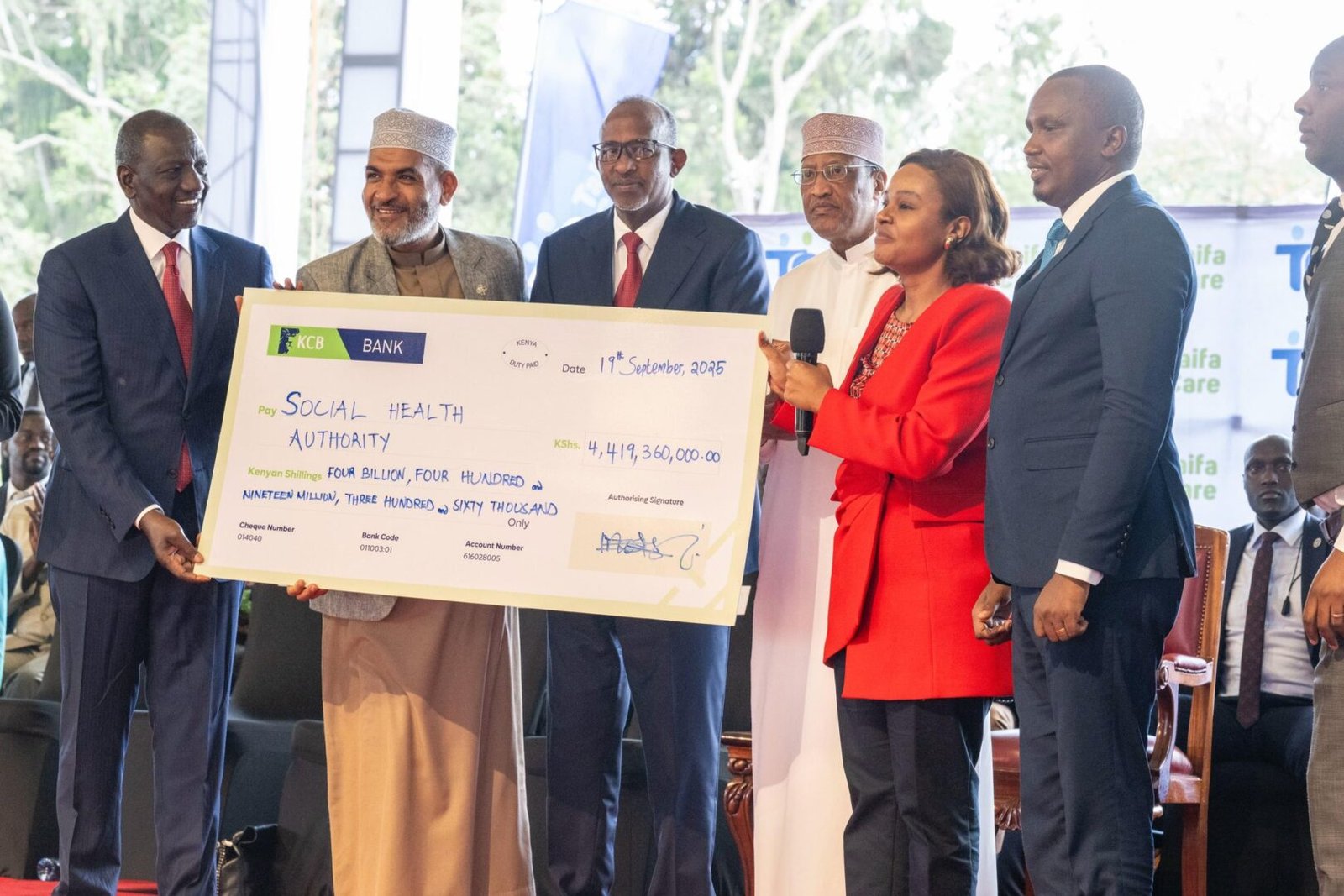
NAIROBI, Kenya — President William Ruto has announced that 3.9 million vulnerable Kenyans are set to benefit from free healthcare under the new Taifa Care programme, beginning with an initial group of 2.2 million.
The President’s announcement came during the launch of the Social Health Authority (SHA) Sponsorship for the vulnerable, a landmark initiative aimed at advancing the realization of Universal Health Coverage (UHC) for all citizens.
During the launch at State House, Nairobi, President Ruto underscored the government’s commitment to equitable healthcare, issuing the SHA with a cheque of KSh 4.419 billion to support the programme’s rollout.
“Today, we are making a bold statement as a nation. We don’t want health to be a preserve of only the rich; we want health to be a right for every Kenyan,” Ruto said.
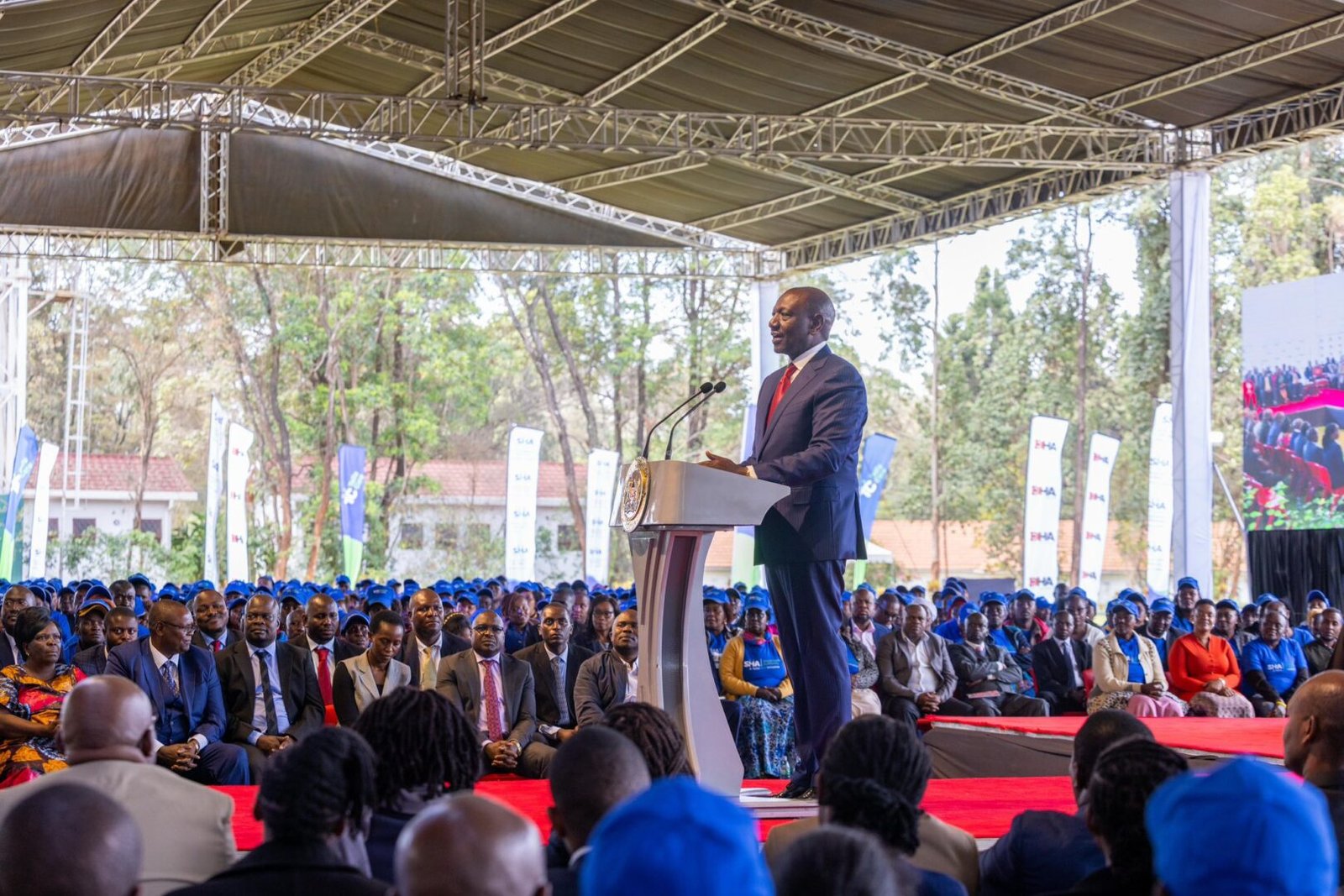
The new initiative fully funds healthcare for its beneficiaries, covering a wide range of services from primary care to specialized and referral treatment through the SHA-controlled Social Health Insurance Fund (SHIF), which replaced the former National Health Insurance Fund (NHIF).
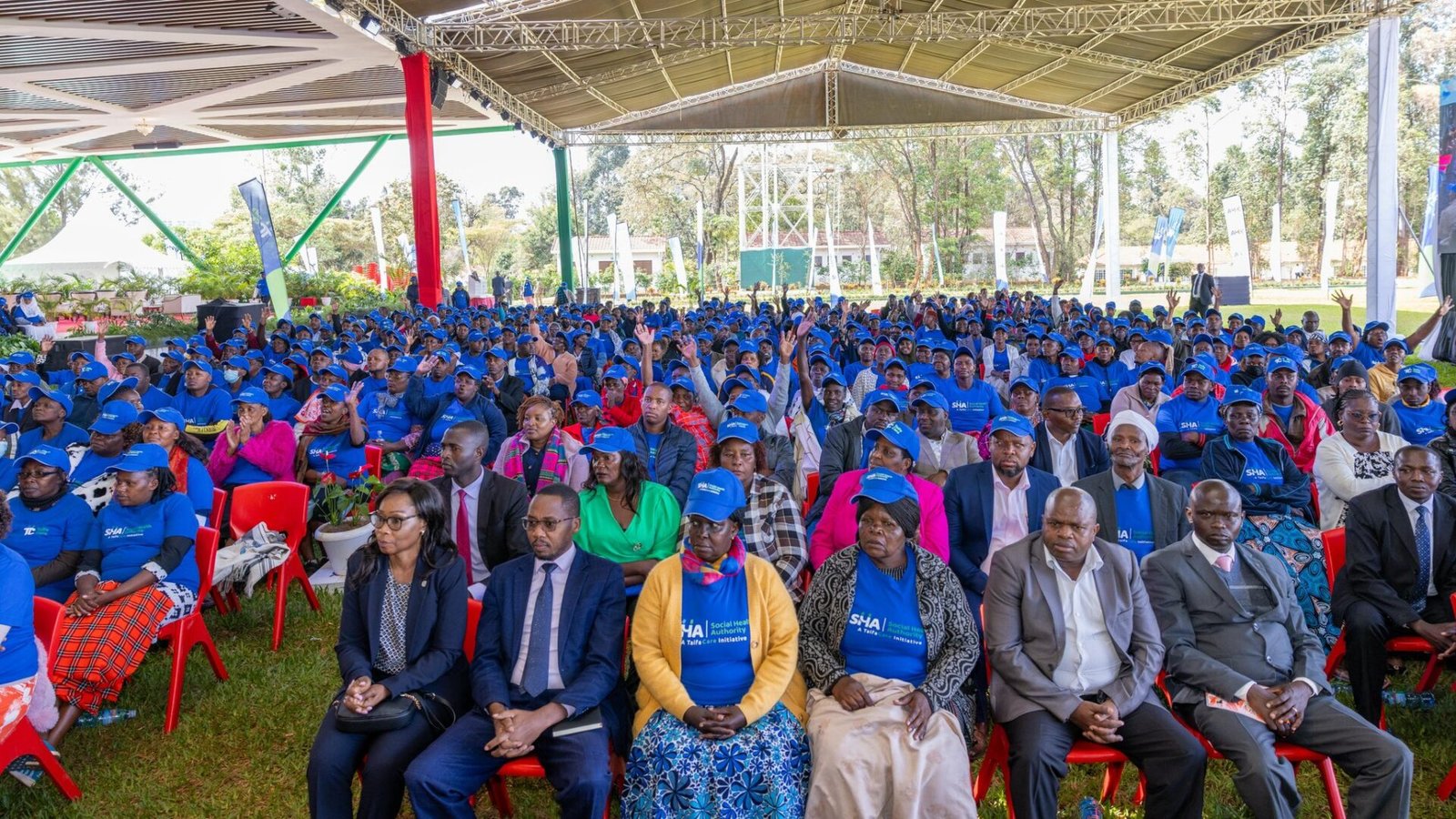
Those enrolled will have access to services at more than 9,000 public, private, and faith-based hospitals.
The provision of free medical cover was a key promise during President Ruto’s campaign, and he spoke of the launch as a significant step towards fulfilling that pledge.
“We made an irrevocable commitment to deliver Universal Health Coverage for all Kenyans, regardless of their economic status. Today, we have taken another significant step in fulfilling that pledge,” he stated.
He added that an additional 1.7 million Kenyans will be enrolled to reach the 3.9 million target.
“We will continue identifying and bringing more of our most vulnerable citizens into this fold, ensuring they benefit from a healthcare system that is robust, responsive, and truly equitable,” Ruto said.
Health Cabinet Secretary Aden Duale noted that the ministry will work collaboratively with county governments to ensure the program reaches every deserving household.
“We have transitioned from a fragmented and costly system to a more collaborative, people-centred health sector. Under primary healthcare, any Kenyan can walk into a facility, receive outpatient treatment, get medication and go home without paying anything,” he said.
Also Read: Kenya to cover health insurance for 1.5 million citizens under SHA, Ruto announces
Dr. Mercy Mwangangi, the chief executive officer of the SHA, provided more detail on the scope of care.
She explained that primary care services would include basic services like consultations, blood pressure checks, sugar level tests, and malaria screenings.
Secondary care will cover hospital admissions for chronic illnesses and treatments such as cancer care and dialysis.
“These services will be accessible across dispensaries, health centres, level four and five hospitals, as well as major hospitals,” she said.
