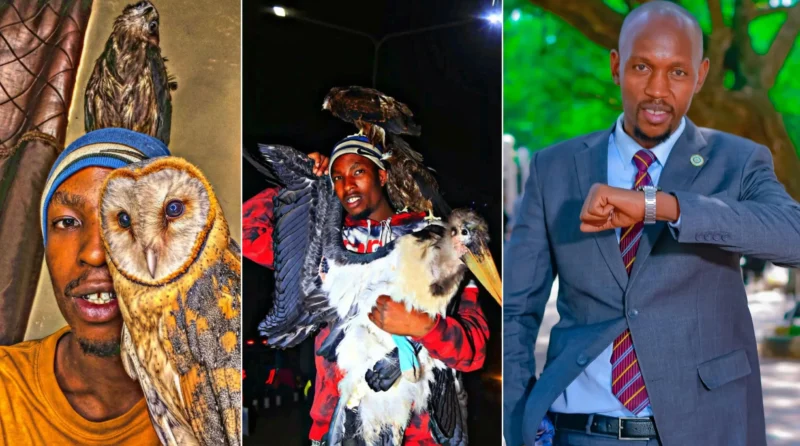




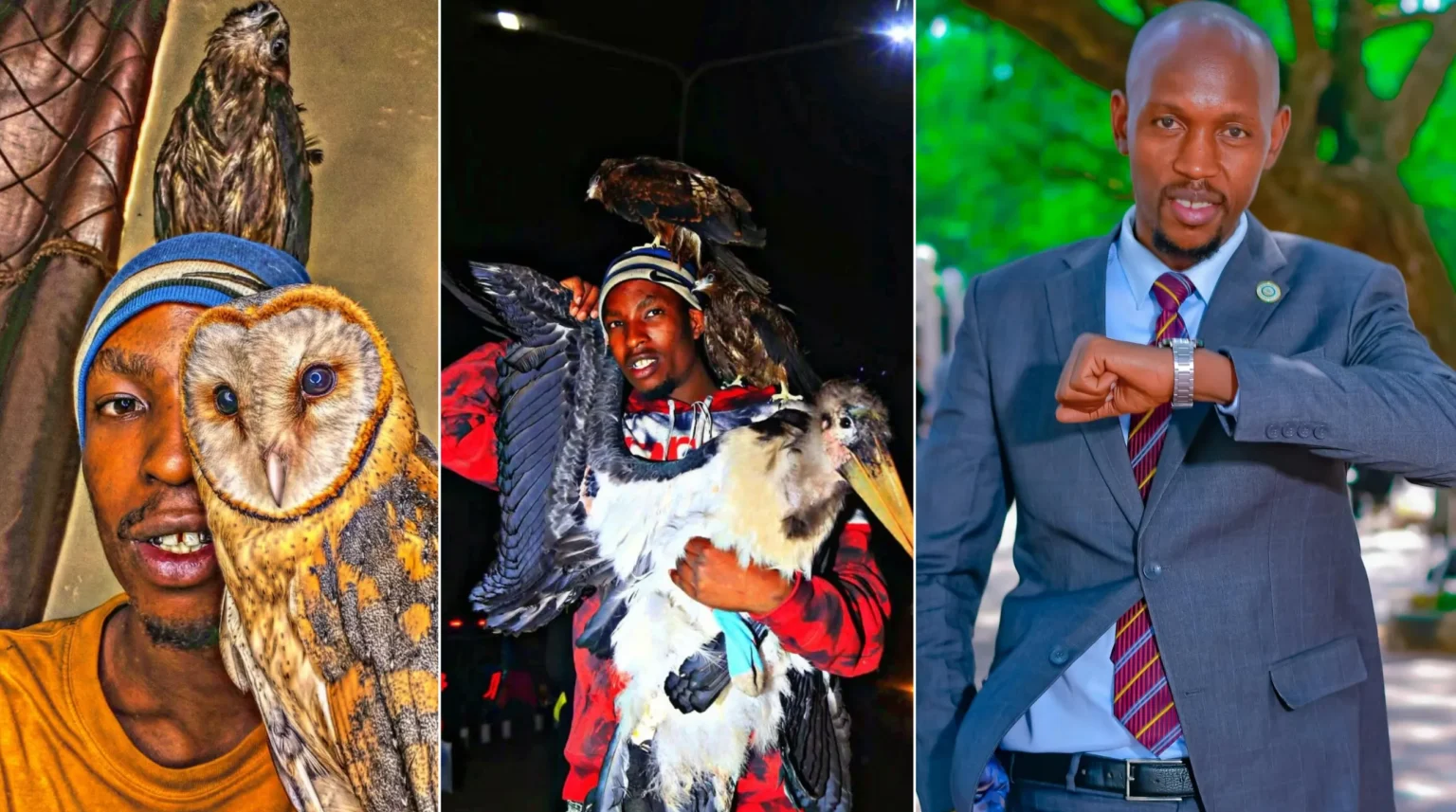
NAIROBI, Kenya — Nairobi County Chief Officer for Citizen Engagement and Customer Service Geoffrey Mosiria has issued a 24-hour ultimatum to social media personality Rodgers Oloo Magutha, popularly known as Nairobi Birdman, demanding that he surrender the birds in his possession or face possible legal action.
Mosiria announced the directive in a video shared on social media, raising concerns about public health risks and the legality of keeping certain wild birds in a private residence.
The county official warned that close contact between humans and wild animals could contribute to the spread of zoonotic diseases — infections that can be transmitted from animals to people.
“Mr Birdman, we understand you are creating content and keeping animals, but there are some animals that you are not allowed to keep at home under the law. Go and hand over those animals to Nairobi National Park,” Mosiria said.
Public health concerns
Mosiria linked his concerns to global disease outbreaks that have been associated with animal-to-human transmission, arguing that keeping wild birds in domestic settings could expose both the owner and the wider public to health risks.
He claimed that some of the birds frequently feed on carcasses and other potentially contaminated materials, increasing the risk of disease transmission.
The county official also referenced concerns over avian influenza, commonly known as bird flu, warning that an outbreak originating from close human interaction with birds could have far-reaching consequences.
“Birdman, I have given you 24 hours to surrender those animals. What doctors are advising is not something to ignore,” he said.
Who is Nairobi Birdman and what birds does he keep?
Nairobi Birdman has built a significant online following through videos and photographs showing him living closely with dozens of birds, many of which appear to be scavenger and wild species commonly found around Nairobi.
His social media content frequently features marabou storks, crows, kites, pigeons and other free-ranging birds feeding inside his home, perching on furniture and sharing meals with him.
Some videos also show large groups of birds gathering around him in residential areas and at dumpsites, where scavenger species are known to forage for food.
Wildlife experts note that while some birds may not be protected species, the keeping, handling or domestication of certain wild animals can be subject to regulation under Kenyan wildlife conservation laws.
Medical professionals weigh in
Mosiria’s warning comes days after Kenya Medical Practitioners, Pharmacists and Dentists Union (KMPDU) Secretary-General Dr Dennis Miskellah publicly called on the Ministry of Health to investigate the social media personality’s interaction with wild birds.
In a social media post, Dr Miskellah expressed concern about the potential spread of zoonotic diseases, particularly given Birdman’s widely shared videos showing him eating and spending extended periods with birds.
“While this may appear entertaining, it will cease to be amusing if he contracts and spreads zoonotic diseases. Public health officers should advise him accordingly because the public should not bear the consequences of such risks,” Dr Miskellah wrote.
Zoonotic diseases have become a major global public health concern in recent years, with health experts warning that close interaction between humans and wildlife can increase the risk of disease emergence and transmission.
Birdman dismisses concerns
Nairobi Birdman has rejected the warnings, insisting that he has spent years living among birds without experiencing any health complications.
Responding to criticism online, the content creator argued that his interaction with birds is part of his lifestyle and content creation activities.
“People say I’ll get sick eating with birds. Yet I eat among them, even at dumping sites where they feed on thrown-away food, and we’re still doing fine. Nature wastes nothing,” he wrote on social media.
His response has generated widespread debate online, with supporters praising his connection to nature while critics questioned the safety and legality of keeping wild birds in a residential environment.
Mixed public reaction
The ultimatum quickly became one of the most discussed topics on Kenyan social media, drawing a mixture of serious concerns and humorous reactions.
Some users backed Mosiria’s position, arguing that wildlife belongs in its natural habitat and that public health authorities have a responsibility to intervene where potential disease risks exist.
Also Read: Kenya Power steps in to protect birds from power line electrocution
Others responded with humour, creating memes and jokes about the 24-hour deadline while imagining how Birdman might negotiate with his feathered companions before complying with the directive.
The debate has also reignited broader discussions about wildlife conservation, animal welfare and public health responsibilities in urban settings.
Legal questions
While Mosiria has called for the birds to be surrendered, it remains unclear whether the county government has formally engaged the Kenya Wildlife Service (KWS) regarding the matter.
Under Kenyan law, certain wildlife species cannot be kept in private possession without appropriate permits and authorisation from wildlife authorities.
Experts note that any enforcement action would likely require the involvement of agencies mandated to regulate wildlife ownership and conservation.
As the deadline approaches, attention is now focused on whether Nairobi Birdman will comply with the directive, challenge the order, or seek clarification from wildlife authorities regarding the status of the birds in his care.
For now, the controversy continues to dominate online conversations, highlighting the intersection of social media fame, public health concerns and wildlife conservation in Kenya.