


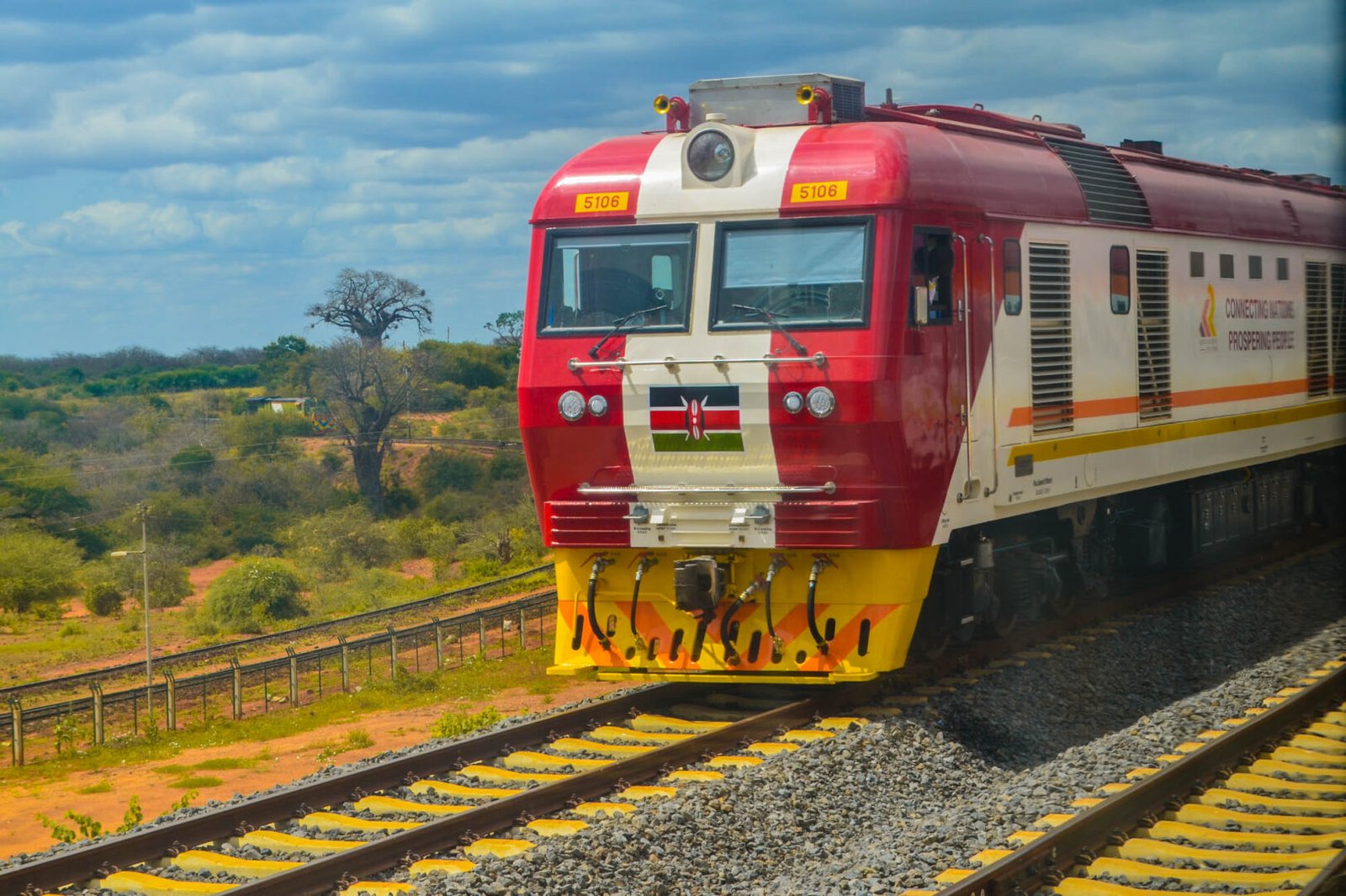
KAMPALA, Uganda — Uganda and Kenya have announced a raft of new strategies aimed at ensuring the seamless movement of goods through the port of Mombasa. As part of this new collaboration, Uganda is exploring the possibility of hiring locomotives from Kenya to address its own capacity constraints.
Benon Kajuna, the Managing Director of Uganda Railways Corporation (URC), described the current state of Uganda’s locomotives as “isn’t good,” noting that the country has only four “inefficient and unreliable” mainline locomotives operating the Kampala-border route.
“We have agreed with KRC that once we have capacity constraints, they can be able to send theirs to Uganda and then we can pay for the hire of these locomotives,” said Mr. Kajuna.
He added, “Currently and unfortunately, at URC we only have two locomotives while four are in the workshop and need about Ush12b; we have agreed to talk to government to get this money and buy spare parts.”
While URC is in the process of procuring 10 new locomotives, he noted that their delivery would take approximately two and a half years.
While Mr. Kajuna did not disclose the terms for the hire, Kenya Railways Corporation (KRC) Managing Director Philip Jamuhuri Mainga said that KRC has 56 locomotives and about 2,000 wagons operating on its Standard Gauge Railway (SGR) system.
“We want to have a seamless network so that Uganda, with its two locomotives, can have a seamless movement from Mombasa to Kampala, and that is what has been agreed and what our governments want,” Mr. Mainga said.
Mr. Kajuna stated that the strategies, which were formalized during the two neighboring countries’ quarterly meeting, also included the implementation of a joint tariff.
“When we are charging a customer, KRC and URC should not charge their own tariffs; we shall instead charge one tariff and agree on the division ratio. We may, for example, say that out of 100 percent, KRC takes 60 percent and URC 40 percent because of the distance involved,” he explained.
“By having a joint marketing tariff, customers who have been offloading at Malaba will now move their goods throughout and not shift from the road to the railway,” said Mr. Kajuna.
He also noted that URC and KRC had agreed that the “two operations departments put in more efforts so that we can create efficiency, meaning we should be able to work for 24 hours day and night.”
Another key strategy is enhanced complementarity in the movement of goods, which will see cargo move directly from the port of Mombasa to Kampala. Mr. Mainga emphasized Kampala’s strategic importance, noting that it is the central point for distributing cargo to other inland countries like the Democratic Republic of Congo, Rwanda, and South Sudan.
“We have experience of successfully operating the SGR for the past six years, and the ideas we have are the ones we are sharing with our colleagues at URC. We hope that in a short while, the strategies that we have put in place today will begin to work and there will be dynamics,” Mr. Mainga said. He also noted that the strategies aim to make both companies competitive and, most importantly, lower the cost of doing business.
Also Read: Kenya Railways suspends Lukenya and Syokimau train services
“For every one kilometre when you carry a 40-tonne container, you probably lose about KSh50,000 (about Ush1.3m per kilometre),” says Mr. Mainga. He added that in the last financial year, Kenya Railways moved 8.2 million tonnes of cargo, with the Metre Gauge Railway (MGR) transporting 1.2 million tonnes and the SGR carrying seven million tonnes.
The new strategies come ahead of the launch of Devki Steel Mills in Tororo District next month. Devki Steel Mills Managing Director Pandit Kaushik said they are setting up a major steel plant worth over $400m, which will also include a cement plant in Mbarara City.
“Our main aim is to make sure that we directly employ over 3,000 Ugandans; with both railway corporations, we want to transport all our raw materials and finished goods within Kampala and bring our raw materials from the port of Mombasa. With the railway collaboration, we want to move all this cargo by railway,” he stated.
