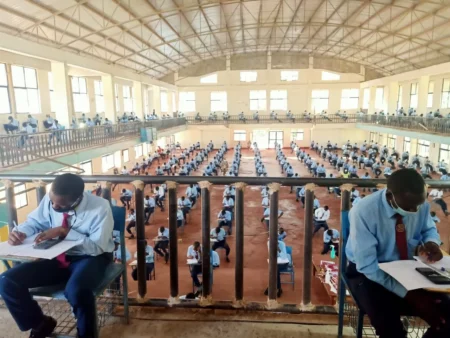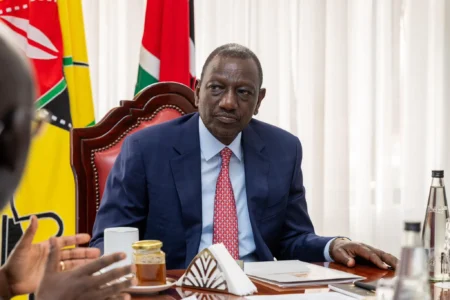





NAIROBI, Kenya — The government is under pressure to overhaul Kenya’s Grade 10 school placement system after Members of Parliament gave the Ministry of Education 30 days to develop a revised framework addressing admission challenges experienced during the first transition under the Competency-Based Education (CBE) system.
The directive, proposed by the National Assembly Departmental Committee on Education, comes amid concerns over how learners were allocated to senior schools during the inaugural placement exercise.
The committee wants the State Department for Basic Education to establish clearer placement guidelines before the next admission cycle in 2027, with particular attention to imbalances identified during the 2026 exercise.
The proposal was presented on November 27 as part of the committee’s submissions to the Budget and Appropriations Committee ahead of the 2027/28 financial year.
The development could have significant implications for families preparing for the next transition, particularly those concerned about school choices, learning pathways and whether available senior school facilities can accommodate learners fairly.
However, the proposed review does not mean that the government has already changed the current placement rules or cancelled existing admissions.
Why MPs want the placement system reviewed
The first Grade 10 transition under CBE exposed challenges in matching learners with their preferred senior schools, academic interests and available learning facilities.
Under the new curriculum, learners progress from junior school into senior school, where they pursue different pathways according to their interests, abilities and career aspirations.
The placement process must therefore balance academic performance, learners’ choices, school capacity, available facilities and regional considerations.
The education committee, chaired by Tinderet MP Julius Melly, says the government needs a revised framework that addresses the imbalances experienced during the previous exercise.
Although the committee has called for clearer rules, it has not publicly provided a comprehensive breakdown of every placement problem it wants the ministry to resolve.
This leaves important questions about how the revised framework will address learners who miss out on their preferred schools, those allocated to distant institutions and families concerned about whether school placements reflect their children’s chosen pathways.
How Grade 10 placement is currently calculated
Under the existing CBE placement framework, three assessment components contribute to a learner’s placement score.
The Kenya Junior School Education Assessment (KJSEA) accounts for 60 per cent, while School-Based Assessments contribute 20 per cent. The Kenya Primary School Education Assessment (KPSEA) accounts for the remaining 20 per cent.
However, placement is not determined by examination performance alone.
The system also considers learners’ preferred senior schools, selected pathways, subject combinations, talents, aptitude, regional balance and the capacity of individual institutions.
Learners are expected to pursue one of three broad pathways: Science, Technology, Engineering and Mathematics (STEM), Social Sciences, or Arts and Sports Science.
The intention is to align education with individual strengths and interests while preparing learners for further education, training and employment.
But the system also faces a practical challenge: popular schools have limited admission capacity, meaning not every learner can necessarily secure a place at their first-choice institution.
Parents face uncertainty ahead of the next admission exercise
The proposed review comes at a time when families are seeking greater clarity about how senior school placements will be determined.
For parents, school allocation affects more than the name of the institution appearing on an admission letter.
It can determine the distance a child must travel, accommodation expenses, access to specialised learning facilities and whether a school offers the subjects required for a learner’s future ambitions.
The availability of teachers, laboratories, workshops, sports facilities and other infrastructure also influences the quality of education learners receive after placement.
A revised framework could therefore provide an opportunity to address inequalities between schools and improve transparency in the allocation process.
However, parents should not interpret Parliament’s recommendation as an immediate invitation to change existing placements. The proposed framework is intended to guide the 2027 exercise, subject to action by the ministry.
Education funding emerges as another major concern
Beyond school placement, MPs have raised concerns about the funding required to support the expanding education system.
The committee is seeking an additional KSh2.9 billion for primary school capitation and KSh41.2 billion for secondary education to address funding shortfalls.
It has also called for a separate budget allocation for learners with special needs and a nationwide assessment of public school infrastructure.
Also Read: Kenya proposes standardised school uniforms under CBE reforms
These requests highlight a broader challenge facing the CBE transition: placement reforms alone cannot guarantee quality education if schools lack adequate classrooms, specialist teachers, laboratories and learning materials.
The committee has also sought additional funding for national examinations, scholarships and teacher welfare, reflecting the financial demands associated with the expanding education structure.
What happens next?
The next major responsibility rests with the State Department for Basic Education, which must respond to Parliament’s proposed one-month timeline and develop a framework that can guide the 2027 senior school placement exercise.
The quality of the review will depend on whether the ministry consults parents, teachers, school administrators and education stakeholders before introducing changes.
It will also need to explain how the revised criteria will balance learner preferences with school capacity, academic performance and regional fairness.
For families, the central concern is whether the next placement exercise will offer a more transparent and predictable process.
As Kenya advances with the CBE transition, the government faces growing pressure to ensure that learners are not disadvantaged by weaknesses in school allocation, inadequate infrastructure or unequal access to educational opportunities.
The decisions made during the next review could shape how thousands of learners experience the transition into senior school.