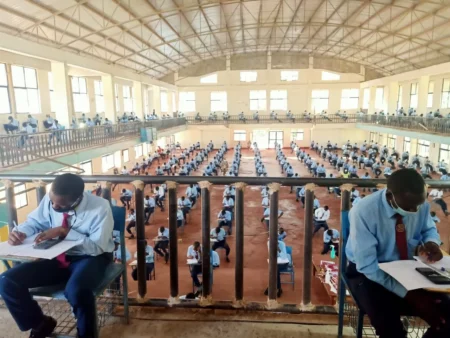





GULU, Uganda — Thousands of students at Gulu University in northern Uganda face the possibility of missing their end-of-semester examinations after failing to complete registration, with the institution warning that those who do not meet its requirements will not be allowed into examination rooms.
University records show that only 5,449 of the 8,302 students enrolled during the current academic year had completed registration by November 24, leaving 2,853 students — approximately 34 per cent of the student population — yet to finalise the process.
The warning comes just days before examinations begin on November 30 and run through December 13, placing pressure on affected students to settle outstanding tuition and functional fees before the assessment period.
Gulu University Communications Officer James Ojok Onono said completing registration through the institution’s Academic Management Information System (ACME) was a requirement for students seeking to sit their examinations.
“To tell you that you are a student at a university, you must be fully enrolled and fully registered in the ACME system. Only students who have registered will be allowed to sit examinations,” Onono said.
He explained that while enrolment itself is free, students must meet the required financial obligations, including tuition and functional fees, to complete the registration process.
The university has urged students with outstanding balances to clear them before the examinations begin, warning that the registration requirement will be enforced at examination venues.
University extends registration deadline
The university says it had already given students additional time to complete registration after the original deadline passed.
According to Onono, the institution’s guidelines required registration to close on October 15. However, management extended the period, allowing students who had not completed the process to continue attending lectures.
“According to the guidelines, by October 15, we should have closed the gate to students. But as a university, we have been lenient because we understand their circumstances and did not withdraw any services from them,” he said.
The decision meant students who had not completed registration could continue participating in academic activities while being given more time to meet the requirements.
However, the university has indicated that this flexibility will not extend to the examination period, raising the prospect that students who have attended lectures throughout the semester could be prevented from sitting their papers.
The institution has not publicly provided a breakdown of the 2,853 unregistered students by faculty, year of study or the amounts outstanding. It is therefore unclear how many are affected by financial difficulties, administrative delays or other registration-related challenges.
Financial pressure raises concerns over access to higher education
The situation highlights the financial pressures facing university students and households as the cost of higher education continues to shape access to academic opportunities.
For students unable to clear outstanding fees, missing an examination can have consequences beyond the immediate semester. It may disrupt academic progression, delay completion of a degree and potentially increase the financial burden associated with remaining at university for longer.
The issue also raises questions about the balance universities must maintain between enforcing financial regulations and ensuring students are not unnecessarily disadvantaged in their pursuit of higher education.
Gulu University’s position is that registration is a formal requirement for examination eligibility. But the scale of the outstanding registration figure puts the spotlight on whether affected students have adequate opportunities to resolve their financial and administrative difficulties before the examinations commence.
The university has not announced a separate arrangement for students who may be unable to pay before the examination period.
University prepares final opportunity for former students
In a separate development, Gulu University plans to give former students with incomplete academic programmes one final opportunity to return and complete their outstanding requirements.
The institution’s University Council approved the move as management prepares to transition to Competency-Based Education and Training (CBET) in the 2027/2028 academic year.
Onono said the change in curriculum would make it difficult to accommodate students seeking to complete programmes under the existing system because the old and new curricula have different requirements.
The planned amnesty will target former students who left the institution with pending retake examinations, incomplete coursework or outstanding research projects.
“If you know you have a pending paper at Gulu University, probably you left when you had not yet completed your research or because you had one or two retakes, you now have one final chance,” Onono said.
Also Read: Two suspects arrested over killing of Gulu University student
The university intends to publish an advertisement outlining the conditions and timelines for those seeking to benefit from the arrangement.
The latest opportunity follows the institution’s 22nd graduation ceremony, at which 77 students who had overstayed their programmes graduated after being readmitted to complete their studies.
It remains unclear how many former students are still eligible for the planned final amnesty.
Examinations deadline puts pressure on university management
With examinations scheduled to begin on November 30, the immediate challenge is whether the 2,853 students who had not completed registration by November 24 can meet the requirements in time.
The university’s warning has placed responsibility on affected students to resolve outstanding payments, but it also leaves important questions about the support available to those facing genuine financial hardship.
For the institution, enforcing registration rules is part of maintaining academic administration and financial accountability. For students, however, the consequences could be significant if outstanding fees prevent them from completing examinations for which they have spent an entire semester preparing.
The coming examination period will therefore test how the university balances its registration requirements with the need to protect students’ academic progress.