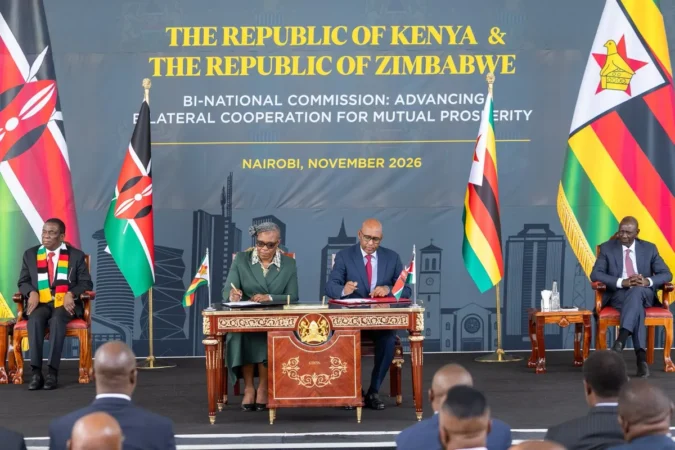




NAIROBI, Kenya — Kenya and Zimbabwe have agreed to deepen cooperation in journalism, news distribution and information technology, in a partnership aimed at strengthening African media institutions and expanding the reach of the continent’s stories.
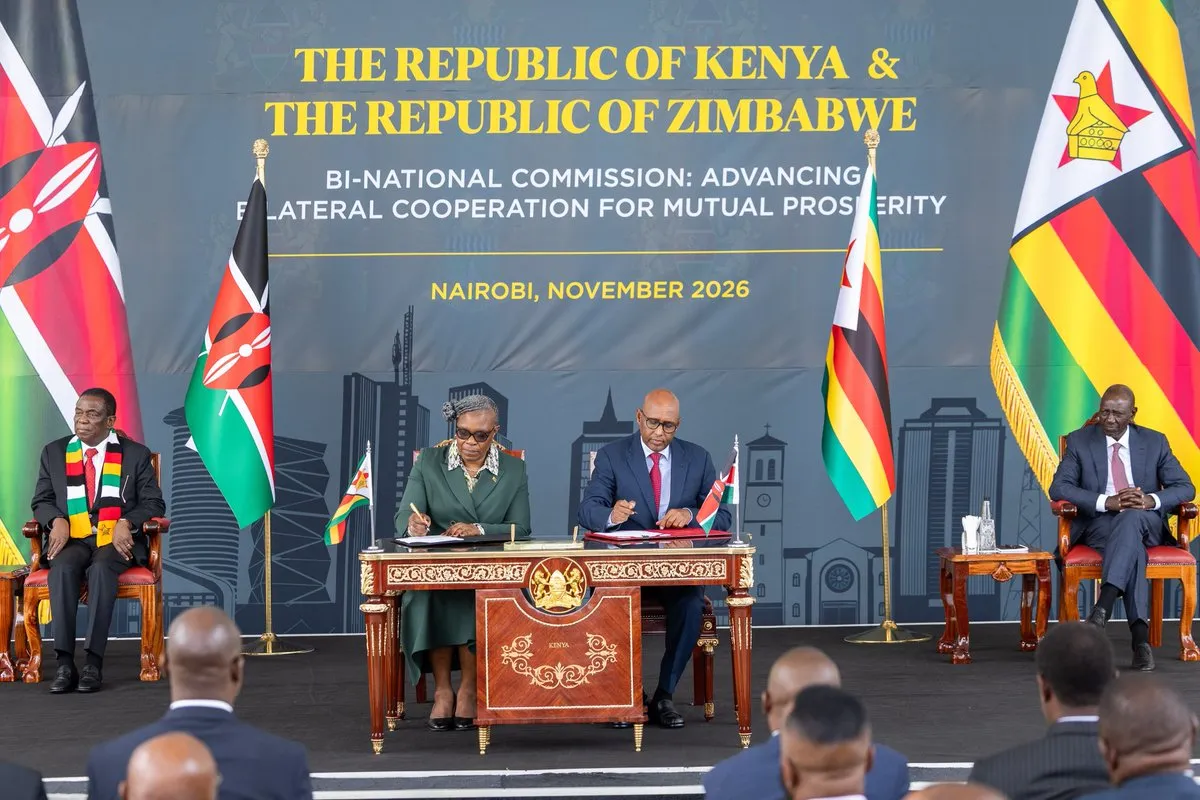
The agreement, formalised through a Memorandum of Understanding (MoU) between the Kenya News Agency (KNA) and Zimbabwe’s Zimbabwe Inter-Africa News Agency (NEW ZIANA), establishes a framework for closer collaboration between the two national news organisations.
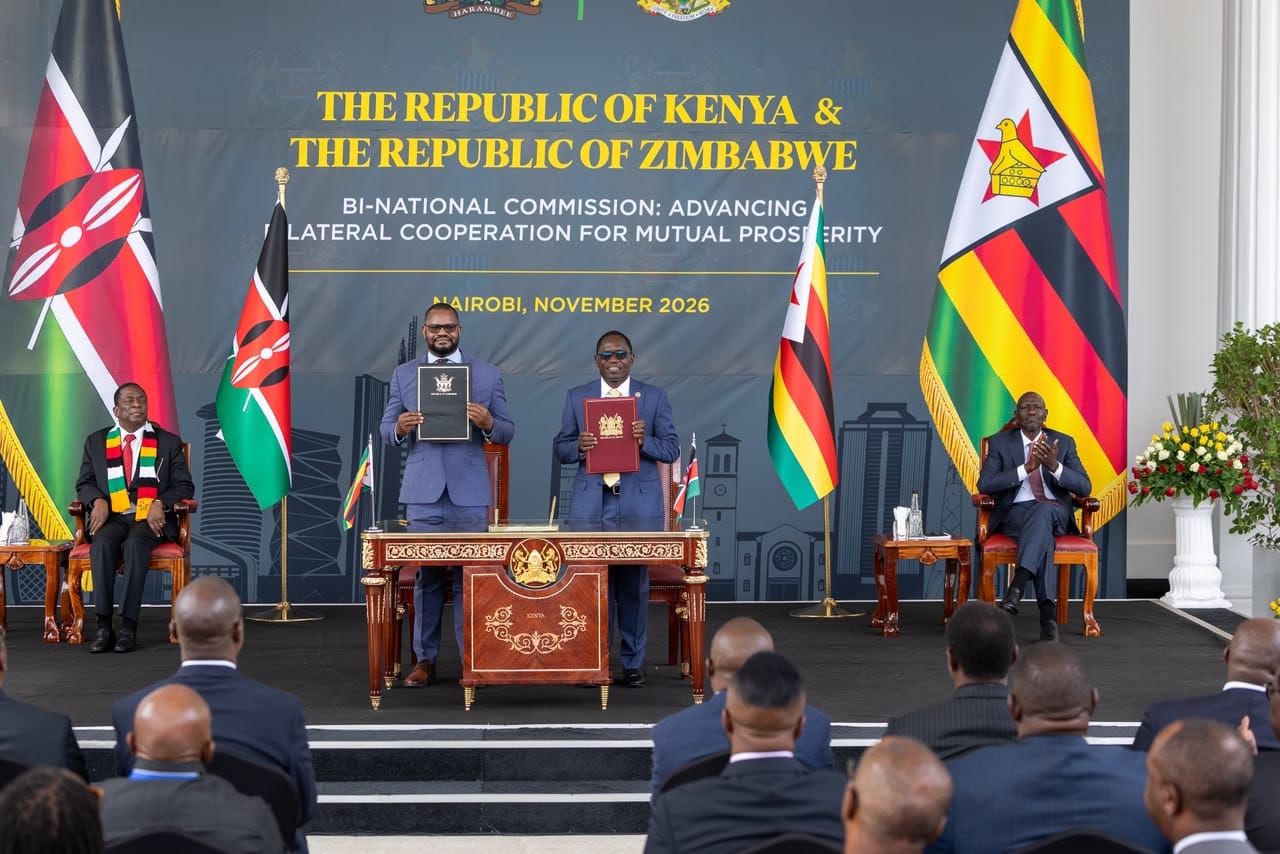
The deal was signed on Friday, November 27, 2026, at State House, Nairobi, during Zimbabwean President Emmerson Mnangagwa’s two-day State Visit to Kenya.
Kenya’s Principal Secretary for Broadcasting and Telecommunications, Stephen Isaboke, signed on behalf of Kenya, while Zimbabwe’s Permanent Secretary for Information, Publicity and Broadcasting Services, Nick Ndabaningi Mangwana, represented his country.
The agreement forms part of broader diplomatic engagements between Nairobi and Harare, which are seeking to translate their longstanding bilateral relations into practical cooperation across different sectors.
What the Kenya-Zimbabwe media agreement covers
Under the MoU, KNA and NEW ZIANA will establish mechanisms for exchanging news reports, photographs, videos and other multimedia content.
The partnership also provides for professional training, knowledge-sharing and the exchange of technical expertise, including collaboration in journalism and Information and Communication Technology (ICT).
Such cooperation could give journalists and editors in both countries greater access to regional reporting networks, improve multimedia production and make it easier to distribute stories across national borders.
For the two agencies, the arrangement also creates an opportunity to broaden coverage beyond domestic events by accessing reporting and content produced by their counterparts.
However, the agreement’s practical impact will depend on how effectively the agencies implement the proposed exchanges, professional programmes and technical collaboration.
Africa seeks greater control of its media narratives
The partnership comes amid wider calls for African media organisations to strengthen their capacity to report on the continent’s affairs from local perspectives.
African countries frequently feature in international news coverage through stories about political instability, conflict, economic difficulties and humanitarian emergencies.
While these issues remain important, media advocates have long argued that the continent’s development, scientific advances, business opportunities, cultural achievements and policy innovations also deserve greater international visibility.
Speaking at the signing, Isaboke emphasised the importance of cooperation among African media institutions in enabling the continent to tell its own stories, influence how its affairs are presented and showcase its development.
The argument behind the partnership is that stronger collaboration between African news agencies can expand the flow of information across borders while improving access to reporting generated within the continent.
For Kenya and Zimbabwe, sharing content and professional expertise could also help address some of the financial and technical challenges facing national news organisations, particularly in an increasingly competitive digital media environment.
State media cooperation and the digital news economy
The agreement also places technology and professional development at the centre of the partnership.
News organisations are increasingly required to deliver information across multiple platforms, including websites, social media, mobile applications, television and digital video services.
This has increased the demand for journalists who can produce accurate, timely and engaging multimedia content while adapting to changing audience habits.
Through the proposed exchange of technical knowledge and professional training, KNA and NEW ZIANA could strengthen their capacity to respond to these changes and improve the distribution of African news content.
Also Read: Kenya government confirms plan to use influencers to promote its programmes
The partnership may also create opportunities for greater collaboration in covering regional developments, government policies, trade, investment and cultural exchanges between the two countries.
Nevertheless, stronger institutional cooperation must also be matched by credible journalism, editorial professionalism and public accountability if the partnership is to deliver lasting benefits to audiences.
A wider step in Kenya-Zimbabwe relations
The signing adds a media and information dimension to the broader diplomatic relationship between Kenya and Zimbabwe.
President Mnangagwa’s State Visit from November 26 to 27, 2026, provided an opportunity for the two governments to formalise areas of cooperation and reinforce their political and economic engagement.
Beyond the immediate agreement between the two news agencies, the partnership reflects a wider African integration agenda that seeks to strengthen cooperation among institutions, share expertise and increase connections between countries.
For audiences in both nations, the potential benefit lies in improved access to news and perspectives from across the continent rather than relying predominantly on coverage produced outside Africa.
Whether the agreement achieves that ambition will ultimately depend on its implementation, the quality of content exchanged and the extent to which the two agencies turn the commitments into sustained professional cooperation.