



NAIROBI, Kenya — Kenya is identifying and rescuing more victims of human trafficking, including citizens exploited in forced labour operations abroad, but its efforts to prosecute traffickers are weakening, according to a US government assessment.
The report paints a troubling picture of a country making progress in identifying and repatriating victims while struggling to hold those responsible for their exploitation accountable.
The sharpest decline was recorded in convictions, which fell from 21 in the previous reporting period to just six, despite a slight increase in the number of trafficking cases investigated.
The assessment also raises concerns over alleged corruption and official complicity, including accusations involving government officials, law enforcement personnel and individuals linked to overseas recruitment agencies.
The findings renew questions about the effectiveness of Kenya’s efforts to protect migrant workers, regulate the recruitment industry and dismantle criminal networks profiting from human exploitation.
Trafficking convictions fall despite more investigations
Kenyan authorities investigated 43 human trafficking cases in 2025, compared with 42 in 2024, according to the report.
However, the number of prosecutions dropped sharply from 44 in the previous reporting period to 14.
The government reported prosecuting eight sex trafficking cases and six cases involving unspecified forms of trafficking. A further 103 prosecutions remained ongoing.
The US assessment was critical of the overall law enforcement response, concluding that the government had reduced its efforts to combat human trafficking.
“The government decreased anti-trafficking law enforcement efforts,” the report stated.
Of the six convictions secured during the reporting period, five involved sex trafficking and one concerned forced labour.
Two sex traffickers received 30-year prison sentences, while three others were sentenced to 20 years. The individual convicted of forced labour received a 10-year sentence.
Kenya’s Counter-Trafficking in Persons Act of 2010 provides for penalties ranging from 30 years’ imprisonment to life imprisonment, a fine of at least Ksh30 million, or both.
However, an amendment intended to remove the option of imposing a fine instead of imprisonment remained unapproved for the fifth consecutive reporting period.
The decline in convictions raises concerns about the country’s ability to translate investigations into successful prosecutions, particularly as trafficking networks continue to exploit vulnerable jobseekers.
Corruption allegations raise concerns over official complicity
Beyond the declining conviction figures, allegations of official involvement in trafficking-related activities emerged as one of the report’s most serious concerns.
The assessment identified corruption within government institutions as a major obstacle to investigating trafficking offences, identifying victims and enforcing existing laws.
Three Ministry of Labour officials were investigated over allegations that they accepted bribes to facilitate potential trafficking crimes involving migrant workers travelling to the Middle East.
The report also cited allegations that criminal syndicates worked with law enforcement and immigration personnel at border checkpoints and airports to facilitate the movement of trafficking victims into and within Kenya.
Media reports referenced in the assessment further indicated that more than 10 per cent of Kenyan government officials had ownership interests in private employment agencies, including companies recruiting workers for Saudi Arabia.
Some Kenyan embassy officials in Saudi Arabia were also accused of demanding sexual favours or money from women seeking assistance to escape abusive employers and return home.
Despite these allegations, the assessment found limited enforcement action against officials suspected of involvement in trafficking-related activities.
“Corruption and official complicity in trafficking crimes remained significant concerns,” the report stated.
The allegations raise difficult questions about accountability within institutions mandated to protect migrant workers, particularly where officials entrusted with enforcing the law are themselves accused of facilitating exploitation.
Kenyans rescued from overseas forced labour
While prosecutions declined, Kenya recorded progress in identifying trafficking victims and assisting those exploited both domestically and abroad.
Authorities identified 271 trafficking victims during the reporting period, comprising 260 victims of forced labour and 11 victims of sex trafficking.
The figure represented an increase from 195 identified victims in the previous reporting period.
Authorities also identified 1,021 potential trafficking victims.
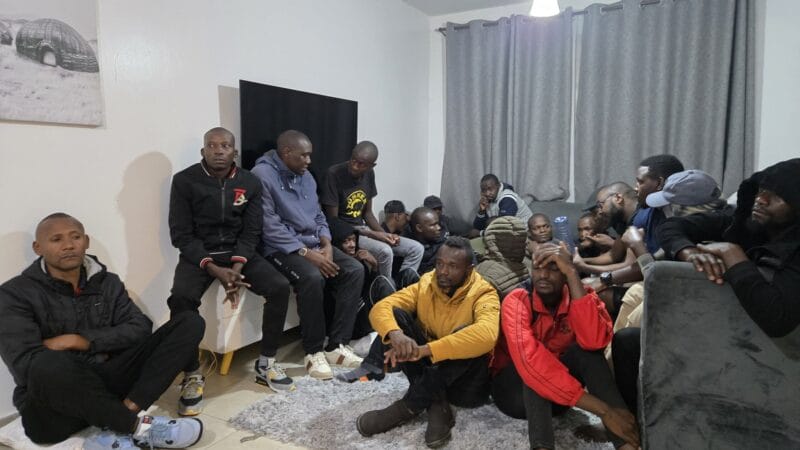
Among the significant developments was the repatriation of Kenyans exploited in online scam operations across Southeast Asia, where fraudulent overseas employment opportunities have increasingly exposed jobseekers to forced labour and criminal exploitation.
The Directorate of Criminal Investigations (DCI), working with the National Employment Authority (NEA), also pursued 13 investigations involving Kenyan recruitment agencies linked to 19 foreign recruitment agents in Burma.
In a separate operation, the DCI reported shutting down a scam centre operated by Chinese nationals in Kenya’s coastal region, where 150 Kenyan workers were employed.
The developments highlight the expanding nature of human trafficking, with criminal networks increasingly exploiting international recruitment channels and online job opportunities to lure unsuspecting workers into abusive conditions.
For many victims, what begins as an opportunity to secure employment abroad can end in forced labour, restricted movement and involvement in criminal activities against their will.
Gaps in protection leave trafficking survivors vulnerable
Despite the increase in identified victims, the US assessment found significant shortcomings in the assistance available to survivors.
The government referred 44 victims to support services, compared with none in the previous reporting period. Partnerships with non-governmental organisations also helped provide assistance to 483 victims, up from 321.
However, access to specialised services remained limited, particularly for adult survivors requiring accommodation and long-term support.
Male trafficking victims faced particular difficulties, with some being referred to homeless shelters while others were reportedly left without accommodation.
The report noted that protection services for adult victims remained inadequate.
Kenya operated one government shelter dedicated to trafficking survivors, alongside five additional facilities run by non-governmental organisations.
Plans to expand the capacity of the government shelter to accommodate up to 60 victims were delayed by funding constraints.
Financial support for direct victim assistance also declined. The National Assistance Trust Fund for Victims of Trafficking allocated approximately Ksh9.27 million during the reporting period, compared with Ksh20 million in the previous period.
The assessment further raised concerns about potential victims being penalised for immigration offences committed as a direct consequence of their exploitation.
Such gaps could discourage survivors from seeking assistance and undermine efforts to identify and investigate trafficking networks.
Overseas recruitment agencies face scrutiny
Kenya’s overseas employment industry remains a major area of concern, particularly as thousands of citizens continue to seek work opportunities in the Middle East and other foreign labour markets.
The National Employment Authority oversees more than 500 licensed recruitment agencies, but officials acknowledged that proxy ownership remains common.
Although the government increased inspections, training and public awareness campaigns, enforcement of recruitment regulations remained inconsistent across counties.
Also Read: Kenyan police foil trafficking plot, save 22 victims bound for Russia-Ukraine war
The report also found that some workers continued to incur recruitment fees and related costs despite regulations prohibiting employment agencies from charging workers recruitment fees.
The concerns come amid growing scrutiny of recruitment networks accused of misleading Kenyans with promises of lucrative overseas jobs before exposing them to exploitation.
Kenya retained its Tier 2 classification in the US assessment, indicating that the government was making significant efforts to meet the minimum standards for eliminating human trafficking but had not yet fully met them.
The government recorded improvements in victim identification, repatriation and prevention initiatives. However, declining convictions, allegations of official complicity and shortcomings in survivor protection remain significant obstacles.
Ultimately, the findings expose a critical weakness in Kenya’s anti-trafficking response: rescuing victims is not translating into stronger accountability for those who exploit them.
For Kenyans seeking employment abroad, stronger oversight of recruitment agencies, credible investigations, prosecution of suspected traffickers and adequate protection for survivors will be essential to ensuring that the pursuit of better economic opportunities does not become a pathway to exploitation.