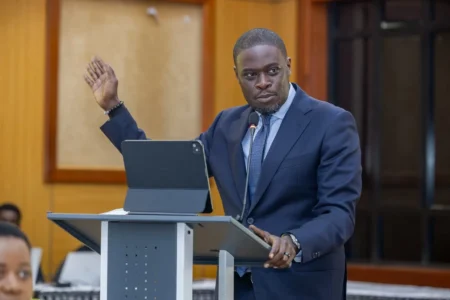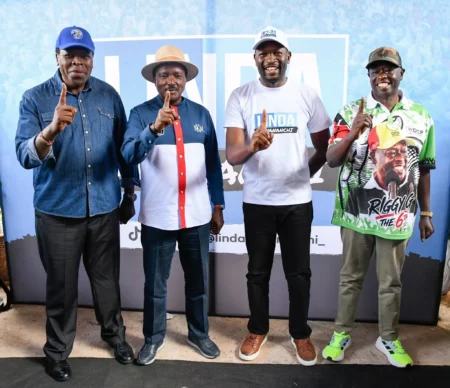
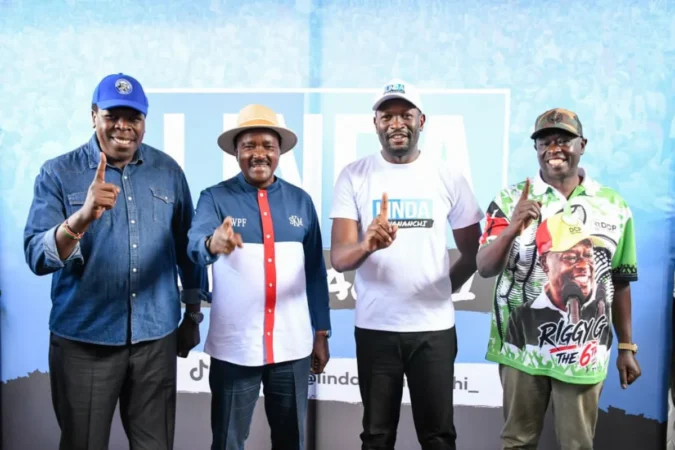



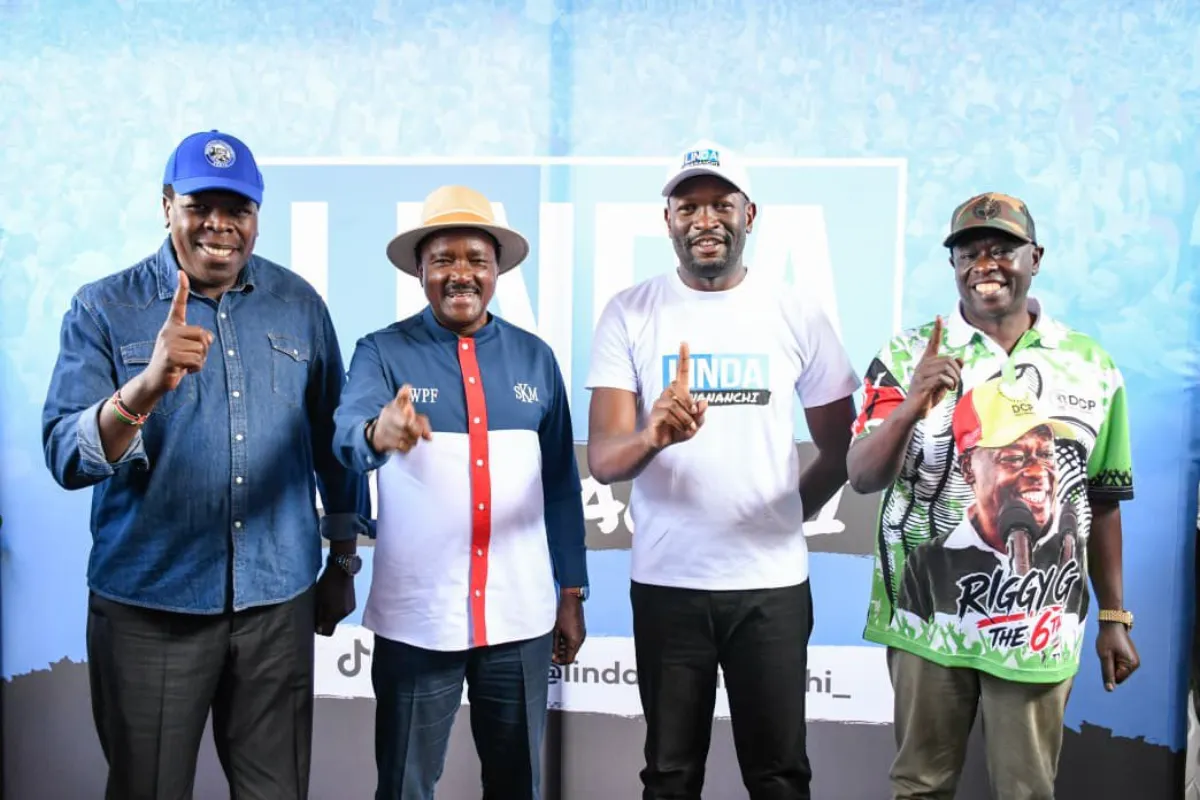
NAIROBI, Kenya — Nairobi Senator Edwin Sifuna, former Deputy President Rigathi Gachagua, Wiper Party leader Kalonzo Musyoka and Democratic Action Party of Kenya (DAP-K) leader Eugene Wamalwa are expected to hold a joint political rally in Kitengela, Kajiado County, on Sunday, November 8, 2026, as disagreements over the direction and leadership of the opposition continue to emerge ahead of the 2027 General Election.
Kajiado Senator Ole Seki Lenku announced the planned gathering on Wednesday, November 4, saying the four leaders would address supporters in Kitengela.
The rally comes amid growing differences among opposition figures over how to build a united political front capable of challenging President William Ruto in the next election.
Although Gachagua, Sifuna, Kalonzo and Wamalwa have increasingly appeared together at public engagements, other opposition leaders have been pursuing separate political activities, exposing competing approaches to coalition-building and the question of who should lead the opposition.
Gachagua’s proposal exposes opposition differences
The latest disagreements followed remarks by Gachagua suggesting that an alliance bringing together his political support base, Kalonzo and Sifuna could form a formidable force against Ruto in 2027.
The former Deputy President argued that the three political blocs had sufficient numbers to mount a serious challenge, while maintaining that other opposition leaders could join the arrangement.
However, the proposal triggered criticism from Jubilee Party leader Fred Matiang’i, who warned that an approach perceived to place a few political figures or communities at the centre of coalition negotiations could undermine opposition unity.
Speaking during an interview with NTV, Matiang’i described the approach as “majoritarian arrogance” and argued that the opposition risked alienating other leaders by allowing individual ambitions and ethnic considerations to dominate discussions.
“That majoritarian arrogance and that particular pride is precisely what is going to split the opposition and make it very difficult for the opposition to come together,” Matiang’i said.
He maintained that the 2027 contest should be based on ideas, policy proposals, leadership records and the ability to address the challenges facing Kenyans, rather than the numerical strength of particular communities.
Matiang’i has also called for an inclusive process to identify the opposition’s presidential candidate, saying he would support a candidate selected through an acceptable and respectful process.
Gachagua hits back at critics
Gachagua subsequently pushed back against criticism from Matiang’i and Democratic Party leader Justin Muturi, challenging them to demonstrate their political strength through grassroots mobilisation rather than demand influence in coalition negotiations.
At a meeting at his Wamunyoro residence in Nyeri on Tuesday, November 3, the Democracy for the Citizens Party (DCP) leader defended his approach, arguing that political influence in an election must be backed by demonstrable support from voters.
Also Read: Matiang’i warns Gachagua’s ambitions could split opposition ahead of 2027
“Get out and look for votes. You cannot lecture us when you are not getting out to look for votes. Kenyans are not stupid; they can see who is working and who is not,” he said.
He also insisted that he would not mobilise supporters only to hand the presidency to a candidate he had not agreed to support.
The exchange has exposed differences over the balance between grassroots mobilisation, regional voting blocs and an inclusive process for selecting a joint presidential candidate.
A separate opposition engagement
Matiang’i has in recent weeks appeared at political engagements alongside figures including Kiharu MP Ndindi Nyoro and People’s Liberation Party leader Martha Karua, reflecting a parallel set of consultations within the broader opposition.
The disagreements have also drawn in Muturi, who has cautioned that no individual or political community should claim ownership of the opposition or dictate the terms of cooperation.
The competing engagements do not necessarily amount to a formal split into separate coalitions, but they highlight unresolved questions over the opposition’s leadership structure, presidential candidate and strategy for the 2027 polls.
For the leaders expected in Kitengela, Sunday’s rally will offer another public platform to demonstrate their political cooperation as negotiations over a common opposition front continue.
Whether that cooperation can be translated into a broader agreement involving the other opposition figures remains an open question.