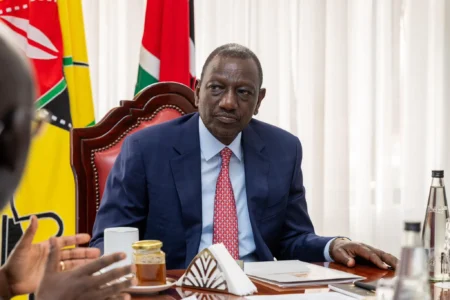



NAIROBI, Kenya — President William Ruto has urged African governments to align development commitments with available financing, warning that unfunded promises risk undermining public trust as he pushes for greater reliance on the continent’s financial institutions.
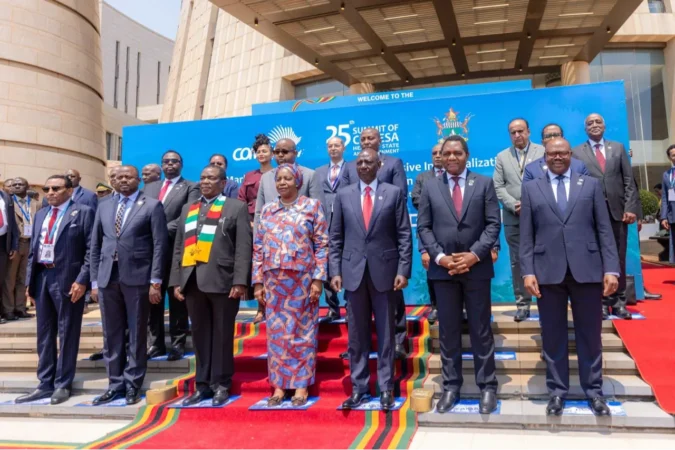
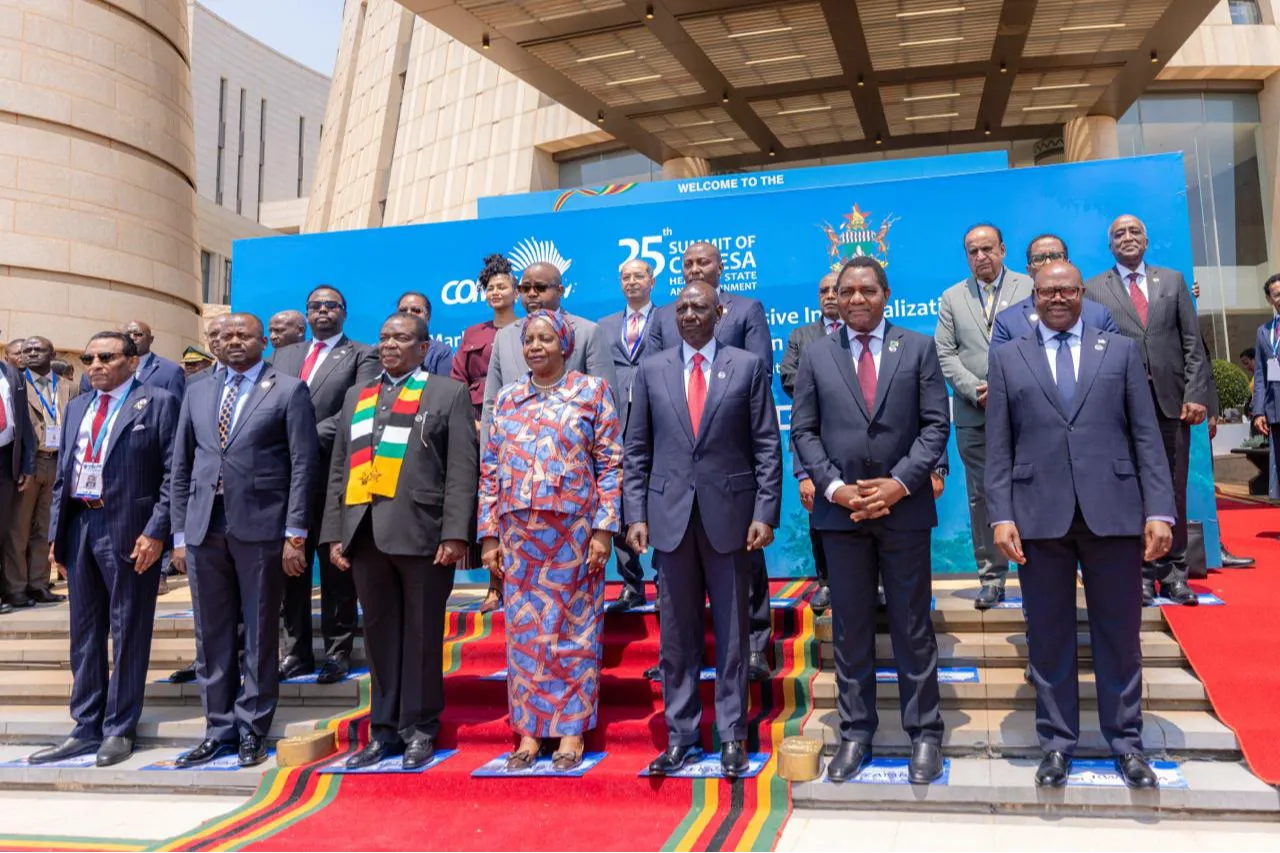
Ruto made the remarks on Thursday, October 22, 2026, while addressing the 25th Summit of the Common Market for Eastern and Southern Africa (COMESA) in Harare, Zimbabwe, where he handed over the bloc’s chairmanship to President Emmerson Mnangagwa.
“Every programme we agree upon must be matched by the resources to deliver it. Otherwise, our communiqués will promise what our budgets cannot pay for,” Ruto said.
The Kenyan president argued that African leaders must move beyond announcing ambitious development programmes at regional meetings and focus on securing the financing required to implement them.
His message comes as governments across the continent face competing demands for infrastructure, industrialisation, employment and public services, often amid constrained budgets and pressure to manage borrowing costs.
For Kenya, the debate carries particular significance as households and businesses contend with the cost of living, taxation and concerns about public debt, alongside calls for improved services and economic opportunities.
Ruto pushes African institutions to finance development
Ruto called for a shift towards mobilising Africa’s own financial resources, arguing that the continent has substantial domestic capital that could be channelled into productive investment.
He cited more than $4 trillion in African financial assets, including resources held by central banks, insurance companies and capital markets, questioning why major development projects still struggle to obtain affordable funding.
“Can we finance what we commit and can we deliver what we finance?,” he asked.
The President urged governments to make greater use of African financial institutions to support infrastructure, trade and industrial development rather than relying excessively on expensive external borrowing.
He pointed to Kenya’s increased shareholding in the African Export-Import Bank (Afreximbank), the Africa Finance Corporation and other regional financial institutions as part of efforts to strengthen Africa’s capacity to finance its priorities.
Ruto’s argument is that greater mobilisation of domestic capital could help African countries reduce their exposure to costly financing while retaining more of the economic benefits generated by investment on the continent.
However, the availability of financial assets does not automatically mean governments can access them for public projects. Mobilising that capital requires viable investments, effective financial institutions, investor confidence and financing arrangements that can manage risk and deliver returns.
$16 billion refinery highlights financing ambitions
Ruto also cited the planned $16 billion East African oil refinery in Kenya as an example of the scale of investment that African financial institutions could help support.
He said the project would be financed almost entirely by African financial institutions, presenting it as evidence of the continent’s potential to mobilise capital for major industrial ventures.
The refinery project, launched in Lamu in September by Nigerian industrialist Aliko Dangote alongside regional leaders, is intended to process up to 700,000 barrels of oil a day. Its proponents say it could strengthen regional energy security and reduce reliance on imported refined petroleum products.
The project is expected to take several years to complete. Its eventual impact will depend on construction, financing, infrastructure, environmental considerations and the economics of supplying and distributing petroleum products across the region.
Ruto used the project to reinforce his call for African countries to invest more heavily in processing their own natural resources rather than exporting raw materials and importing finished products.
“For too long, our engagement with the world has followed one script: we export raw materials, we import finished goods, and we borrow at a premium to make the difference,” he said.
“That script, I dare say, has run its course.”
Ruto calls for equal partnerships with foreign investors
The president urged international partners to invest in African industries and support local processing, arguing that economic relationships should create value on the continent rather than reinforce dependence on external markets.
“We do not want to be treated special; we want to be treated equal,” he said.
His remarks reflect a broader push for African economies to move up global value chains by manufacturing goods locally, creating jobs and retaining a greater share of the value generated from minerals, agricultural products and other natural resources.
Also Read: Ruto’s unfulfilled promises put his 2027 re-election bid under pressure
Ruto also called for stronger trade among African countries, arguing that regional markets could support businesses, expand industrial production and create more opportunities for workers.
The challenge, however, extends beyond financing. Trade barriers, infrastructure gaps, regulatory differences and limited industrial capacity continue to constrain commerce between many African economies.
COMESA trade grows as Ruto hands over leadership
Ruto said trade among COMESA member states had increased by 10.5 per cent to $14.7 billion, while exports to markets outside the bloc rose by 6 per cent to $212 billion.
He called for deeper regional economic integration and greater investment in industries that can supply goods to neighbouring countries, reducing dependence on imports from outside Africa.
COMESA brings together 21 member states and seeks to promote regional trade and economic cooperation through market integration and investment.
During the summit, Ruto handed over the bloc’s chairmanship to Zimbabwean President Emmerson Mnangagwa, ending Kenya’s year-long tenure at the helm of the regional organisation.
He also urged COMESA to accelerate work on a sustainable financing strategy to ensure that regional programmes have the resources required for implementation.
The central question, as African leaders pursue new development ambitions, is whether commitments made at summits can be translated into funded projects, functioning infrastructure, stronger industries and tangible improvements in citizens’ lives.
For Ruto, matching promises with financing is essential. Delivering measurable results will be the test of whether that approach can turn Africa’s financial potential into sustained economic progress.