


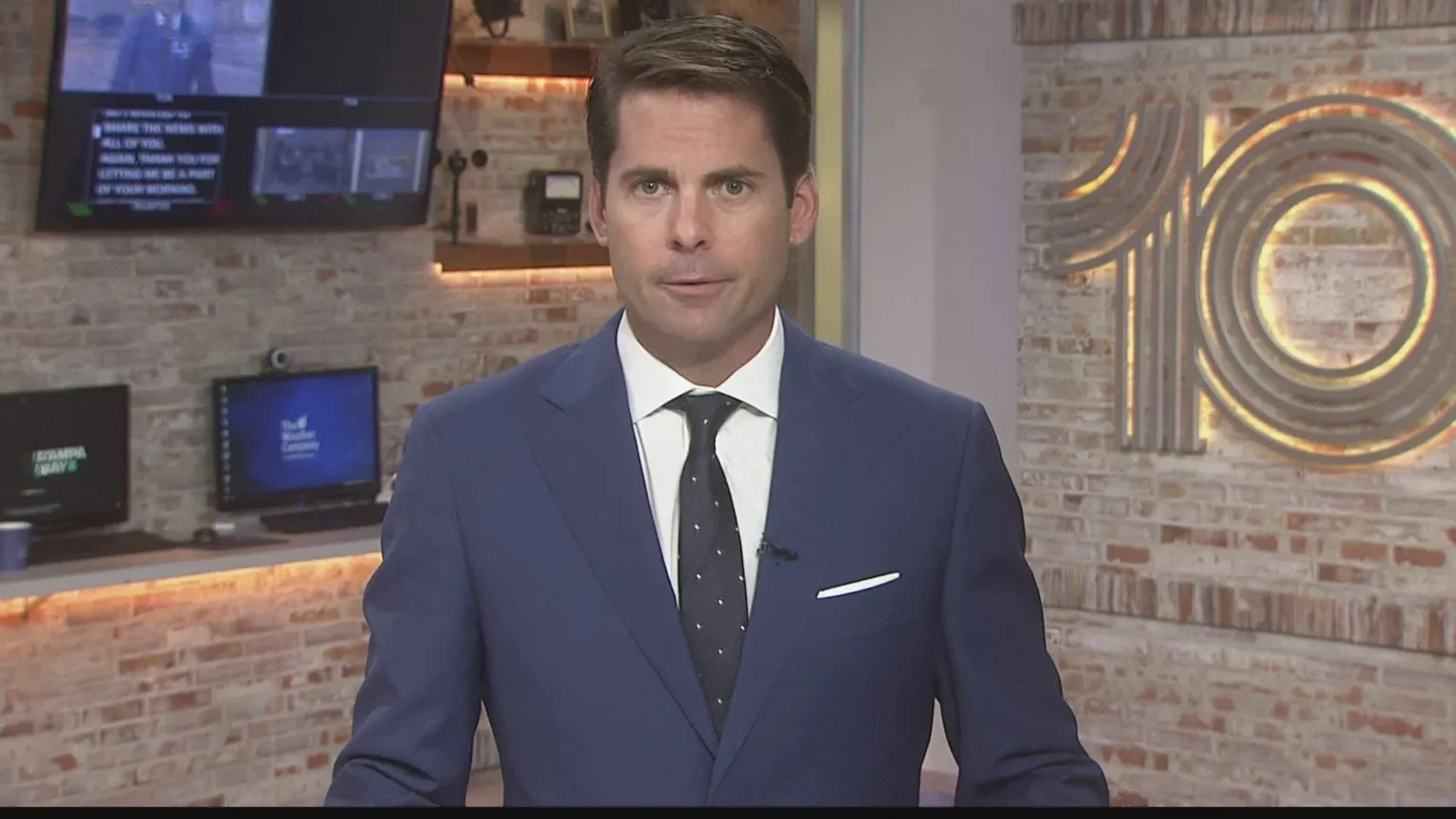
NEW YORK, United States — American television host Rob Finnerty has apologised to Kenyans following a backlash over remarks in which he suggested that immigration was making New York City resemble Nairobi.
Finnerty, who hosts the primetime programme Finnerty on the US television network Newsmax, acknowledged that he had misspoken after his comments prompted criticism on social media.
“I want to offer an apology to the people of Nairobi, Kenya. The passion you have for your city and homeland is amazing… We all make mistakes. I misspoke, and I am sorry to anyone I have offended,” he wrote in a post on X on Tuesday, October 13, 2026.
The apology followed a Newsmax broadcast in which Finnerty discussed immigration under former US President Joe Biden and argued that the arrival of migrants from developing countries had changed the character of American cities.
What Finnerty said about Nairobi
During the broadcast, Finnerty criticised the Biden administration’s immigration policies and referred to migrants from Africa, the Middle East and South America.
“Joe Biden let millions of people from third-world countries Africa, the Middle East, South America, we have no idea where these people are from,” he said.
He added: “They move to blue sanctuary cities, and the cities then start to look like Nairobi, than New York City.”
Finnerty also compared the situation in the United States with immigration challenges in the United Kingdom and France, saying: “What is happening in the UK and France is happening here already.”
The remarks drew criticism from Kenyans who objected to the use of their capital as a negative benchmark in a debate about immigration and urban conditions in the United States.
Some questioned the basis for the comparison, particularly because people interviewed in the Newsmax segment identified themselves as coming from countries including Guatemala, Bangladesh, Burkina Faso, Senegal, Mexico and Guinea—not Kenya.
Kenyans demand a televised apology
Finnerty’s comments prompted social media users to challenge his portrayal of Nairobi, with some sharing photographs and videos of the capital’s skyline, commercial districts and infrastructure.
Others argued that problems in New York should be discussed on their own merits rather than using an African city as a shorthand for decline.
Also Read: Outrage in Nairobi as mature trees felled along State House Road
Although Finnerty’s apology acknowledged the offence caused, some Kenyans said a statement on social media was insufficient and demanded that he apologise during a live television broadcast, where the original remarks were made.
The response has also renewed discussion about how African cities are portrayed in international media, particularly in political debates about migration, public services and urban development.
Nairobi at the centre of a US immigration debate
The controversy emerged from a wider American political debate over immigration, border enforcement and so-called sanctuary cities—jurisdictions that limit certain forms of cooperation with federal immigration authorities.
Finnerty’s comments linked immigration to what he described as deteriorating conditions in some American cities. However, the comparison with Nairobi was a political characterisation rather than evidence that migrants were responsible for any particular urban problem.
The episode illustrates how commentary on domestic US politics can provoke international reactions when foreign countries or cities are used as negative comparisons.
For Nairobi residents and other critics, the issue was not simply Finnerty’s criticism of immigration policy, but the way he invoked their city to make his argument.
His apology acknowledged that his remarks had caused offence, but the demand for a televised response suggests that some critics want him to address the controversy on the same platform where the original comments were broadcast.