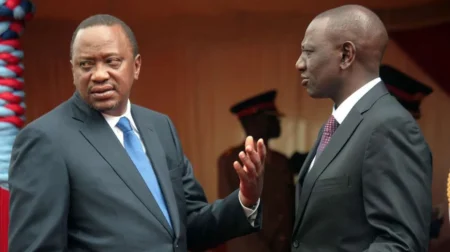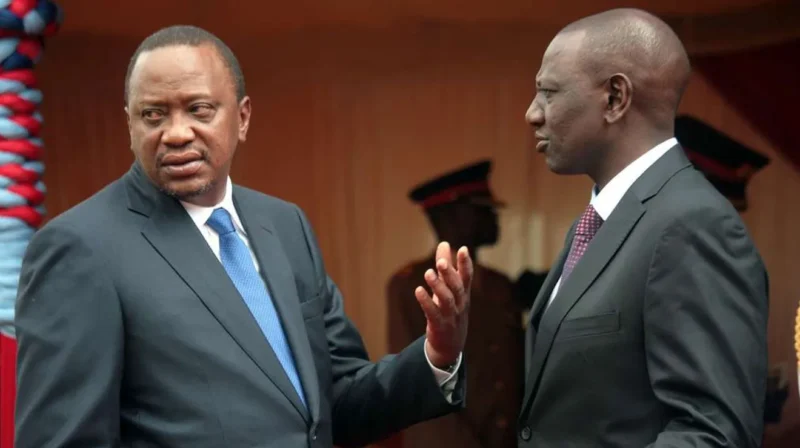



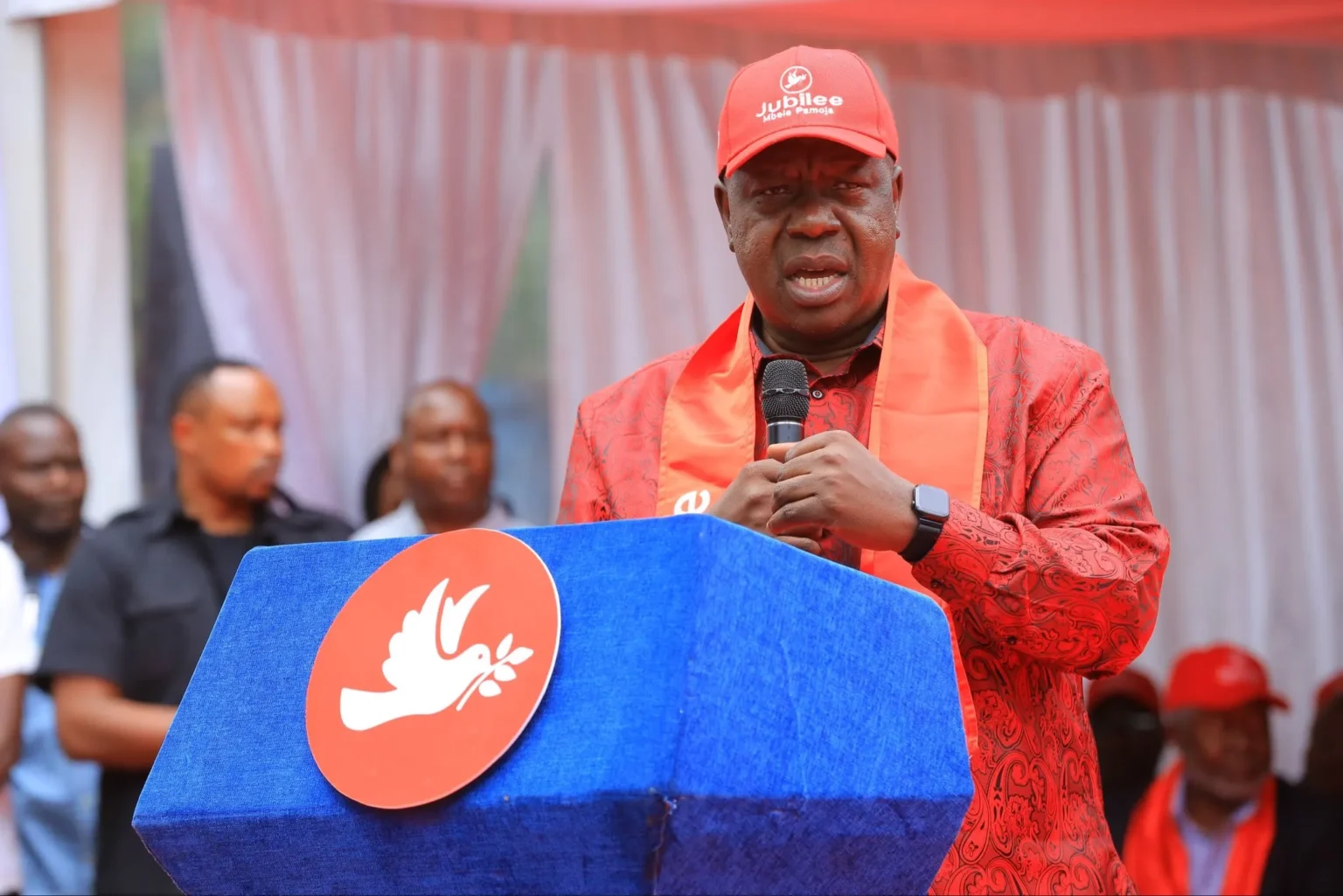
NAIROBI, Kenya — Former Interior Cabinet Secretary Fred Matiang’i has questioned why President William Ruto continues to target his predecessor, Uhuru Kenyatta, accusing the Head of State of using political figures as excuses for challenges facing his administration.
Matiang’i’s remarks follow renewed criticism of Uhuru by Ruto, who has accused the retired president of supporting opposition politicians seeking to challenge his re-election bid in 2027.
Speaking on the dispute, Matiang’i questioned why Ruto was directing his criticism at a former president who left office in 2022 rather than addressing the opposition preparing to contest the next General Election.
“Unajua ni style ya Mheshimiwa Rais kila wakati kutafuta kisingizio,” Matiang’i said, suggesting that the President repeatedly looks for excuses.
He argued that Uhuru had retired from the presidency and was no longer responsible for the day-to-day running of the government.
Matiang’i also pointed to Uhuru’s involvement in regional peace initiatives, questioning why Ruto continued to draw him into domestic political disputes while he was engaged in diplomatic work.
Ruto renews criticism of Uhuru
Ruto has recently intensified his criticism of Uhuru, accusing the former president of betraying their political understanding and backing rivals seeking to challenge him in the 2027 election.
During political engagements in the North Rift, the President said he had supported Uhuru’s presidential ambitions in 2013 and 2017 but felt abandoned when he sought the presidency in 2022.
Ruto has also accused Uhuru of sponsoring opposition politicians, claims that have become a recurring feature of the political exchanges between the two leaders. These remain allegations by the President, rather than independently established findings.
The dispute reflects the breakdown of the political partnership that brought the two leaders together in the Jubilee administration before their relationship deteriorated ahead of the 2022 election.
Uhuru backed Raila Odinga in that contest, while Ruto ran against the opposition leader and won the presidency.
The continuing exchanges have placed the former president at the centre of political manoeuvring ahead of the 2027 election, as opposition figures seek to build a challenge to Ruto’s administration.
Matiang’i invokes the presidency’s national role
Matiang’i also argued that the presidency carries constitutional responsibilities that extend beyond political parties and electoral competition.
“Tunaheshimu ofisi ya rais. Kwa katiba yetu ya Kenya, ofisi ya rais ni ofisi kubwa,” he said, emphasising the importance of respecting the institution of the presidency.
He maintained that the President should represent all Kenyans, regardless of their political, ethnic or religious affiliations.
His remarks frame the dispute as a question of leadership and national unity, with Matiang’i arguing that the Head of State should concentrate on governing rather than repeatedly engaging his predecessor in political exchanges.
The Constitution establishes the President as Head of State and Government and assigns the office responsibilities that include safeguarding national unity and promoting the interests of the Republic.
Uhuru continues regional peace efforts
Uhuru has remained involved in diplomatic initiatives since leaving office, including African Union-led efforts to address the conflict in eastern Democratic Republic of Congo.
An African Union delegation that included Uhuru held consultations with representatives of the AFC/M23 movement in Goma on October 5, 2026, as part of efforts to advance the eastern DRC peace process. The delegation subsequently held talks with Rwandan officials in Kigali.
Also Read: Ruto accuses Uhuru of betrayal, tells former president to retire
The African Union’s Panel of Facilitators said the engagements were intended to support mediation efforts and strengthen progress towards peace in the region.
Uhuru’s diplomatic role provides context for Matiang’i’s argument that the retired president has responsibilities beyond Kenya’s domestic political contest.
However, his participation in peace initiatives does not, by itself, resolve the political dispute over whether he is supporting opposition figures at home.
Political tensions build ahead of 2027
The latest exchange highlights the growing contest over Uhuru’s political influence as Kenya approaches another election cycle.
Ruto’s supporters have accused the former president of helping organise or finance opposition efforts, while critics of the administration have questioned why the President continues to focus on his predecessor.
Matiang’i’s intervention adds to that criticism, placing emphasis on the President’s responsibility to address national concerns and compete with political opponents on the basis of governance and performance.
The claims and counterclaims are likely to remain part of the political debate as parties and prospective candidates position themselves ahead of the 2027 General Election.
Neither the accusations against Uhuru nor Matiang’i’s assessment of Ruto’s motives should be treated as established fact without supporting evidence.
The central issue remains a political dispute over the former president’s influence and the direction of the opposition ahead of the next election.