
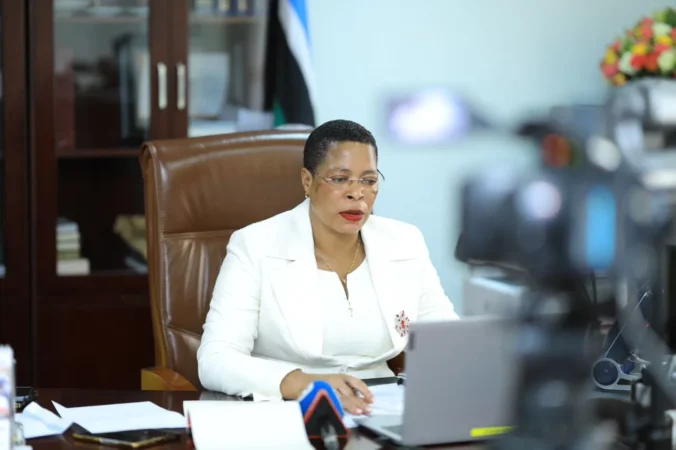


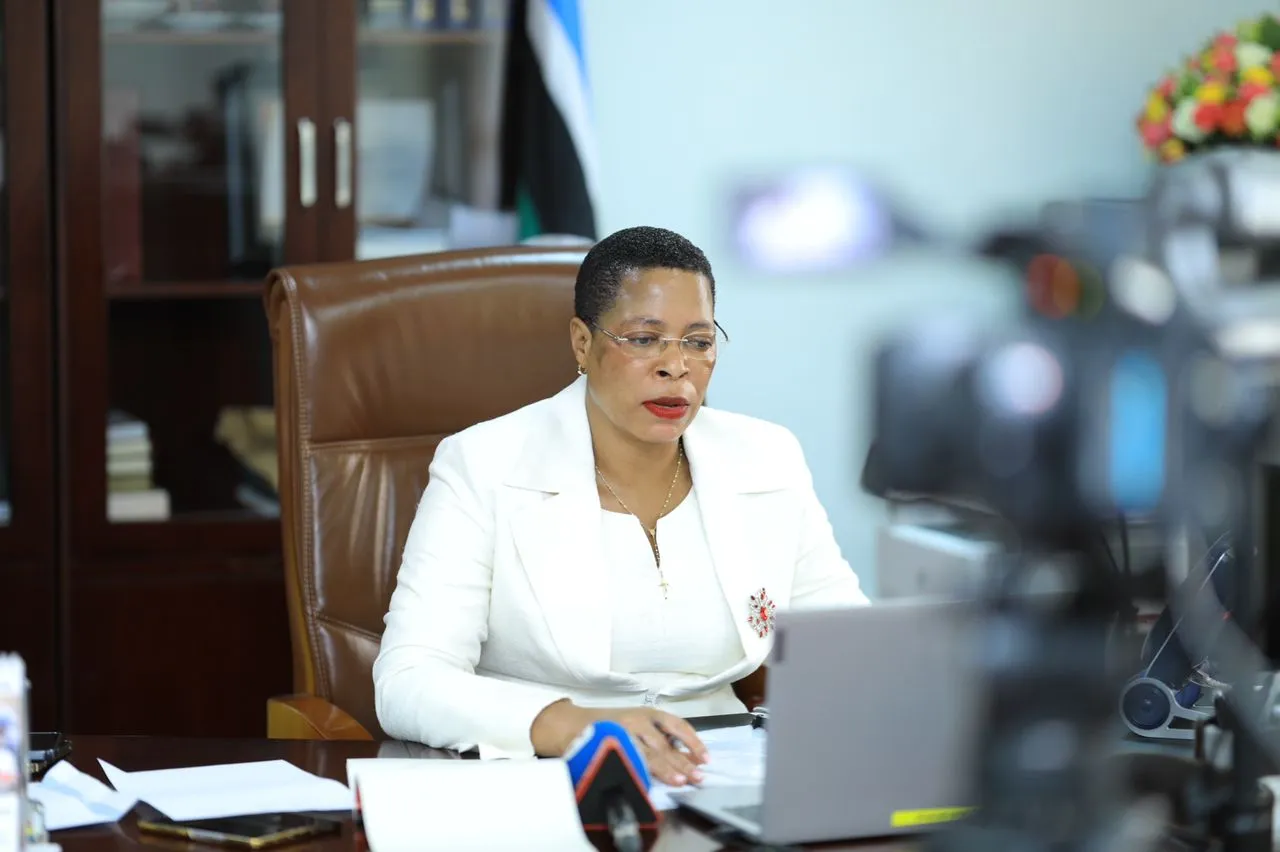
KAMPALA, Uganda — A prominent X account formerly used by Uganda’s former Speaker of Parliament, Anita Annet Among, has been rebranded as Global Africa Brief, raising questions about who controls the profile and how its established audience has been transferred to a new media identity.
The account, previously operating under the handle @AnitahAmong, now uses @GlobalAfricaHQ and identifies itself as Global Africa Brief, a platform covering African political, economic and social developments.
Reports published on October 11 and 12, 2026, indicate that the account retains its original numerical user ID, 1325766248458809351, alongside its reported November 2020 creation date and approximately 614,000 followers. The profile now links to the website globalafricabrief.com.
The continuity of the numerical identifier is a significant technical indicator that the profile has been renamed rather than replaced by a newly created account. However, it does not establish who authorised the change, whether control was voluntarily transferred or whether a financial transaction took place.
The account’s previous posts have also disappeared, removing an easily accessible archive of communications associated with Among’s political career.
Neither the disappearance of the posts nor the change of branding, on its own, proves that the account was compromised or that any wrongdoing occurred.
Remmy Bahati linked to emerging news platform
Ugandan journalist Remmy Bahati has been linked to the development of Global Africa Brief through her public references to building the platform and her contributions to its website.
Bahati, a former NBS Television journalist based in the United States, has publicly described herself as a founder of Global Africa Brief. In a September 2026 post cited by Watchdog Uganda, she referred to her work engaging African leaders as the initiative continued to develop. She has also published articles on the platform and referenced its X account.
The website presents Global Africa Brief as a news-oriented operation covering developments across the continent and international affairs. Its published material includes reporting and commentary on politics, economic development and regional issues.
However, Bahati’s publicly documented association with the news initiative does not independently establish that she owns the X account, negotiated its transfer or participated in any transaction involving Among.
No publicly documented agreement or direct confirmation from either party has established the circumstances under which the account changed hands, if it did.
That distinction is important because the creation of a media brand and the control of an established social media profile are separate questions. A journalist may establish a publication without necessarily owning every account used to promote it.
Deleted posts leave questions about account history
The removal of the account’s previous posts has made it more difficult for followers and researchers to compare its former political messaging with its current editorial output.
During her tenure as Speaker and as the Bukedea District Woman MP, Among used social media to communicate with the public and share political and parliamentary updates. The rebranding has replaced that identity with a platform presenting itself as a source of news about Africa.
The account’s reported follower count is particularly significant because it represents an established audience accumulated before the current branding appeared.
That audience now encounters a different name, description and apparent editorial purpose without a readily accessible archive explaining the transition.
The change illustrates how a social media account can carry an existing audience into an entirely different communications role. Followers acquired through a politician’s public profile may remain attached to the account even after it becomes a news platform.
Such continuity does not necessarily indicate misconduct. However, it raises questions about transparency, audience expectations and the distinction between an individual’s political communications and a publication’s editorial identity.
Without a public explanation from the parties involved, it remains unclear whether followers were informed about the change or whether the account’s previous communications were preserved elsewhere.
Uganda has experienced a separate account takeover
The uncertainty surrounding Among’s former account recalls a documented incident involving Uganda’s Parliament in May 2023, when the legislature lost control of its official Twitter account.
Chris Obore, then Parliament’s director of communication and public affairs, confirmed that unknown actors had hacked the account and that efforts to recover it had failed.
Parliament subsequently created a replacement account to continue providing official updates and engaging with the public.
The incident demonstrated the potential disruption when an institution loses access to an established social media channel, particularly one used for official communications.
However, the two cases are not equivalent.
In the 2023 incident, Parliament publicly acknowledged that its account had been hacked. In Among’s case, the available reporting establishes a change of handle and branding, alongside the reported continuity of the account identifier, but does not independently verify an intrusion.
A voluntary rebranding, a negotiated transfer and an unauthorised takeover can produce similar outward changes. Establishing which explanation applies would require further evidence, including statements from the previous account holder, the current operators or the platform itself.
Among’s political transition provides context, not proof
The rebranding comes after a period of political uncertainty surrounding Among, whose tenure as Speaker ended in May 2026 following her withdrawal from the contest for the Speakership of the 12th Parliament.
Her political position and public profile have attracted scrutiny amid reports of investigations into allegations of corruption and unexplained wealth. Those allegations and reported investigations do not establish why the X account was renamed.
Reports also said that Among later made public remarks about President Yoweri Museveni after a period of political and legal uncertainty. However, no publicly confirmed explanation has linked those developments to the account’s transformation.
Among’s lack of a publicly reported explanation for the change leaves several possibilities unresolved. She or her team may have authorised a rebranding, transferred control to another party, lost access to the account or decided to communicate through other channels.
None of these possibilities should be treated as established without supporting evidence.
The distinction matters because the timing of the change may invite speculation, but timing alone cannot demonstrate a connection between a public figure’s political circumstances and the control of a social media account.
Ownership and transparency remain unresolved
The case also raises broader questions about the governance of influential social media accounts, particularly when a profile associated with a public figure becomes a media platform.
The retention of an established audience can give a new brand immediate visibility, but it can also leave followers uncertain about the identity and editorial purpose of the account they originally chose to follow.
For a news organisation, clear ownership information, an identifiable editorial team and transparent account management can help establish credibility and distinguish independent journalism from political communication.
Global Africa Brief’s website provides information about its current news output, but the available reports have not established the terms of the X account’s rebranding or documented a direct agreement between Among and Bahati.
Also Read: NBS Television, Next Radio and AfroMobile social media accounts hacked
The unresolved questions are therefore specific: Who authorised the change from @AnitahAmong to @GlobalAfricaHQ? Who controlled the account when the rebranding occurred? Was the change voluntary, negotiated or unauthorised? And what arrangements, if any, governed the use of the existing audience?
Answers would require confirmation from the parties involved or other verifiable records.
Until then, the account’s continuing numerical identity provides evidence of profile continuity, but not a complete explanation of its ownership history.
The transformation of Among’s former account into Global Africa Brief is a reminder that digital identity and editorial identity are not necessarily the same. A profile can retain its technical history and audience while its public purpose changes dramatically.
For followers and researchers, the key issue is no longer simply what happened to the former Speaker’s account, but whether the people behind its new identity will explain how the transition occurred.