



KAMPALA, Uganda — Uganda has ordered heightened monitoring along its border with Kenya following allegations that some Ugandan nationals were being facilitated to acquire Kenyan identity documents and register as voters ahead of Kenya’s 2027 General Election.
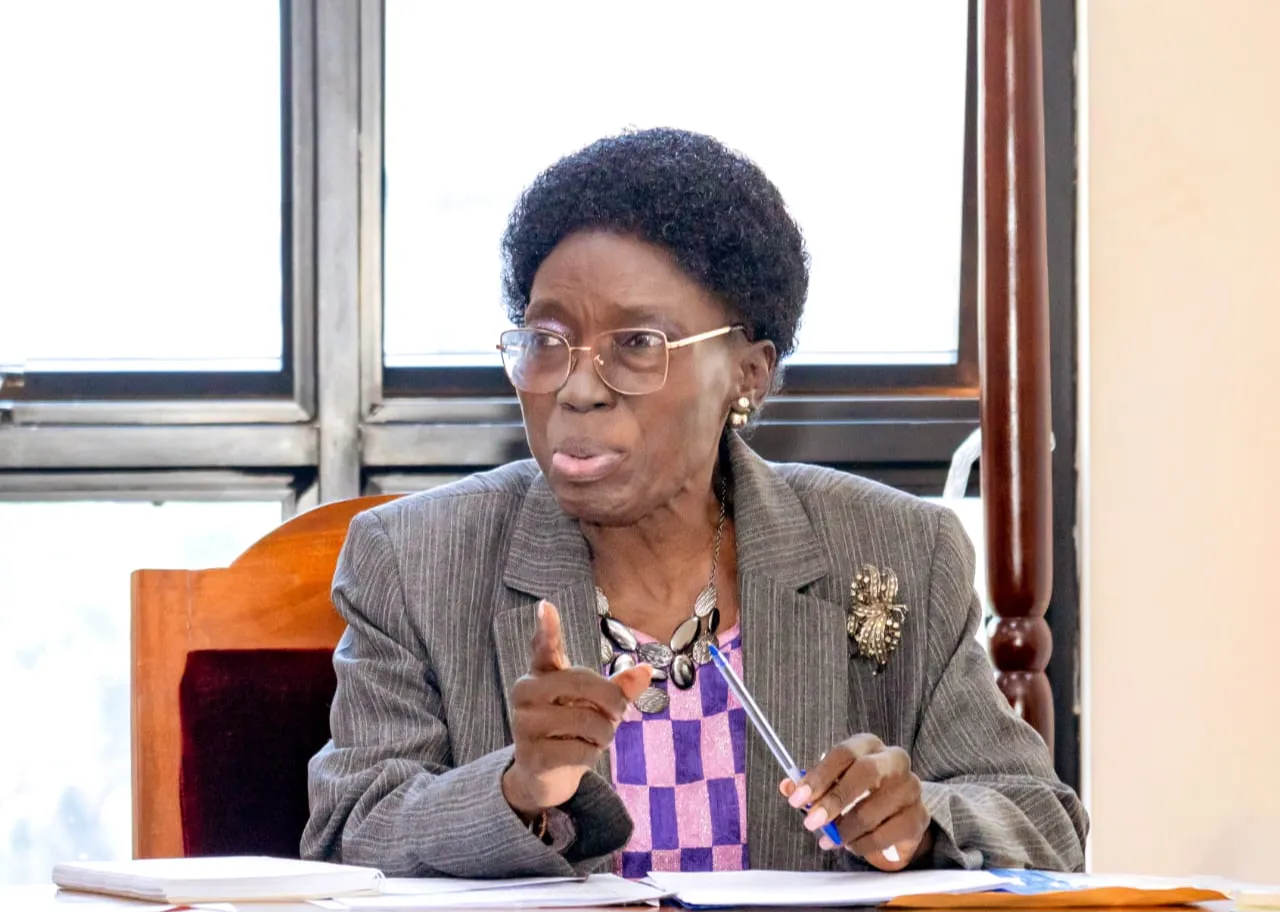
First Deputy Prime Minister and Minister for East African Community (EAC) Affairs Rebecca Kadaga said on Wednesday that Ugandan security and local authorities in border districts must prevent citizens from crossing into Kenya to participate in political or electoral activities.
She stressed, however, that Uganda was not seeking to interfere with Kenya’s election and warned security agencies against disrupting legitimate cross-border movement between communities with longstanding family, commercial and cultural ties.
Kadaga’s directive follows a KTN News investigation aired in late September that alleged an organised effort to facilitate the registration of Ugandan nationals as Kenyan voters.
The investigation focused on the Suam border area in Trans Nzoia County, where the report alleged that Kenyan voter-registration materials were being moved across the border and that some Ugandan nationals were being assisted to obtain Kenyan identification documents and voter cards.
But the allegations have been strongly disputed by Kenya’s electoral authorities and criminal investigators.
Uganda tightens scrutiny at border
Kadaga directed authorities in districts including Bukwo, Moroto, Amudat, Namisindwa, Busia, Tororo, Namayingo and Buikwe to take a coordinated interest in cross-border political activity.
The directive was framed as a measure to prevent Ugandan citizens from becoming involved in Kenya’s electoral process rather than a restriction on ordinary movement between the two countries.
Kadaga said Uganda respected Kenya’s sovereignty and expected Kenya to observe the same principle.
She also said Ugandan institutions had no role in Kenya’s elections and that responsibility for determining who qualifies to vote rests with Kenyan institutions.
The minister cautioned that legitimate movement across the border should not be disrupted because many communities on both sides have longstanding family, cultural and commercial relationships.
That distinction is significant for communities where crossing the international boundary is part of ordinary economic and social life.
KTN investigation triggered the dispute
The controversy began with a KTN News investigation published in late September under the headline “2027 Election: Are Votes Being Smuggled Across the Kenya-Uganda Border?”
The report centred on the Suam area and cited allegations that Ugandan nationals were being targeted for possible registration as Kenyan voters.
The investigation also raised questions about the movement of election-registration equipment across the border.
According to KTN’s report, a vehicle carrying election-related materials was allegedly intercepted on April 18 and the DCI officer involved was subsequently transferred.
Those claims have since become one of the most contested parts of the story.
DCI rejects key allegations
Kenya’s Directorate of Criminal Investigations subsequently rejected the report’s account of its involvement.
The DCI said no officer had arrested or questioned the occupants of the vehicle described in the report, that no election materials had been seized in the manner alleged and that there had been no transfer of an officer linked to such an investigation.
The agency described the claims as false and misleading and said it would raise the matter with institutions responsible for media standards and accountability.
The dispute means that the alleged vehicle interception and subsequent transfer of a DCI officer cannot currently be presented as established fact.
IEBC rejects foreign-voter registration claims
The Independent Electoral and Boundaries Commission (IEBC) has also rejected the central allegation that an organised scheme is registering foreign nationals as Kenyan voters.
The commission said it had not received credible evidence supporting claims of illegal voter registration, unlawful voter transfers or the registration of foreigners as voters.
It said that where credible evidence of electoral malpractice is presented, it would investigate and take disciplinary or criminal action where appropriate.
The IEBC’s response creates a clear divide between the allegations contained in the media investigation and what Kenya’s electoral regulator says has so far been established.
That distinction is particularly important as Kenya approaches the 2027 election, when voter-registration claims can quickly become politically charged.
What the allegations actually claim
The KTN investigation alleged that some Ugandan nationals were obtaining Kenyan identification documents and subsequently moving through the registration process to become voters.
The report also cited claims that election materials had been taken towards the Uganda border.
Some of the allegations were presented through accounts from individuals interviewed by the investigation.
But the existence of allegations is not, by itself, proof that an organised cross-border voter-registration operation exists.
Neither the IEBC nor the DCI has confirmed the alleged scheme.
Indeed, both institutions have publicly challenged important aspects of the account.
Uganda also raises dual-citizenship question
Kadaga separately addressed the question of Ugandans who may hold or acquire Kenyan citizenship.
She said a person could not simultaneously maintain allegiance to both countries for electoral purposes and vote in both jurisdictions.
Her comments have brought the issue of nationality and electoral eligibility into the centre of the dispute.
But the practical question for Kenya’s election authorities remains whether anyone without Kenyan citizenship has actually been unlawfully entered onto the Kenyan voters’ register.
That is a matter that would require documentary and electoral evidence rather than allegations alone.
Border communities caught between politics and daily life
The latest directive comes against a backdrop of unusually intense political scrutiny around Kenya’s 2027 election.
For border communities, however, the Kenya-Uganda boundary is also an economic and social corridor.
Families live on opposite sides. Traders cross regularly. Cultural and ethnic ties predate the modern international boundary.
Kadaga therefore urged Ugandan authorities to monitor unlawful political activity without interfering with legitimate cross-border travel.
That balancing act could become increasingly important if political allegations continue to spill into border communities.
The bigger election-integrity question
The dispute now involves three separate questions.
The first is whether any Ugandan nationals have actually acquired Kenyan identity documents unlawfully.
The second is whether any non-Kenyans have subsequently been registered as voters.
The third is whether election-related equipment was moved across the border as alleged.
At present, these questions have produced conflicting accounts rather than a settled factual picture.
Also Read: Gachagua vows no Ugandan or Somali will vote in Kenya in 2027
The KTN investigation raised the allegations and brought them into public view. The IEBC rejected claims of an organised foreign-voter registration scheme. The DCI disputed key allegations about its officers and the alleged interception. Uganda has nevertheless responded by ordering tighter monitoring of cross-border political activity.
The controversy has also attracted wider political attention in Kenya. The Standard reported that MPs criticised the media investigation, while other political figures have continued making allegations about foreigners and voter registration.
But the competing claims have yet to produce publicly established evidence of the scale of voter registration alleged in the exposé.
For Uganda, the immediate message is that citizens should not cross into Kenya to participate unlawfully in another country’s electoral process.
For Kenya, the responsibility for determining voter eligibility remains with Kenyan institutions.
And for communities along the border, the challenge will be ensuring that an increasingly heated electoral dispute does not disrupt legitimate movement, trade and family ties between the two countries.
With the 2027 elections still ahead, the allegations are likely to remain under scrutiny.
For now, however, the alleged voter-smuggling scheme remains disputed rather than established fact.