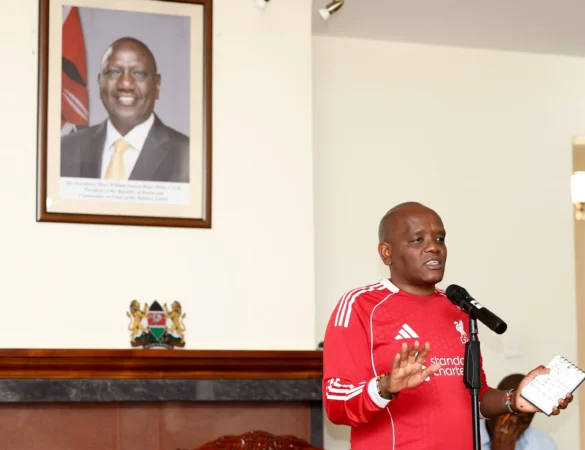



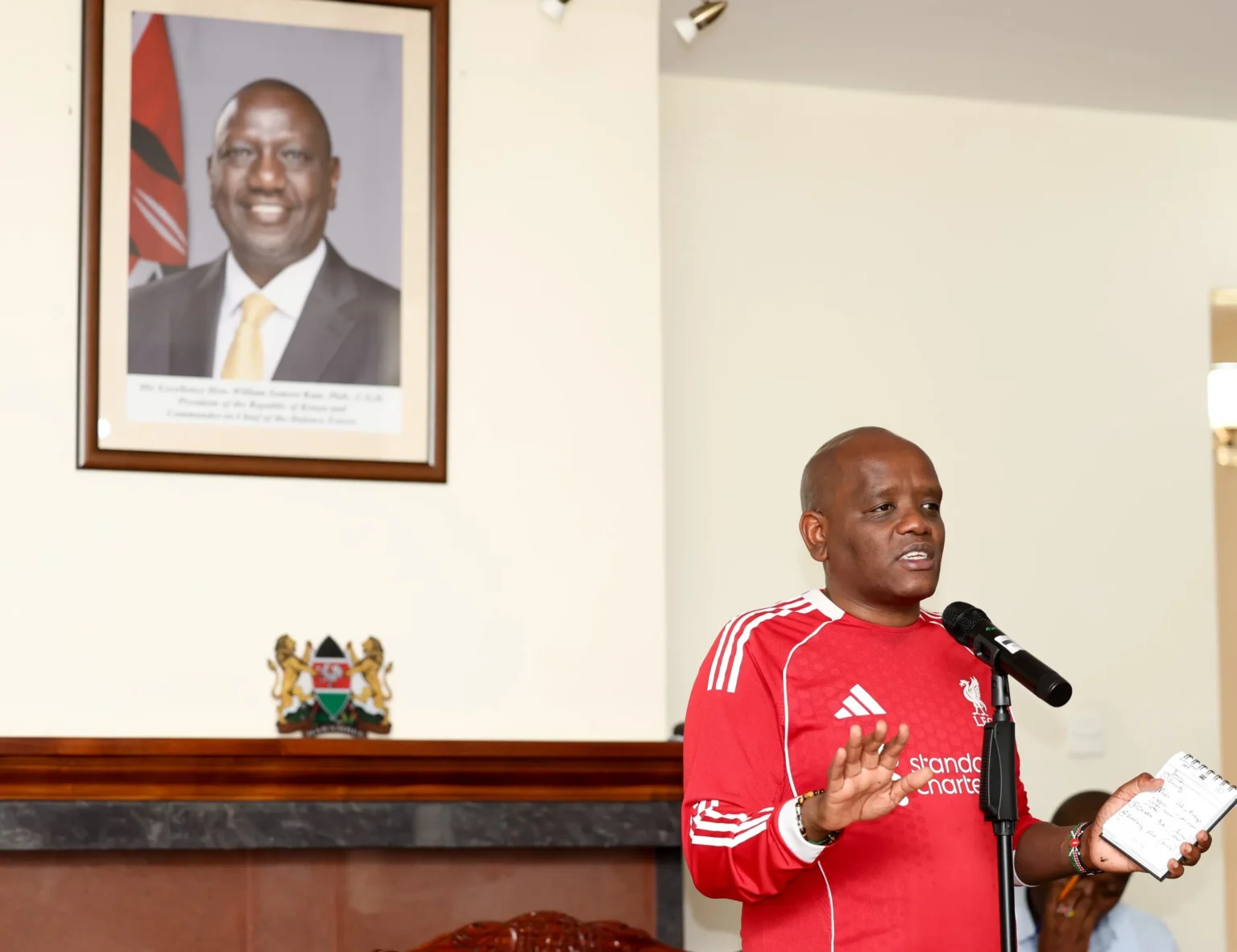
NAIROBI, Kenya — The Kenyan government plans to work more closely with social media influencers and content creators to communicate its programmes to the public, Head of Presidential Special Projects and Creative Economy Dennis Itumbi has said.
Itumbi said influencers would form part of the government’s broader communication strategy, arguing that the changing way Kenyans consume information has made social media an increasingly important channel for public communication.
His comments come as government projects and initiatives are increasingly being promoted through digital creators, a trend that has generated debate over the role of influencers in public communication, particularly as Kenya moves towards the 2027 general election.
Speaking on Saturday, October 3, Itumbi said the government was embracing a system that included influencers among the channels used to explain its programmes.
He said the approach was contained in the United Democratic Alliance (UDA) manifesto and therefore represented an implementation of a commitment made by President William Ruto’s administration.
Itumbi also referred to what he described as 43 government systems, although he did not provide further details in the remarks about how those systems were connected to the influencer strategy. Recent government statements have separately referred to a digital health infrastructure comprising 43 systems under the Universal Health Coverage programme.
Itumbi argued that the growth of social media meant the government could no longer rely exclusively on traditional media to communicate with citizens.
He cited research by the Media Council of Kenya, saying social media now reaches a larger audience than mainstream media.
The latest State of the Media 2025 Survey supports part of that argument. The Media Council of Kenya reported that 39 per cent of Kenyans identified social media as their primary source of news, compared with 31 per cent for television. It also found that 74 per cent of Kenyans use social or digital platforms for content and information consumption.
The figures reflect a wider change in Kenya’s media environment, where platforms such as WhatsApp, Facebook, TikTok and YouTube have become major channels through which citizens receive and share information.
Itumbi said influencers could therefore help the government reach audiences that may not consume information through conventional media outlets.
Itumbi said the government’s expectation was that influencers would explain government programmes using factual information rather than simply repeat political messaging.
He urged creators to participate in communicating the government’s work while helping explain programmes to audiences in language they could understand.
He said influencers would be allowed to examine relevant government documents before producing content, with the intention of ensuring that information presented to the public was accurate.
The approach comes as the government implements a broader communication policy aimed at coordinating how ministries, departments and agencies communicate with the public.
The Ministry of Information, Communications and the Digital Economy says the National Government Communication Policy is intended to strengthen coordination, funding and public engagement, while making communication an integral part of government programmes.
Government communication documents also emphasise the use of modern media platforms to broaden public engagement and disseminate information.
Itumbi also made clear that influencers could be paid for communicating government programmes.
He compared the proposed arrangement with the government’s existing practice of paying newspapers and other media organisations to carry government advertising and public-information campaigns.
He argued that there was no fundamental difference in paying digital creators to communicate government programmes to audiences on social media.
The government has previously indicated that it was prepared to financially support content creators producing material around programmes including affordable housing, healthcare, job creation and agriculture. In October 2025, Itumbi told creators that the government was willing to provide money and content for campaigns focused on those areas.
His latest remarks suggest the use of creators is intended to become a more established part of the government’s communication machinery rather than an occasional campaign tactic.
The increased involvement of influencers has also prompted debate over the distinction between public information, government advertising and political communication.
The timing is particularly significant as political parties and leaders begin positioning themselves ahead of the 2027 elections.
While Itumbi presented the strategy as a way of improving public understanding of government programmes, critics of the administration have questioned whether influencers could become vehicles for promoting the government’s political narrative.
Also Read: Kenya to spend KSh100m on influencers, bloggers to counter online criticism
That concern is not limited to Kenya. Social media creators increasingly occupy a space between entertainment, commentary, advertising and news, allowing political messages to reach audiences without necessarily passing through the editorial processes used by established news organisations.
The Media Council of Kenya has itself highlighted the growing influence of digital platforms while warning media practitioners about risks associated with misinformation, online amplification and the rapid spread of unverified content.
For the government, however, the argument is increasingly straightforward: if Kenyans are consuming more information through social platforms, government communication must follow them there.
Itumbi said influencers should use the opportunity to explain government programmes accurately and help citizens understand how policies and services affect them.
The emerging model will place greater responsibility on both the government and the creators it engages to distinguish factual public information from political advocacy, particularly as the 2027 election approaches.