
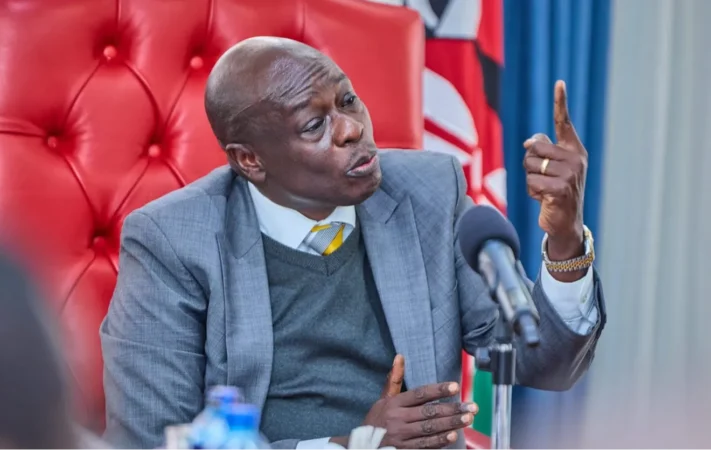


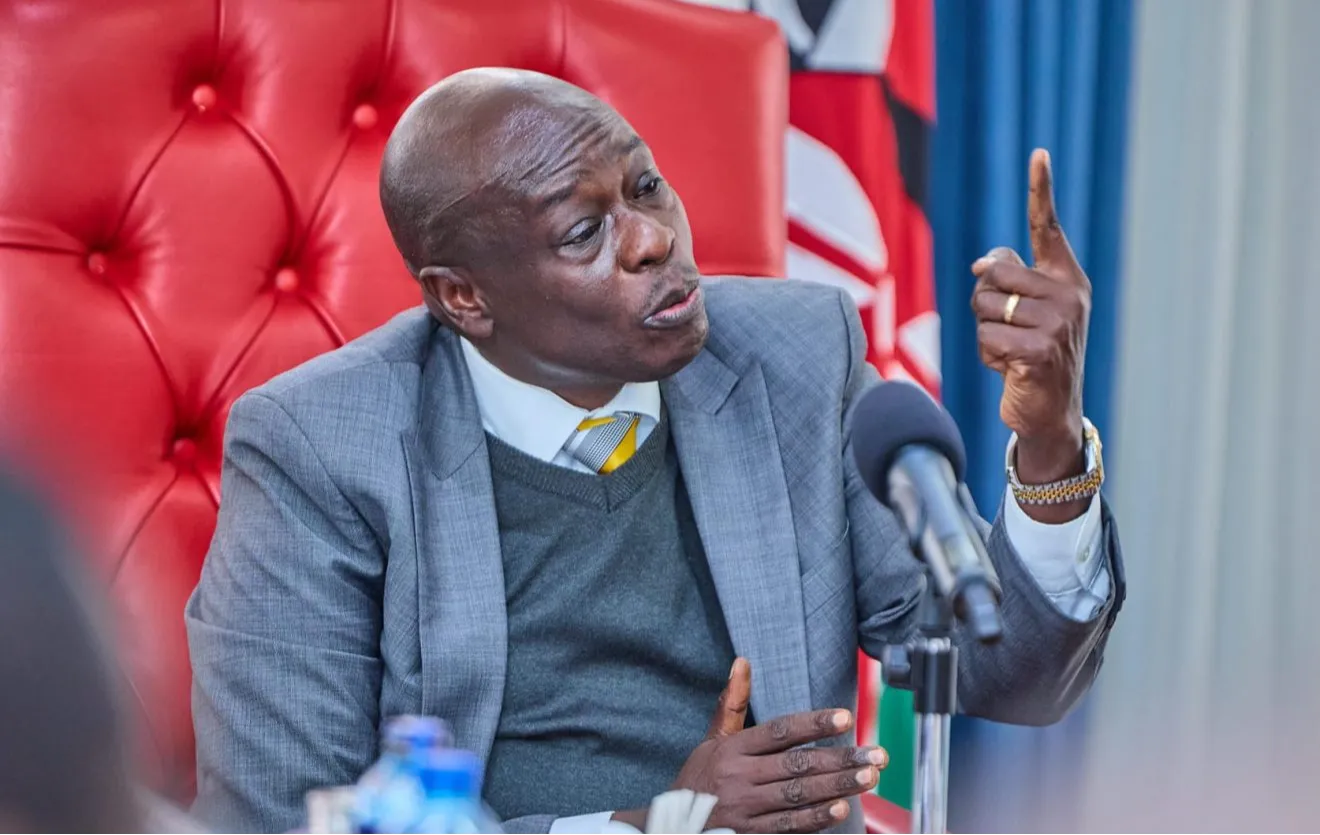
NAIROBI, Kenya — Former Deputy President Rigathi Gachagua has vowed that foreign nationals will not be allowed to participate in Kenya’s 2027 General Election, as a dispute over voter registration and citizenship documentation intensifies.
Speaking to members of the clergy in Boston, United States, on Sunday, October 4, Gachagua accused some political leaders allied to President William Ruto of considering mobilisation efforts involving people from Somalia and Uganda.
“Some other fellow called Duale is saying, ‘Let us look for people from Somalia.’ Another fellow called Pukose is saying, ‘Let’s get people from Uganda,’” Gachagua said.
“I’m sorry, it cannot work. One: no foreigner will vote in Kenya.”
Gachagua, who leads the Democracy for Citizens Party (DCP), said his political camp would instead concentrate on mobilising eligible Kenyan voters.
“I want to give you an undertaking: we shall mobilise our voters. They know each other. There is no Ugandan who will vote in Kenya. There is no anybody from Somalia who will vote in Kenya. And for sure, no dead people will vote,” he said.
Gachagua’s remarks come days after allegations of an organised scheme to register foreign nationals as Kenyan voters generated political controversy.
The claims followed a media investigation alleging that some Ugandan nationals were being assisted to obtain Kenyan identity documents and subsequently register as voters along parts of the Kenya-Uganda border.
The Independent Electoral and Boundaries Commission (IEBC), however, has rejected the allegations, saying it has not received credible evidence to substantiate claims of illegal voter registration, unlawful voter transfers or the registration of foreigners.
IEBC Chairperson Erastus Edung Ethekon said unverified reports risk undermining public confidence in preparations for the 2027 election.
The commission said its constitutional mandate covers the registration of eligible Kenyan citizens holding national identity cards or valid passports.
It also clarified that it does not issue Kenyan identity cards or passports, with those functions handled by other government agencies responsible for identification, citizenship and immigration.
IEBC said voter registration is being conducted at gazetted registration centres across all 290 constituencies, with applicants required to present valid identification.
The controversy is particularly sensitive in counties bordering Uganda, where communities on both sides of the frontier have longstanding family, social and economic ties.
The debate has also highlighted the distinction between citizenship and voter registration.
A foreign national does not automatically become eligible to vote in Kenya because of residence, family connections or possession of documentation. Under the electoral framework cited by IEBC, registration is for eligible Kenyan citizens who meet the identification requirements.
The commission has urged anyone with evidence of electoral malpractice to report it to the relevant authorities so that allegations can be investigated.
Gachagua also mentioned Somalia as he criticised what he portrayed as attempts to expand the government’s political support base through voter mobilisation.
The issue has become intertwined with a separate government policy change affecting access to national identity documents in northern Kenya.
Government leaders have promoted increased registration of eligible residents in the region following the removal of a longstanding vetting requirement for applicants seeking national identity cards.
In January, Health Cabinet Secretary Aden Duale said more than 1.1 million residents in North Eastern who already had national identity cards had not registered as voters. He called for a grassroots registration campaign targeting eligible residents.
Duale’s remarks referred to residents who were already Kenyan ID-card holders, rather than an announcement to register Somali nationals from outside Kenya.
The distinction has become important as political arguments over voter registration increasingly intersect with wider debates about citizenship, identity documentation and representation in northern Kenya.
The political controversy has also been fuelled by misinformation.
A widely circulated graphic previously claimed that President Ruto’s government planned to “manufacture” five million Somali voters in North Eastern Kenya ahead of the 2027 election.
Fact-checkers found the graphic to be fake. The claim nonetheless became part of a wider political debate over the government’s decision to remove the historic vetting requirement for identity-card applicants in the region.
That background makes the latest allegations particularly sensitive as political parties begin organising for the 2027 election.
Gachagua said his political movement would focus on mobilising Kenyan citizens rather than seeking support from outside the country.
Also Read: Museveni’s son Muhoozi backs Ruto’s re-election bid, names Wetang’ula his ‘Mutume’ in Kenya
His remarks form part of a broader political contest over the size and composition of Kenya’s electorate ahead of the next election.
The IEBC says more than 2.6 million new voters had been registered through the continuous voter registration process over the preceding year as of its September 27 update. The commission said the registration exercise was being conducted at gazetted centres under trained registration officials.
The commission has also announced plans to expand voter registration for Kenyans living abroad from 12 countries to 26 ahead of the 2027 election. That process concerns Kenyan citizens in the diaspora, not foreign nationals seeking to vote in Kenya.
As the 2027 campaign takes shape, claims about who is being registered — and who is eligible to vote — are likely to remain politically contentious.
For now, the central factual position from the electoral commission is that only eligible Kenyan citizens who meet the legal identification requirements should be registered, while claims of organised foreign voter registration remain unsubstantiated according to the IEBC.