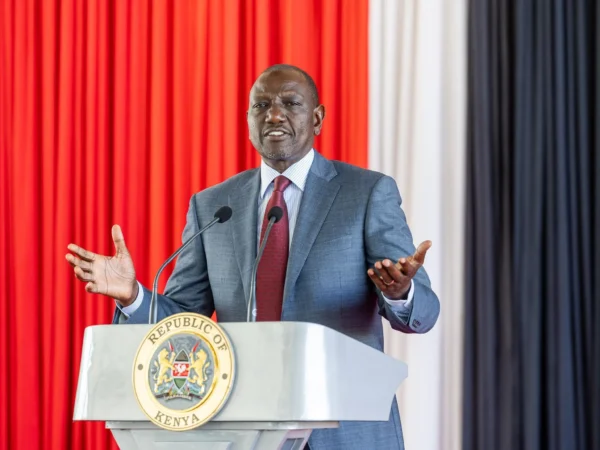




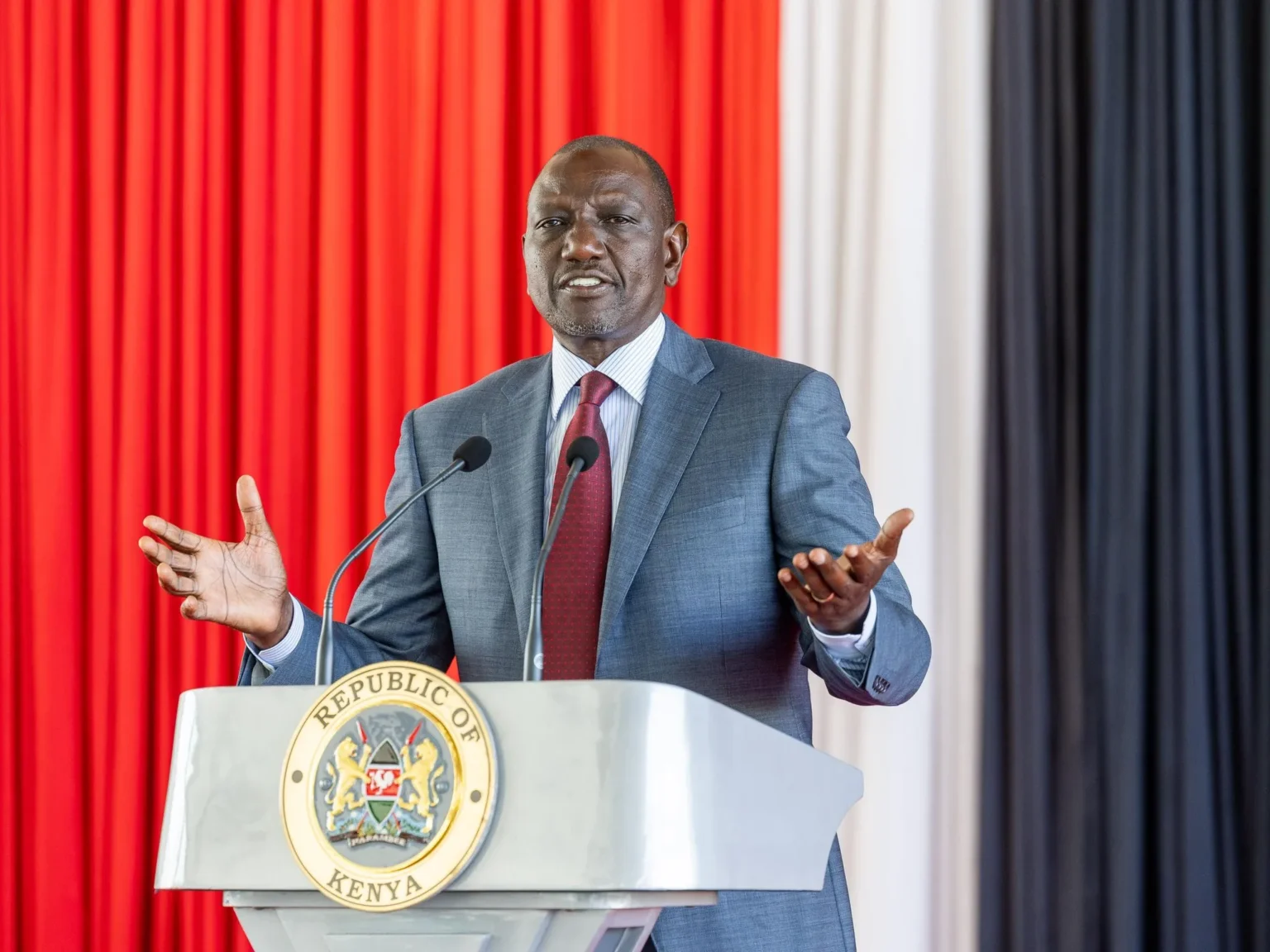
BOMET, Kenya — President William Ruto has moved to reassure foreign nationals living and working in Kenya that they remain welcome in the country, declaring that no Kenyan has the right to harm or mistreat them, as his government works to contain fallout from a crackdown on foreign traders that has unsettled thousands of East African migrants.
Speaking on Saturday, 12 September, during the foundation-laying ceremony for the Chebunyo Mother and Child Hospital in Bomet County, Ruto said Kenya remained open to foreign workers and investors as long as they complied with the law.
“I know there has been a big debate about who should work in Kenya, who should invest in Kenya. Let me say this for the record: all investors have space in Kenya,” he said.
Warning against vigilante action
The President also cautioned Kenyans against taking matters into their own hands, following reports of harassment and attacks targeting foreign traders — particularly Burundian nationals — in the weeks since his government first announced restrictions on foreign-run small businesses.
“No citizen has a right to take the law into their hands and harm other people from other areas,” Ruto said, addressing a separate forum in Bomet. He directed foreigners engaged in business or employment in the country to regularise their status and obtain the necessary permits, while stressing that “every person from wherever they come from will be treated fairly in accordance with the law.”
Weeks of anxiety among migrant traders
Ruto’s remarks follow weeks of uncertainty that began on 2 September, when he announced that small-scale trade and informal retail businesses should primarily benefit Kenyan citizens, with enforcement of the directive taking effect from 7 September.
The announcement triggered alarm among foreign nationals, particularly citizens of East African Community member states such as Burundi, many of whom earn a living through hawking and small-scale trading in Nairobi and other towns.
In the days that followed, hundreds of Burundian nationals were reported to have gathered outside their embassy in Nairobi seeking emergency travel documents, amid fears of harassment or eviction.
Some affected traders reportedly lost their businesses and livelihoods, while others said they faced threats and eviction from their premises and homes.
Rights groups and the East Africa Law Society raised concerns that enforcement of the directive risked discriminating against foreign nationals based on nationality, and the African Union’s human rights body also voiced alarm over the attacks.
Also Read: Man arrested over alleged hate speech targeting Burundians in Kenya
Government officials had already sought to contain the fallout in the days before Ruto’s latest remarks.
Foreign Affairs Principal Secretary Korir Sing’Oei said the President’s original comments had been “taken out of context,” clarifying that they were made in reference to the Local Content Bill before Parliament, which proposes reserving certain business categories for Kenyan citizens rather than imposing a blanket restriction on foreigners.
Prime Cabinet Secretary Musalia Mudavadi separately told members of the diplomatic corps that Kenya was not imposing a blanket ban on foreign-run small businesses and urged East African Community citizens to continue operating “with confidence” while regularising their documentation.
Kenya “remains an open society,” Ruto says
In his Saturday remarks, Ruto pointed to growing foreign direct investment as evidence of Kenya’s openness to outsiders, saying inflows had grown from $1.6 billion to $3.2 billion over the past three years.
He cited a planned $16 billion refinery investment by Nigerian conglomerate Dangote in Lamu, which he said was expected to be signed by the end of the month, as a sign of continued investor confidence.
He also reaffirmed Kenya’s commitments under the East African Community, the Common Market for Eastern and Southern Africa (COMESA), and the African Continental Free Trade Area, saying citizens of member states remained free to invest and work in Kenya within the bounds of the law.
“We will continue to be an open society because that is the DNA of Kenya,” he said.
The government’s 90-day window for foreign nationals engaged in small-scale business to regularise their status remains in effect.
East African Community citizens are not required to pay a fee to register for the work permits that allow them to engage in small-scale trade in Kenya, though officials say many migrants have yet to complete the process.