


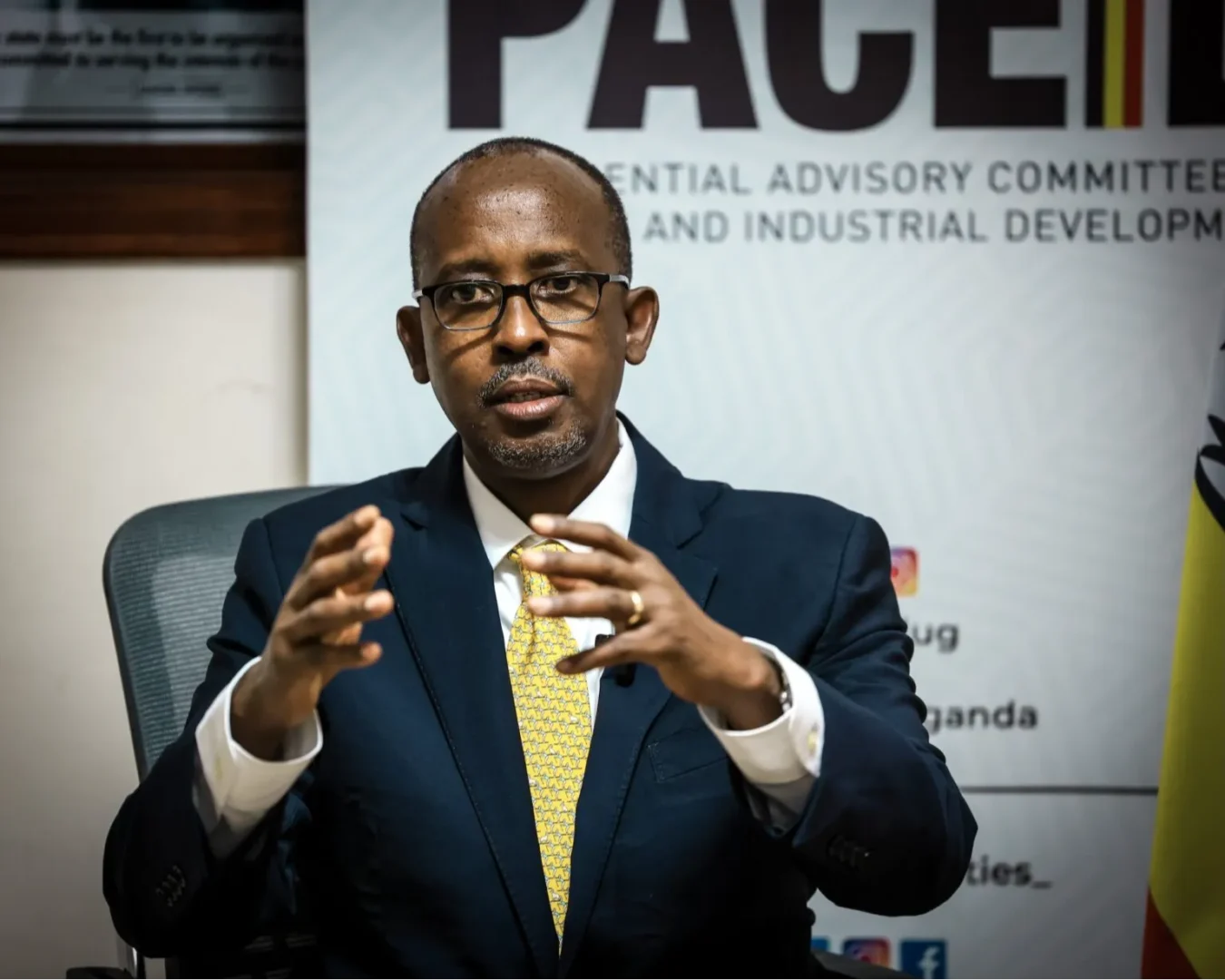
KAMPALA, Uganda — Presidential adviser Odrek Rwabwogo has challenged Chief of Defence Forces (CDF) Gen Muhoozi Kainerugaba over the legality of the crackdown on the Presidential Advisory Committee on Exports and Industrial Development (PACEID), while demanding due process for a senior aide detained amid the escalating dispute.
Rwabwogo’s intervention marks a new and more consequential phase in the increasingly public confrontation between the two men, who are brothers-in-law and occupy influential positions within President Yoweri Museveni’s political establishment.
The dispute intensified this week after Muhoozi declared PACEID an “illegal organisation”, accused some of its members of corruption and threatened arrests.
Muhoozi also ordered government ministries, departments and agencies to suspend dealings with the committee, warning that those who continued to work with it would face consequences.
The confrontation escalated further after Matthew Bagonza, a senior PACEID official and close associate of Rwabwogo, was detained.
Muhoozi subsequently confirmed Bagonza’s detention on social media but did not publicly disclose the offence he was accused of, the security agency holding him or the legal basis for his detention.
Rwabwogo challenges arrest
Rwabwogo said he travelled to Entebbe to meet Museveni after learning of Bagonza’s arrest and was told by the President that he had neither ordered nor been aware of the detention.
“I met the President and the President told me that he was not aware and had given no order for the arrest of this officer,” Rwabwogo said.
The account directly contradicts Muhoozi’s earlier suggestion that Museveni had authorised action against officials he accused of wrongdoing within PACEID. Muhoozi had said that arrests of alleged “criminals” in the organisation had begun and attributed the crackdown to instructions from “Mzee”, his reference to Museveni.
Rwabwogo described Bagonza as a long-serving associate who joined him in 2010 and has worked with him since.
He said allegations against Bagonza, if any, should be presented before a competent court and determined through a fair and impartial process.
Rwabwogo also criticised the manner in which the detained official was treated, arguing that even people accused of wrongdoing are entitled to dignity and lawful treatment.
His intervention came after Muhoozi published a photograph of Bagonza without a shirt and made threats of severe punishment while he was in detention. The CDF did not provide details of any formal charges against him.
Rwabwogo rejects PACEID ‘illegal’ label
Rwabwogo also rejected Muhoozi’s description of PACEID as an illegal organisation.
He argued that the committee was formally established by Museveni in March 2022 and operates under the Office of the President with a mandate to promote Uganda’s exports, industrial development and access to international markets.
Rwabwogo said an individual social-media post, regardless of the position held by its author, could not by itself invalidate an institution created through a formal government process.
He said PACEID submits reports on its activities and has worked with Ugandan businesses and exporters to develop value chains and expand access to international markets.
The committee’s legal and administrative status has nevertheless become a central issue in the dispute after Muhoozi publicly declared it illegal and ordered government institutions to stop dealing with it.
A family feud becomes a state dispute
The confrontation is particularly significant because it involves two members of Museveni’s immediate family who occupy prominent positions within the ruling establishment.
Rwabwogo is married to Museveni’s daughter, Patience Rwabwogo, while Muhoozi is the President’s son and Uganda’s Chief of Defence Forces.
Their relationship has previously deteriorated into public exchanges. Muhoozi has previously accused Rwabwogo of corruption, allegations Rwabwogo has rejected. The two later appeared to reconcile following intervention by First Lady Janet Museveni, but the latest dispute suggests that the tensions have resurfaced.
The current confrontation, however, goes beyond personal accusations.
Muhoozi’s threats have involved security action against officials of a presidential advisory body, while Rwabwogo is challenging the legality of those actions and invoking constitutional protections for people accused of offences.
That has raised broader questions about who has authority to order action against PACEID and under what legal framework such action can be taken.
Muhoozi’s growing role
The dispute also comes amid Muhoozi’s increasingly assertive public role in Uganda’s political affairs.
As CDF, Muhoozi has used social media to comment on political issues, security operations and the activities of organisations he considers a threat to the government’s interests.
His latest confrontation with PACEID has again blurred the boundaries between military authority, political influence and the administration of civilian institutions.
Also Read: Muhoozi warns against ‘foreign agents’ undermining Uganda
Muhoozi has not publicly provided detailed evidence supporting his allegations that PACEID is illegal or that its members are involved in corruption.
PACEID, through Rwabwogo, has rejected the accusations.
The committee’s defence also places Museveni at the centre of the dispute because Rwabwogo says the President told him that he neither knew about Bagonza’s arrest nor ordered it.
The next test
The immediate question is what happens to Bagonza and whether the authorities will formally charge him.
If he is accused of an offence, Rwabwogo’s position is that the matter should proceed through the courts rather than through public threats or punishment while in custody.
The dispute also leaves unresolved Muhoozi’s broader challenge to PACEID’s status and operations.
For now, the confrontation has exposed an unusual fault line within Uganda’s ruling establishment: a presidential son and military chief publicly challenging an institution associated with the President’s son-in-law, while the latter insists that the institution is legitimate and that the rule of law must prevail.
What began as a clash between two influential members of the First Family is therefore increasingly becoming a test of institutional authority, civilian oversight and due process inside Uganda’s government.