




NAIROBI, Kenya — Popular Kenyan content creator Cindy Baibe has lost her TikTok account, which had more than 642,600 followers, following a controversy over an alleged explicit livestream involving her and her boyfriend.
The account’s removal has triggered a wider debate in Kenya over content moderation, online decency and the protection of children from sexually explicit material on social media.
TikTok had not, at the time of publication, publicly disclosed the specific violation that led to the permanent removal of Cindy’s account.
The circumstances have therefore been reported in the context of the wider controversy rather than as confirmation of a particular enforcement decision.
Controversial livestream sparks backlash
The controversy began after Cindy went live on TikTok in a session that viewers alleged shifted from her usual lifestyle and entertainment content to sexually explicit material involving her boyfriend, known online as Medusa.
Clips and claims about the livestream subsequently spread across social media, prompting widespread criticism.
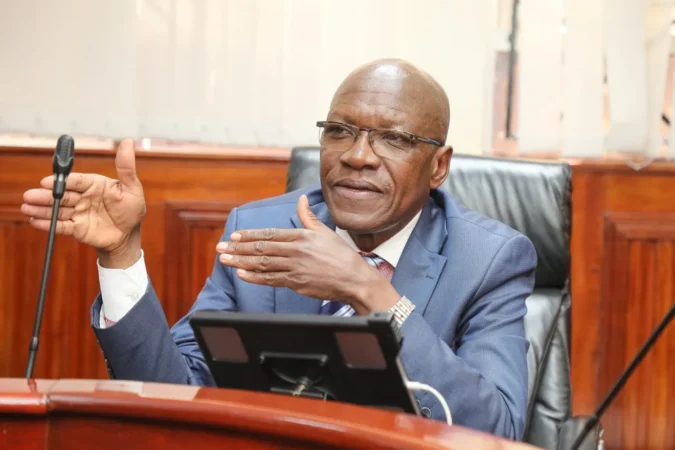
The controversy also attracted the attention of Nairobi County Chief Officer Geoffrey Mosiria, who criticised the content and raised concerns about its accessibility to young users.
Mosiria argued that social media platforms have a responsibility to prevent children from being exposed to adult material.
Mosiria takes issue to regulators
The dispute escalated on August 18, when Mosiria reportedly wrote to the Communications Authority of Kenya (CA) over content published by Cindy and other creators he accused of promoting sexually explicit material.
He called for the authorities to investigate the content and take appropriate action.
The intervention came amid renewed scrutiny of TikTok’s handling of harmful and sexually explicit material in Kenya, particularly content that could be accessed by minors.
Kenya has previously raised concerns about inappropriate content on TikTok, with regulators and lawmakers pressing platforms to strengthen safeguards for children and other vulnerable users.
Cindy responds with defiant video
Before her account disappeared, Cindy responded to the criticism with a video in which she appeared to challenge those questioning her online activities.
She gave viewers a tour of her home, showcasing expensive furnishings, a 75-inch television, other electronics and a Toyota Harrier.
During the video, she highlighted her financial success and appeared to suggest that her lifestyle placed her beyond the reach of those criticising her.
The response generated further attention online and intensified the dispute.
Her account was subsequently removed from TikTok, prompting speculation that the ban was directly connected to the confrontation.
However, there is no publicly verified evidence that Mosiria personally ordered or caused TikTok to remove the account. TikTok has its own enforcement mechanisms and community guidelines, and the platform had not publicly attributed the account’s removal to the Nairobi official.
Cindy and boyfriend issue apology
Following the removal of her main TikTok account, Cindy and Medusa reportedly issued a joint apology.
According to reports circulating online, the two expressed regret over the incident and apologised to their audience.
The apology marked a sharp change in tone from Cindy’s earlier response to criticism.
The disappearance of an account with more than 642,600 followers also represents a significant setback for the creator, who had built a substantial audience through TikTok livestreams and other digital content.
A wider TikTok safety crackdown
Cindy’s case comes against the backdrop of intensified TikTok enforcement in Kenya.
The platform’s own enforcement data show that 884,591 videos uploaded from Kenya were removed for violating TikTok’s Community Guidelines during the first quarter of 2026. TikTok said 99.7 per cent of the videos were removed proactively before users reported them, while 96.3 per cent were taken down within 24 hours of being posted.
TikTok also removed 48,739 accounts suspected of belonging to users under the age of 13 during the same period.
Also Read: Ugandan socialite Kirabo Kisitu’s private videos leak online
The figures followed another major enforcement exercise covering the final quarter of 2025, when TikTok said it removed 820,552 videos in Kenya and banned 108,752 accounts. Of the banned accounts, 93,704 were suspected of belonging to users below 13.
The numbers underline the scale at which TikTok is enforcing its rules in Kenya and the growing importance of content moderation as the platform’s influence among young people expands.
Cindy’s digital career
Cindy Baibe, also known as Cindy Reborn, has built a large following through TikTok content and livestreams and has frequently attracted public attention over her personal life and online activities.
She has previously spoken publicly about her Christian faith and her decision to embrace a new identity as Cindy Reborn.
Her online career has also been marked by several viral moments, relationship controversies and public exchanges with fellow content creators.
The latest episode, however, has raised a different question: how far should platforms go in enforcing standards on content that is accessible to potentially underage audiences?
For Cindy, the immediate consequence is the loss of a major digital platform and its large following.
For TikTok and Kenyan regulators, the controversy adds to a much broader challenge — balancing creators’ freedom to publish with the need to keep platforms safe, particularly for children.
As of publication, TikTok had not publicly provided a detailed explanation for Cindy Baibe’s account termination.