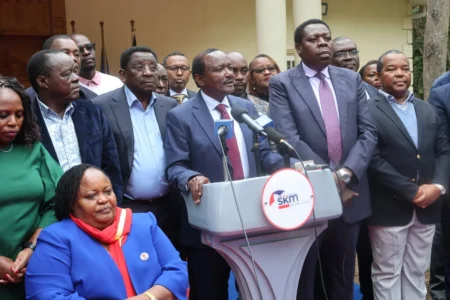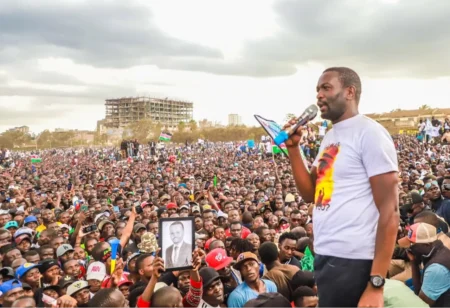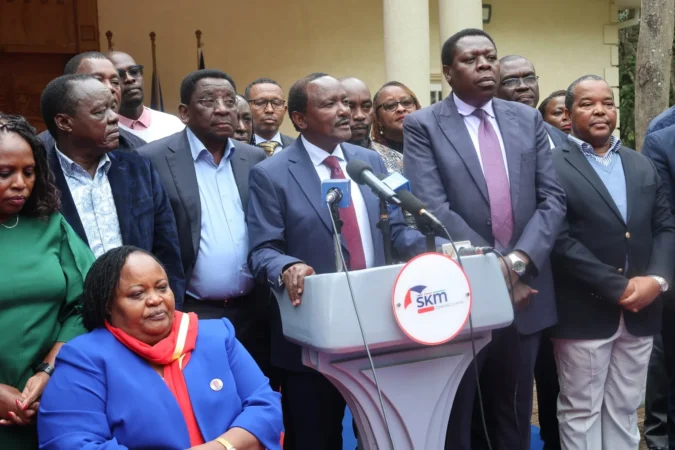
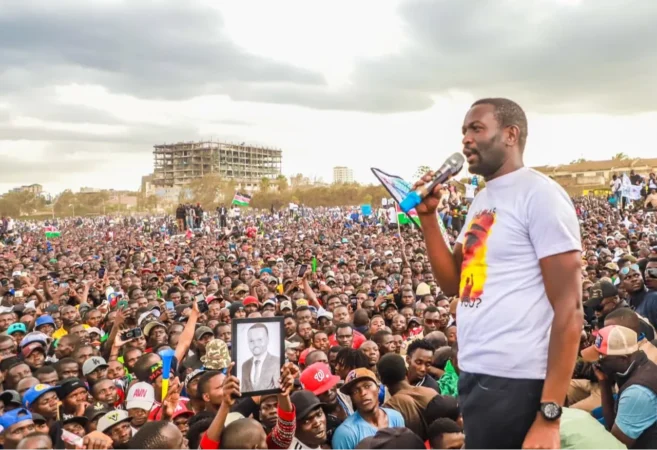



NAIROBI, Kenya — Nairobi Senator Edwin Sifuna and his Linda Mwananchi allies have been offered an alternative political vehicle for the 2027 General Election as a dispute over the movement’s preferred party identity threatens to complicate its plans to field candidates.
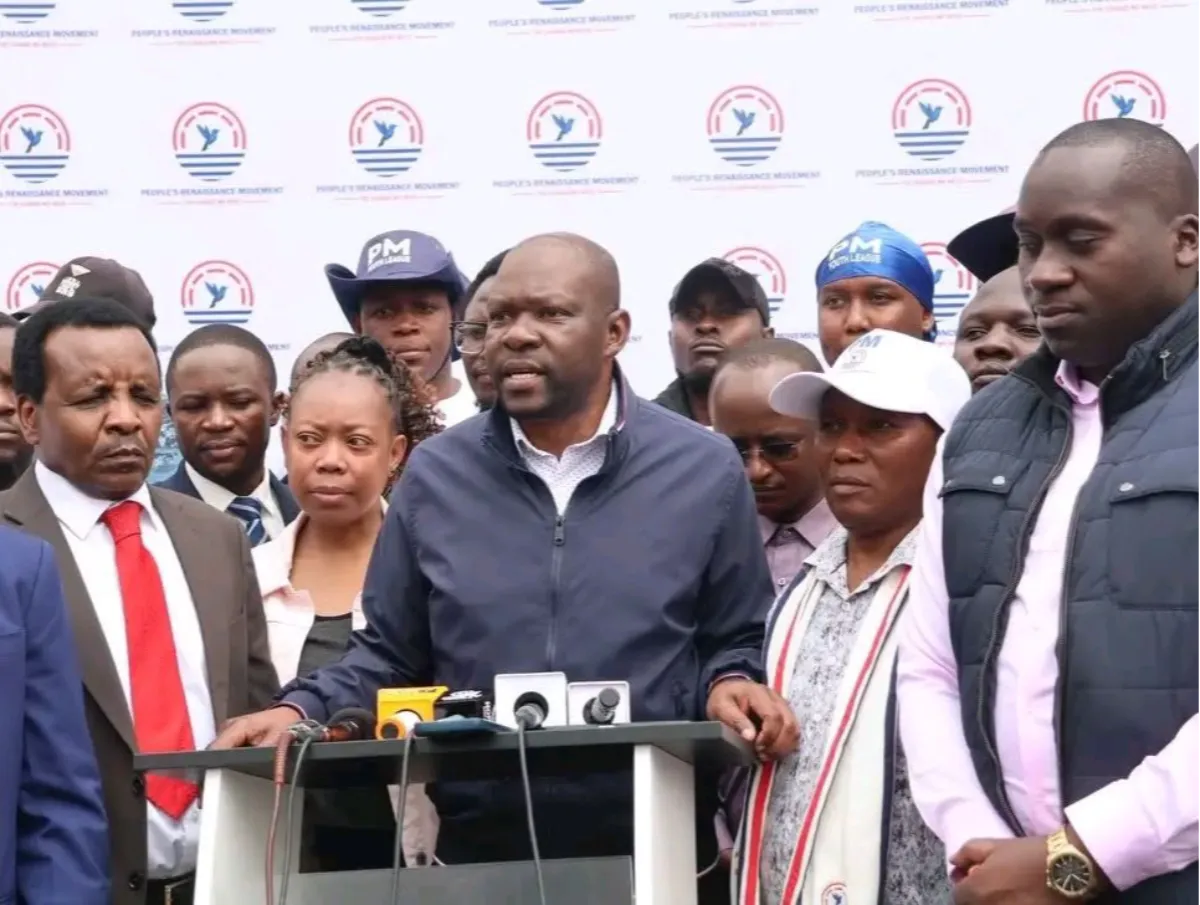
The People’s Renaissance Movement (PRM) says it is prepared to open its structures to the Linda Mwananchi team and allow its candidates to contest elections under the party, including the presidency, parliamentary seats and county assembly positions.
The offer was made by PRM Secretary-General Isaac Fwamba in Kitale, Trans Nzoia County, on Monday, as pressure mounted on the Office of the Registrar of Political Parties (ORPP) over the registration dispute surrounding the Linda Mwananchi name.
Fwamba urged Sifuna and his allies to consider using an existing political party rather than continuing to pursue a separate registration process.
“Tunaomba kwamba watu wa Linda Mwananchi, hiki ndicho chama kinachowafaa. Ili kuongoza, wasing’ang’ane na vitu vingine kama kwenda kuregister chama kingine,” Fwamba said.
He said PRM was willing to give the movement sufficient political space to contest at every level.
“As the People’s Renaissance Movement, we are ready to field candidates in all elective positions from the presidency to MCA,” he added.
The invitation could provide Linda Mwananchi with an escape route from a registration dispute that has become increasingly important as Sifuna and his allies build a national political network ahead of the 2027 election.
A political movement without a settled vehicle
The dispute over the Linda Mwananchi name has been developing for months.
In March, Sifuna, Siaya Governor James Orengo, Vihiga Senator Godfrey Osotsi, Embakasi East MP Babu Owino and other leaders associated with the movement formally challenged an application by a private individual to register a party using the Linda Mwananchi name. They argued that the proposed party was not associated with their movement and could confuse the public.
The registration question has since become intertwined with the wider political ambitions of the movement.
Linda Mwananchi began as a political mobilisation platform associated with a faction of ODM leaders but has increasingly developed a national profile through rallies and grassroots tours.
Sifuna and his allies have taken the movement beyond its original Western Kenya base, with activities extending into other parts of the country as they seek to build support ahead of 2027.
That expansion has raised a practical question: what party will carry the movement’s candidates onto the ballot?
The issue matters because a political movement, however popular, cannot by itself provide the formal electoral framework required to nominate candidates for the presidency, Parliament and county assemblies.
Registration dispute becomes a political problem
The registration row has also acquired a wider political significance.
The Linda Mwananchi faction has previously rejected attempts to associate its movement with party registration applications made without its authorisation. In March, the Registrar rejected one application to register the Linda Mwananchi party name, according to reports at the time.
But the movement’s leaders have continued to explore options for transforming their grassroots mobilisation into an electoral force.
By July, members of the faction were publicly discussing the formation of a new political party and challenging the Registrar’s decision, while some leaders acknowledged that acquiring an already registered party could become an alternative if registration efforts failed.
That makes the PRM offer significant.
It does not necessarily mean Sifuna’s camp has accepted the proposal.
Instead, it highlights the narrowing choices facing a movement that wants to compete in 2027 but still lacks a settled party structure.
The political stakes for Sifuna
For Sifuna, the party question goes beyond paperwork.
The Nairobi senator has emerged as one of the most visible figures associated with Linda Mwananchi and has increasingly been linked to efforts to build a new political platform ahead of 2027.
The movement has attracted several senior politicians, including Orengo, Osotsi and Babu Owino, while expanding its grassroots activities across different regions.
The challenge is turning that political visibility into an organisation capable of contesting an election.
A new party would have to navigate registration requirements, establish national structures, recruit members, organise nominations and meet the legal requirements necessary to participate in the election.
An existing party would offer a faster route.
But it could also carry political costs.
Joining another party could dilute the Linda Mwananchi brand that Sifuna and his allies have spent months building. It could also create questions over who controls the party’s structures, nomination process and political identity.
For that reason, the PRM proposal may be attractive as an electoral shortcut while simultaneously being difficult to accept politically.
A crowded opposition landscape
The dispute is unfolding against a broader reorganisation of Kenya’s opposition ahead of the 2027 election.
Several political formations are attempting to consolidate support, negotiate coalition arrangements and position themselves for the presidential contest.
The Linda Mwananchi movement is therefore competing not only for voters but also for political space.
Also Read: Who owns the ‘Linda Mwananchi’ name? Legal battle erupts over party registration
Its leaders have sought to present the movement as a platform for ordinary Kenyans and have used the “Linda Mwananchi” identity extensively during public mobilisation.
The name itself has consequently become politically valuable.
The continuing registration dispute is therefore about more than branding. It concerns whether the movement can preserve its identity while securing the institutional machinery required to contest an election.
The clock is ticking
The latest developments put Sifuna and his allies in a difficult position.
They can continue pursuing their preferred political identity and risk spending valuable time in a registration dispute.
They can seek another party vehicle and potentially sacrifice some control over the movement’s identity and structures.
Or they can negotiate a broader arrangement with an existing political formation while retaining Linda Mwananchi as a political brand.
The PRM offer has brought that choice into sharper focus.
For now, there is no indication that Sifuna or the Linda Mwananchi leadership has accepted the proposal.
But the invitation underscores a central challenge facing the movement: political momentum does not automatically translate into an electoral vehicle.
With the 2027 election approaching, the ability to settle that question may prove as important as the rallies, endorsements and grassroots support the movement has accumulated.
For Sifuna and his allies, the battle over the Linda Mwananchi name is therefore becoming a battle over something more consequential — who controls the political vehicle through which they hope to enter the 2027 race.