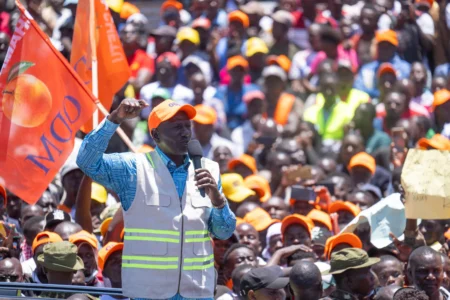
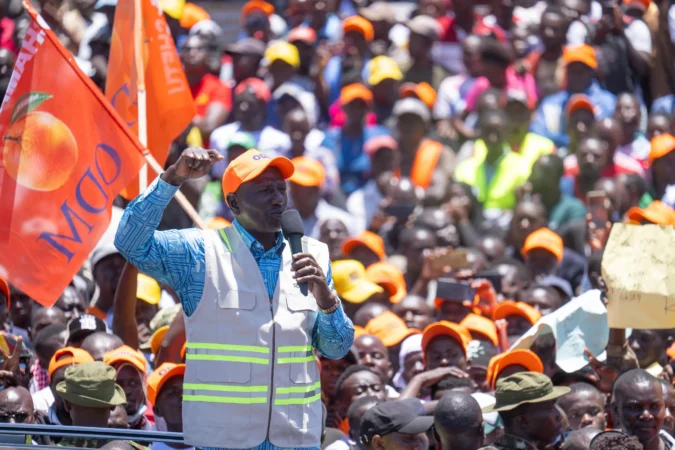




NAIROBI, Kenya — The opposition-aligned Linda Mwananchi movement is facing an increasingly complex legal battle over its proposed political party, with competing claims over the “Linda” brand threatening to push the dispute from the Office of the Registrar of Political Parties (ORPP) to the courts.
What began as an administrative disagreement over the proposed name “Linda Mwananchi Party of Kenya” has evolved into a multi-party contest involving the movement led by Nairobi Senator Edwin Sifuna and his allies, the original applicant who first sought to reserve the name, and a newly registered political outfit carrying the acronym LINDA.
The dispute comes as opposition figures intensify preparations for the 2027 General Election.
Earlier this week, Sifuna led a delegation from the Linda Mwananchi movement to the Office of the Registrar of Political Parties (ORPP) seeking a review of an earlier decision rejecting the proposed party name.
The delegation met Registrar of Political Parties John Cox Lorionokou after the ORPP declined an application submitted by promoter Charles Wanyonyi to reserve the name Linda Mwananchi Party of Kenya.
According to the Registrar’s earlier decision, the proposed name closely resembled the protected slogan “Linda Mkenya, Boresha Kenya”, raising concerns under Section 8 of the Political Parties Act.
Speaking after the meeting, Suba South MP Caroli Omondi, who serves as the movement’s spokesperson, said the Registrar had agreed to reconsider the matter and communicate a decision before the end of the week.
The ORPP had not publicly confirmed that account by the time of publication.
Omondi argued that there was no legal justification for continuing to deny registration, saying the movement remained optimistic that the matter would be resolved administratively.
Among those accompanying Sifuna were Senators Godfrey Osotsi and Richard Onyonka, alongside MPs Babu Owino, Jack Wamboka and Danson Mwashako.
Lawyers challenge review process
However, what appeared to be a possible breakthrough has quickly developed into a fresh legal dispute.
Lawyers representing Wanyonyi have questioned the Registrar’s decision to revisit the application without involving their client, arguing that any review conducted in his absence would be procedurally flawed.
In a demand letter, the advocates state that Wanyonyi first applied to reserve the name on February 24, before the Registrar rejected the application on March 4, citing similarities to protected slogans and broader public-interest concerns.
They now contend that reopening the matter without notifying the original applicant could violate principles of administrative fairness.
Betting on a different name
Sources close to the movement say its strategy now rests on a simple legal interpretation.
They believe the ORPP rejected only the exact wording “Linda Mwananchi Party of Kenya”, leaving room for alternative party names incorporating the words Linda Mwananchi, provided they are sufficiently distinct.
The movement is also understood to have identified two alternative names should its preferred option ultimately fail to secure approval.
Whether the Registrar accepts that interpretation remains uncertain.
A third claimant complicates matters
The naming dispute has become even more complicated following the registration of another political outfit.
The ORPP has since approved the Liberty National Democratic Alliance (LINDA Party), introducing a third claimant associated with the increasingly contested “Linda” identity.
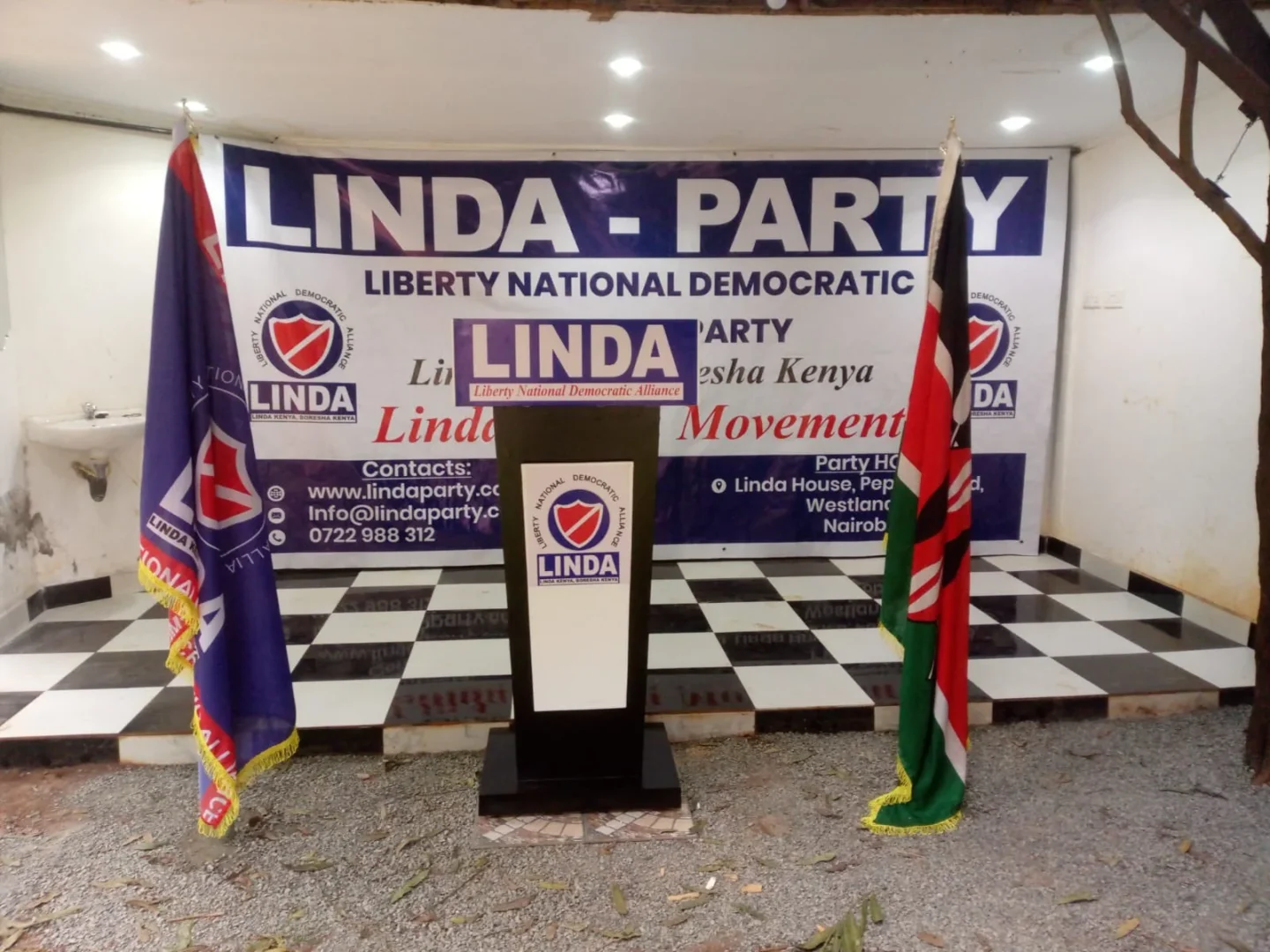
That development leaves the Registrar balancing overlapping interests involving:
- The Linda Mwananchi movement
- Wanyonyi’s original application; and
- The newly registered LINDA Party.
Political questions emerge
The dispute has also generated political speculation.
Linda Mwananchi has increasingly become a rallying platform for opposition leaders, including Sifuna, Siaya Governor James Orengo, Osotsi, Onyonka and Owino, who have criticised cooperation between sections of the opposition and President William Ruto’s administration.
Some supporters believe the prolonged registration process reflects more than routine administrative scrutiny.
However, no evidence has emerged linking the delays to political interference, and neither the Registrar nor the government has publicly suggested the application has been handled differently because of the movement’s political positioning.
At present, allegations of political influence remain speculative.
What the law says
Kenya’s Political Parties Act requires prospective political parties to satisfy several legal requirements beyond securing a name reservation.
Applicants must demonstrate national character, reflecting diversity across regions, gender, ethnicity and special-interest groups including youth, women and persons with disabilities.
The law also requires parties seeking full registration to establish offices in more than half of Kenya’s counties and submit verified membership records.
Three possible outcomes
The movement now appears to have three realistic options.
It could continue engaging the Registrar in hopes of securing approval for a revised party name.
Alternatively, it could abandon the disputed branding altogether and adopt one of its reported backup names, although that would sacrifice months of political branding built around the Linda Mwananchi slogan.
Also Read: Kenyans raise KSh6.5m for Linda Mwananchi initiative, Edwin Sifuna reveals
The third—and increasingly likely—scenario is litigation.
With lawyers already exchanging formal correspondence and three competing interests converging before the Registrar, the dispute could ultimately be resolved by the courts if no administrative solution is reached.
Time running against the movement
Ordinarily, Kenya’s Political Parties Act provides relatively clear timelines for party registration.
A reserved name remains protected for 90 days before applicants proceed to provisional registration. The Registrar is then expected to determine provisional registration within 30 days, while parties have 180 days to satisfy the conditions for full registration.
Yet those timelines assume the name reservation itself is uncontested.
The law offers limited guidance where multiple applicants claim similar names or where the Registrar rejects an application on public-interest grounds.
That legal grey area now sits at the centre of the Linda Mwananchi dispute and could ultimately determine whether the movement enters the 2027 elections under the brand it has spent months promoting.