

NAIROBI, Kenya — The campaign toward Kenya’s 2027 General Election appears to have entered a new phase, with political disputes increasingly spilling beyond campaign platforms into demands for criminal investigations and regulatory intervention.
On Saturday 25, July 2026, a section of leaders from the South Rift called on security agencies to investigate former Deputy President Rigathi Gachagua over allegations they claim threaten national security and public order, intensifying an already heated political confrontation between the government and one of its most vocal critics.
Led by Kericho Senator Aaron Cheruiyot, the leaders accused Gachagua of financing criminal gangs, encouraging political violence and making inflammatory statements capable of undermining national cohesion ahead of the next general election.
The allegations, which Gachagua has consistently denied, come as political rhetoric across the country grows increasingly confrontational nearly two years before Kenyans return to the ballot.
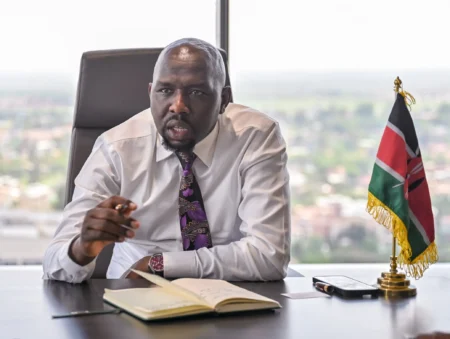
Addressing separate public gatherings in Bomet and Kericho counties, Cheruiyot urged Interior Cabinet Secretary Kipchumba Murkomen and Inspector General of Police Douglas Kanja to investigate the former deputy president’s conduct.
“I would like to pose one simple question: Why should one person be allowed to spread hatred simply because other leaders have a different political standing?” Senator Cheruiyot posed.
He added:
“CS Murkomen and IG Kanja should not give Rigathi Gachagua even the slightest opportunity to incite or harm other Kenyans.”
The remarks illustrate how security has become an increasingly prominent theme in Kenya’s evolving political discourse, with competing camps accusing each other of sponsoring violence rather than limiting disagreements to policy differences.
The leaders also turned their criticism toward the National Cohesion and Integration Commission (NCIC), accusing the constitutional body of failing to respond decisively to what they described as repeated inflammatory statements attributed to Gachagua.
According to the leaders, the commission has not applied the law consistently when dealing with politicians accused of hate speech.
“If some of us used the kind of language that is being used by Rigathi Gachagua, we would immediately be summoned and asked to explain what we meant,” Senator Cheruiyot said.
Their criticism comes at a politically sensitive moment for the commission.
The NCIC recently confirmed it had opened investigations into Health Cabinet Secretary Aden Duale following public complaints over remarks he made during a public event in Lafey Constituency, Mandera County. The complaints alleged that the statements promoted ethnic profiling and division.
That investigation has become part of a wider debate over whether Kenya’s institutions enforce hate speech laws consistently across the political divide.
The latest calls against Gachagua therefore extend beyond one politician.
They touch on broader concerns about whether institutions charged with protecting national cohesion are perceived as politically neutral or selectively active depending on who is under scrutiny.
Away from the security debate, South Rift leaders used the same forums to defend President William Ruto’s administration against sustained criticism from opposition figures.
Their remarks reflected growing efforts by government allies to frame political attacks against the administration as threats to stability rather than ordinary democratic contestation.
Gachagua has, however, rejected accusations that he finances criminal gangs or encourages political violence.
Instead, the Democracy for Citizens Party (DCP) leader has repeatedly accused the government of using rogue elements within the police service to intimidate political opponents and sponsor violence during political events.
Those competing narratives have become one of the defining features of Kenya’s political environment following Gachagua’s fallout with President Ruto.
What began as disagreements within Kenya Kwanza has gradually evolved into a wider national political confrontation involving allegations of intimidation, abuse of state institutions and competing claims over who bears responsibility for rising political tensions.
The accusations have yet to result in criminal charges directly linked to the claims raised by government allies, underscoring the distinction between political allegations and legal findings.
Under Kenyan law, allegations of incitement, hate speech or financing organised violence require investigation by competent authorities before any prosecutorial decisions can be made.
The National Cohesion and Integration Commission may investigate suspected hate speech offences before forwarding files to the Office of the Director of Public Prosecutions where sufficient evidence exists.
Similarly, allegations involving organised criminal activity fall within the investigative mandate of the National Police Service and the Directorate of Criminal Investigations.
Whether the latest demands by South Rift leaders translate into formal investigations remains unclear.
Neither the Interior Ministry nor the National Police Service had publicly announced any new investigations specifically arising from Saturday’s statements by the time of publication.
Political observers note that accusations of incitement and violence frequently become more common as election cycles draw closer.
Kenya’s previous elections have demonstrated how inflammatory rhetoric, misinformation and ethnic mobilisation can heighten political tensions, prompting institutions such as the NCIC to monitor public statements more closely.
That context explains why calls for investigations often generate significant political attention even before formal legal processes begin.
Supporters of stronger enforcement argue that early intervention helps prevent violence before it escalates.
Critics, however, caution that criminal investigations must remain evidence-based and insulated from partisan political competition if public confidence in state institutions is to be maintained.
Also Read: Jubilee condemns Gachagua’s call for tourists, investors to avoid Kenya
The challenge for Kenya’s law enforcement and oversight agencies will therefore extend beyond determining whether any laws have been broken.
Equally important will be convincing the public that decisions are guided by evidence rather than political affiliation.
With more than a year before the official campaign period begins, Kenya’s political conversation is already becoming increasingly defined by questions of security, accountability and institutional independence.
Saturday’s calls from South Rift leaders add another layer to that debate.
Whether they lead to formal investigations or remain part of the country’s intensifying political rhetoric, they demonstrate that the battle for 2027 is no longer being fought only through campaign speeches and party mobilisation.
It is increasingly being contested through the institutions responsible for policing political conduct, safeguarding national cohesion and determining where legitimate political expression ends and unlawful incitement begins.