


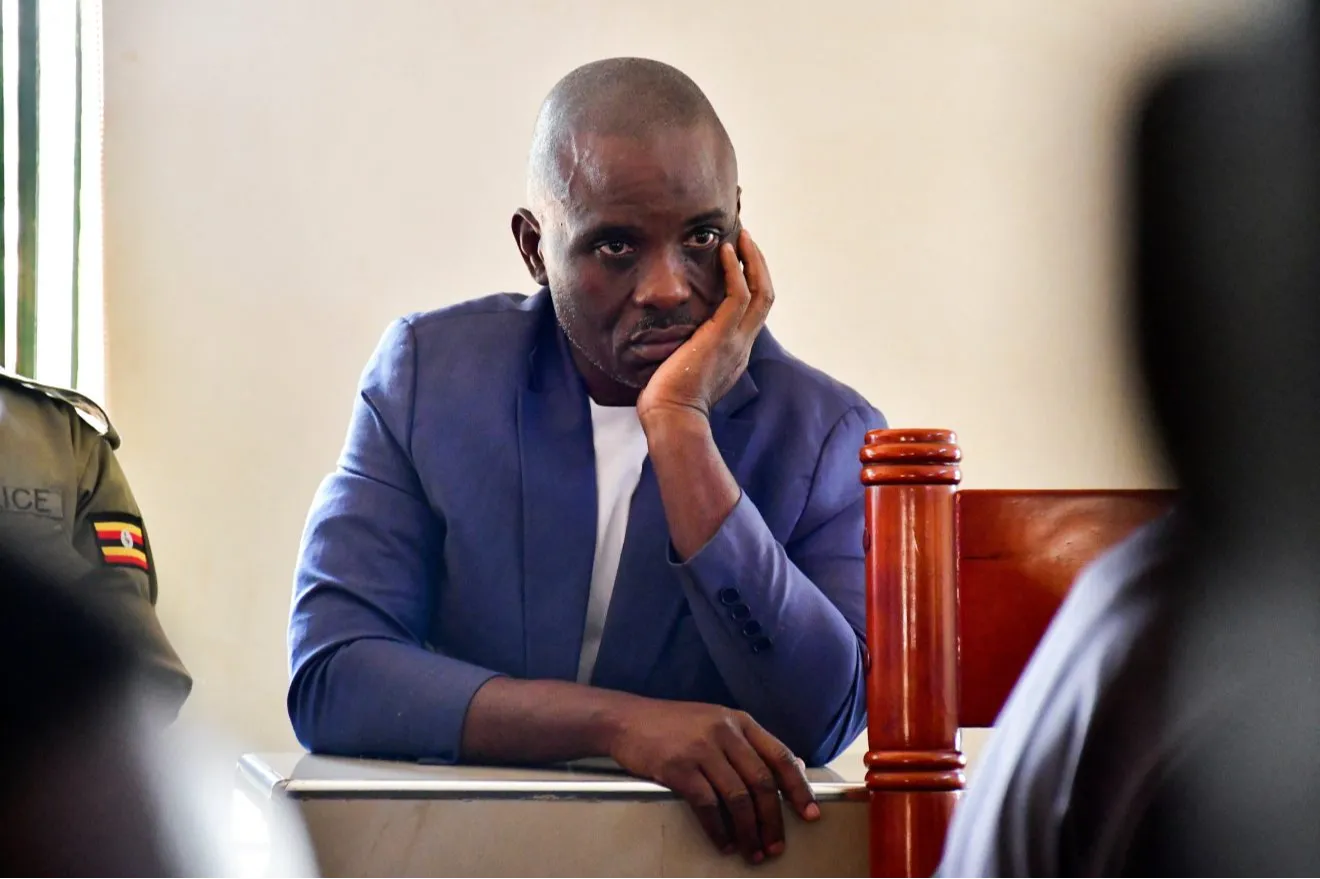
KAMPALA, Uganda — The Director of Public Prosecutions (DPP) has asked Uganda’s High Court to deny bail to People’s Front for Freedom (PFF) president Erias Lukwago, arguing that the veteran opposition politician presents a significant flight risk and could interfere with prosecution witnesses because of his political influence if released pending trial.
The state made its position clear in an affidavit filed before the Criminal Division of the High Court, where Chief State Attorney Joseph Kyomuhendo contends that Lukwago has failed to demonstrate the exceptional circumstances required to justify his release while facing trial on a charge of misprision of treason.
The application sets the stage for what has become one of Uganda’s most closely watched bail proceedings, with the court now weighing two competing constitutional principles: an accused person’s right to liberty before conviction and the state’s responsibility to safeguard the integrity of criminal proceedings.
Justice David Matovu is expected to rule on the application on July 30, following written submissions from both the prosecution and defence.
Lukwago, 56, was committed to the High Court last week after the Makindye Chief Magistrate’s Court ruled that police investigations had been completed.
According to an indictment signed by Assistant DPP Thomas Jatiko, the prosecution alleges that between 2021 and November 2024, Lukwago knowingly failed to report information relating to an alleged plot to overthrow the government.
Prosecutors claim that, in his capacity as president of the People’s Front for Freedom, Lukwago knew that opposition figures, including Dr Kizza Besigye, Hajji Obeid Lutale, Joel Wakhaima and Frank Kiherere Atukunda, allegedly intended to commit treason but failed to notify authorities or take reasonable steps to prevent the alleged offences.
The offence of misprision of treason, although less commonly prosecuted than treason itself, centres on the alleged concealment of information relating to plans to commit treason rather than direct participation in the alleged acts.
In opposing Lukwago’s release, prosecutors argue that the charge carries exceptional public interest because it relates to allegations affecting national security.
“The charges relate to alleged activities that undermine the affairs and security of Uganda,” the affidavit states.
The prosecution argues that Lukwago’s prominence in Uganda’s legal and political landscape substantially increases the risk that he could influence witnesses if released.
According to the affidavit, his position as a senior advocate, former Kampala Lord Mayor and president of the People’s Front for Freedom gives him considerable public influence that could interfere with the prosecution’s case.
The state further contends that the severity of the offence itself creates an incentive for absconding.
Misprision of treason carries a maximum sentence of life imprisonment, a factor prosecutors argue heightens the likelihood that an accused person could fail to return to court if granted bail.
The DPP also questioned whether Lukwago’s proposed sureties offer sufficient assurance that he would continue appearing before court throughout the trial.
His proposed sureties include his law partner Chrysostom Katumba, his elder brother Abdul Sewankambo, Mukono Municipality MP Betty Nambooze Bakireke and former Rubaga North MP Moses Kasibante.
Lukwago’s legal team, however, presents the case from a markedly different perspective.
Rather than focusing solely on constitutional entitlement to bail, the defence argues that continued detention poses a growing risk to Lukwago’s health because Uganda’s prison medical system lacks the specialised care his condition requires.
In his application, Lukwago relies on the constitutional presumption of innocence while arguing that remand has become medically unsustainable.
The prosecution disputes that assertion.
According to the DPP, the Uganda Prisons Service employs qualified medical personnel capable of providing the treatment Lukwago requires.
The state similarly rejected allegations that he had been assaulted in detention, subjected to forced physical drills or held under conditions that aggravated his illness.
Those competing claims place prison healthcare at the centre of the bail proceedings.
Following Friday’s court session, Lukwago’s lawyer Medard Lubega Sseggona maintained that his client’s health continues to deteriorate while on remand.
He said the defence had requested that Lukwago be referred to Mulago National Referral Hospital.
Instead, Justice Matovu directed prison authorities to take the necessary medical action after consulting medical personnel within the Uganda Prisons Service.
While acknowledging efforts by prison medical staff, Sseggona questioned whether the correctional health system possesses sufficient resources to manage complex medical cases.
According to the defence, Murchison Bay Prison Hospital remains heavily congested and the prison service has only one physiotherapist serving inmates across the entire correctional system.
Sseggona argued that physiotherapy currently available merely manages Lukwago’s pain and symptoms while failing to address the underlying medical condition that requires more specialised treatment.
The dispute reflects a broader challenge that frequently arises in high-profile criminal cases involving prominent political figures.
Courts are often required to balance competing interests: protecting the constitutional rights of accused persons while ensuring they neither abscond nor interfere with the administration of justice.
Also Read: Erias Lukwago says he faces death without urgent medical care
Where health concerns are raised, judges must additionally assess whether existing prison medical facilities can reasonably meet an accused person’s treatment needs without compromising constitutional protections.
Rather than hearing oral arguments immediately, Justice Matovu directed both parties to proceed through written submissions.
Under timelines agreed before court, the defence will first file its submissions, followed by the prosecution’s response and a defence rejoinder.
The ruling will subsequently be delivered electronically through the Electronic Court Case Management Information System (ECCMIS) on July 30.
The decision is expected to provide not only immediate guidance on Lukwago’s liberty pending trial but also judicial clarification on how Ugandan courts balance medical necessity, constitutional rights and national security considerations when determining bail in politically sensitive criminal cases.