


KAMPALA, Uganda — Railway wagons are among the most traceable pieces of public infrastructure.
Each carries a unique identification number. Each movement is expected to be recorded. Ownership records, maintenance histories and cargo assignments ordinarily create a continuous paper trail designed to ensure that rolling stock can be accounted for wherever it travels along a railway network.
That is precisely why Parliament’s latest findings have unsettled lawmakers.
The question confronting Uganda Railways Corporation (URC) is no longer simply where 394 railway wagons are.
It is how assets valued at more than Shs220.8 billion could disappear from official records without a definitive explanation of whether they remain in service, crossed international borders, were improperly disposed of or became victims of theft.
Those unanswered questions prompted Parliament on Wednesday 22, July 2026 to direct URC Managing Director Benon Kajuna to record a statement with the Criminal Investigations Directorate (CID), signalling that what began as an audit query has now entered the realm of criminal investigation.
The directive followed a tense sitting of Parliament’s Committee on Physical Infrastructure, where legislators openly questioned URC’s explanations regarding the missing wagons.
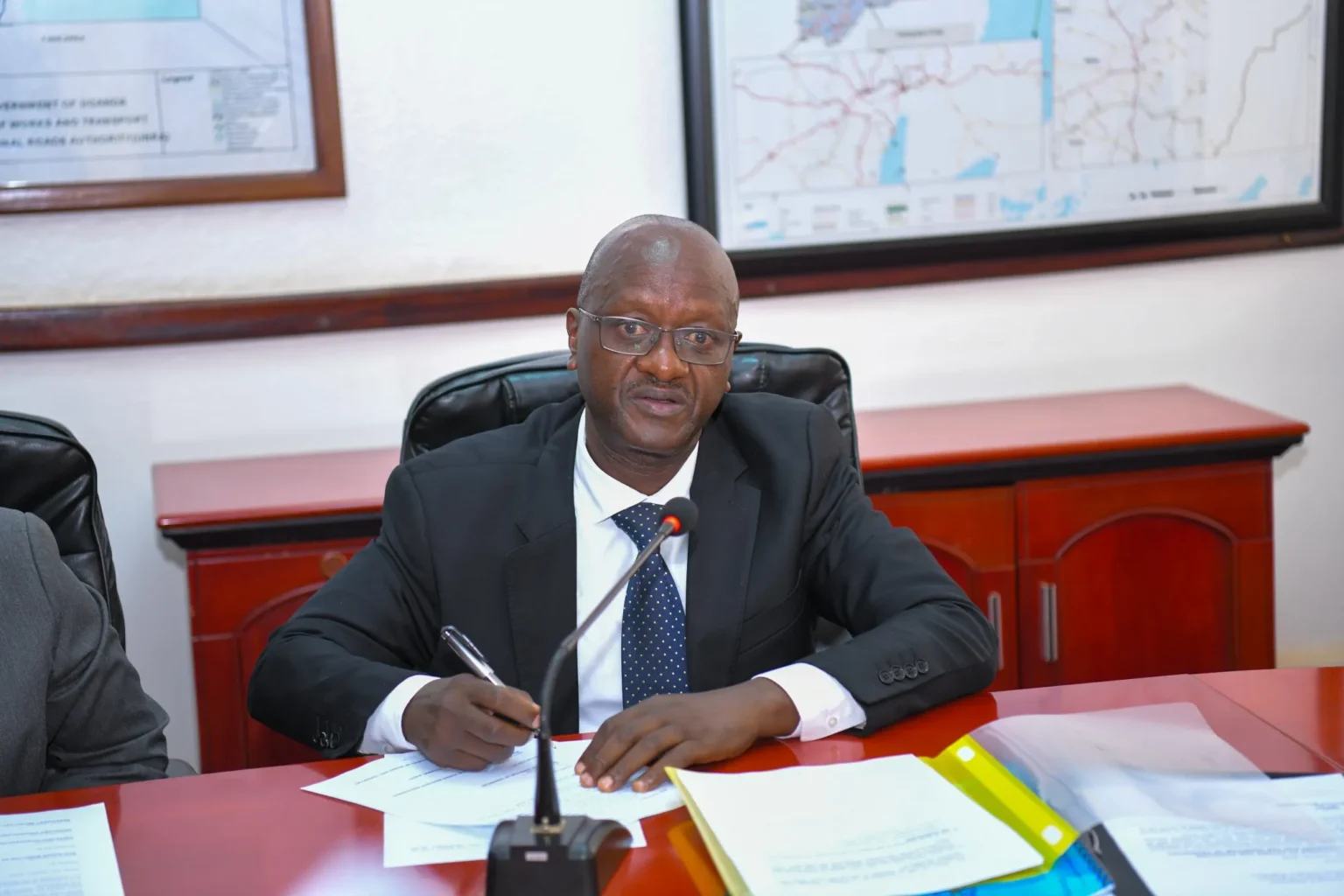
Committee chairperson and Mbarara City South MP Mwine Mpaka ordered the corporation to provide evidence within one hour demonstrating joint efforts with the Kenya Railways Corporation to trace the missing rolling stock.
Although URC submitted documentation, committee members said it failed to provide confirmation from Kenyan authorities establishing the whereabouts of the wagons.
“The assumption is they are in Kenya, but there is also an assumption that some are sold in Uganda,” Mpaka stated.
“The managing director is going to go and record a statement at police, and if he does not provide evidence within a week, the next time he reports, then we shall officially open the fire regarding the disappearance of the wagons.”
His remarks reflected growing frustration among lawmakers who argued that strategic national assets cannot simply disappear without accountability.
The controversy originates from the Auditor General’s December 2025 report, which identified serious weaknesses in URC’s asset verification and inventory management systems.
According to the audit, by November 2024 the corporation could not physically account for 131 wagons owned by Uganda Railways Corporation (URC).
Subsequent verification recovered 18 of them.
However, 113 URC wagons remained unaccounted for.
The findings became significantly more serious when auditors also reported that all 281 Kenya Railways Corporation wagons under URC’s custody could not be physically verified.
That raised the total number of missing wagons to 394.
For Parliament, the issue extends beyond accounting discrepancies.
It raises fundamental questions about how one of Uganda’s most strategically important transport agencies manages assets central to regional trade.
More than Uganda’s problem
The missing Kenyan wagons have introduced another sensitive dimension.
Budiope County MP Eng. Ssebbugga Kimeze warned that failure to account for railway assets belonging to a neighbouring country could eventually become a diplomatic concern.
“As if that is not enough, we actually lost 281 wagons for the Kenyan railways. Property belonging to a neighbouring country goes missing here. In fact, it is stolen by our own thieves here. This is going to cause us a diplomatic problem one of these days.”
The Northern Corridor railway network linking Uganda to Kenya remains one of East Africa’s most important freight routes, supporting the movement of imports from the Port of Mombasa and exports destined for regional and international markets.
Because wagons routinely move across borders under bilateral operational arrangements, effective coordination between Uganda Railways and Kenya Railways is essential.
When ownership records become uncertain, confidence in those arrangements can also come under strain.
The true cost of disappearing infrastructure
Beyond the numbers lies a substantial financial burden.
Batoro County MP Emmanuel Ilukol told the committee that each freight wagon carries an estimated value of about US$150,000, making the losses potentially enormous.
He urged Parliament to involve the State House Anti-Corruption Unit in the investigation.
“It seems we are taking it lightly. Up to when must we burden the taxpayer for acts of people that are not accountable for their jobs?”
Infrastructure economists note that freight wagons represent productive national assets rather than dormant government property.
Each missing wagon potentially reduces transport capacity, affects freight efficiency and increases logistics costs that ultimately filter through supply chains into consumer prices.
URC defends its efforts
Kajuna, who assumed leadership of Uganda Railways Corporation in early 2025, defended the corporation’s handling of the matter.
He told lawmakers that tracing railway wagons is significantly more complex than locating ordinary government assets because wagons continuously move across railway networks under operational agreements between different railway administrations.
According to Kajuna, Uganda Railways and Kenya Railways established joint technical committees and have held regular meetings aimed at resolving the discrepancies.
He said documentary evidence of those engagements had already been submitted to Parliament.
His explanation, however, failed to satisfy legislators seeking more concrete answers.
Lawmakers demand traceability
Kole North MP Samuel Opio argued that railway assets are specifically designed to remain traceable throughout their operational life.
“We don’t know whether they were stolen, we don’t know whether they have been sold, we don’t know whether they are in Kenya. Wagons cannot just be stated to have disappeared. They are supposed to have wagon numbers, identification numbers, traceability of their locations,” said Kole North MP Samuel Opio.
His remarks reflected a broader concern shared by transport professionals.
Modern railway operations rely heavily on asset registers, movement documentation and maintenance records to ensure rolling stock remains continuously accounted for.
Where those systems fail, experts say, the problem often points beyond simple administrative oversight towards deeper governance weaknesses.
Accountability beyond missing wagons
The investigation has also reignited debate about governance within state-owned enterprises responsible for managing strategic infrastructure.
Public asset specialists argue that effective inventory systems should enable authorities to determine almost immediately whether rolling stock has crossed borders, entered maintenance facilities, been leased to operators or become inactive.
Failure to establish those facts promptly suggests broader institutional weaknesses.
Parliament’s decision to involve criminal investigators therefore reflects growing concern that administrative explanations alone may no longer be sufficient.
A railway under renewed scrutiny
Uganda Railways Corporation (URC) has undergone significant restructuring in recent years as government seeks to revitalise freight transport and reduce dependence on road haulage.
Rail remains central to Uganda’s long-term transport strategy, particularly for moving fuel, construction materials and bulk cargo through the Northern Corridor.
Also Read: Uganda to hire locomotives from Kenya in new railway partnership
That strategy depends not only on locomotives and railway lines but also on the availability of freight wagons capable of transporting goods efficiently.
Every wagon that cannot be accounted for potentially weakens the system the government hopes to strengthen.
The investigation enters a new phase
With Parliament directing Kajuna to record a CID statement and demanding further evidence within a week, the inquiry has moved beyond routine oversight.
Lawmakers now appear determined to establish not only where the missing wagons are, but whether criminal conduct contributed to their disappearance.
Whether investigators ultimately conclude the wagons were misplaced, improperly documented, unlawfully disposed of or stolen, the controversy has already exposed significant questions about how Uganda safeguards billions of shillings worth of strategic public assets.
For Parliament, the missing wagons have become more than an audit finding.
They have become a test of whether public institutions can demonstrate accountability when critical national infrastructure simply cannot be found.