

KANUNGU, Uganda — For residents of Kanyashande village in Kanungu District, the new bridge over River Kankoko was supposed to mark the end of a problem they had lived with for years.
During the rainy season, the river frequently became impassable, cutting off communities from markets, schools and health centres. Farmers struggled to transport produce. Motorists were forced onto longer, more expensive routes. Visitors travelling towards Bwindi Impenetrable National Park encountered another reminder of the infrastructure gaps that continue to affect parts of rural Uganda.
When construction of the Kankoko Bridge was completed earlier this year, many believed that chapter had finally closed.
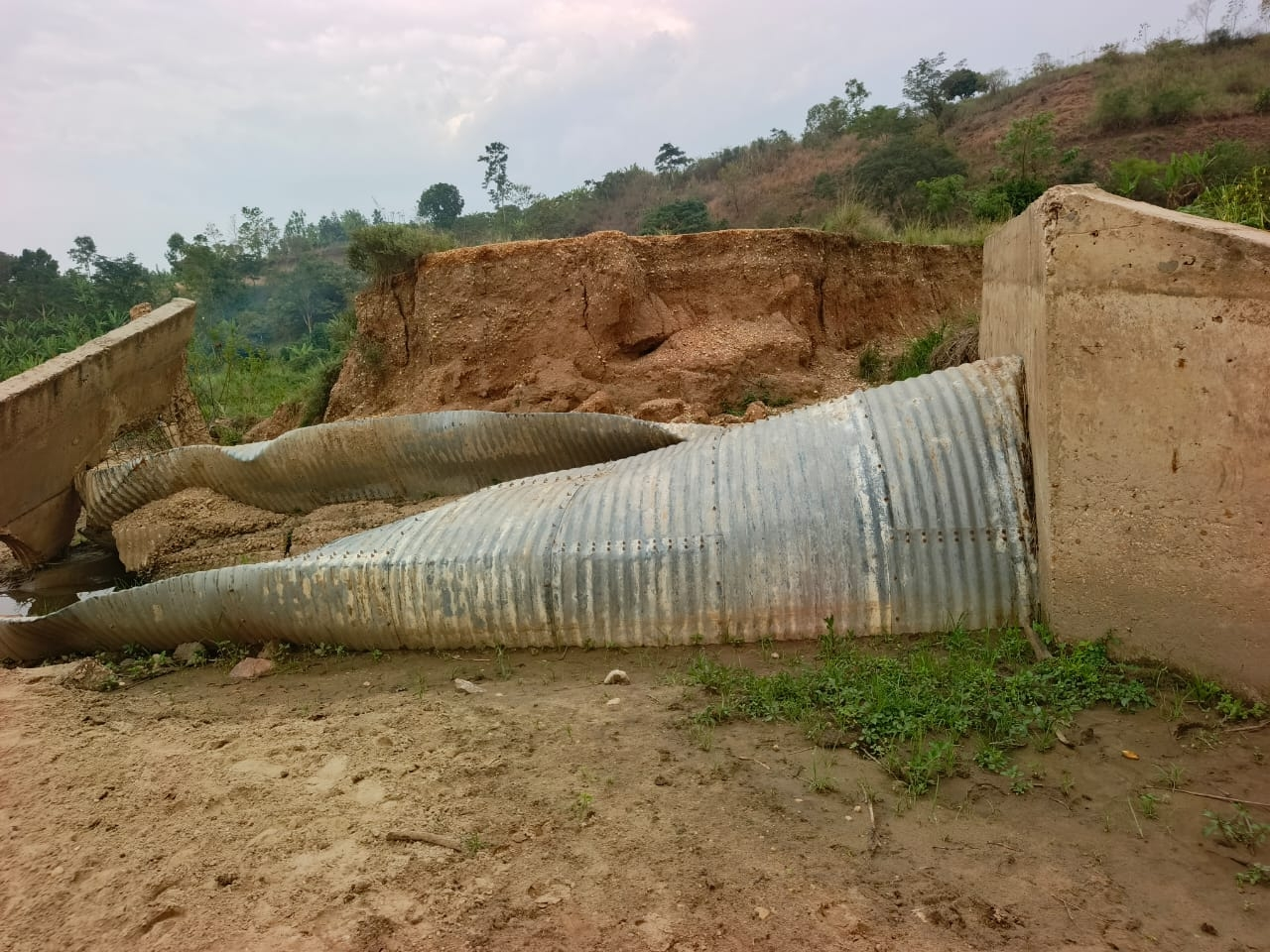
Instead, barely three months later, a large section of the Shs40 million structure collapsed after heavy rainfall, severing the same road it was built to improve and transforming what should have been a symbol of development into the centre of an expanding investigation into alleged shoddy workmanship and possible misuse of public funds.
The collapse has also prompted authorities to launch a search for Kanungu District Engineer January Silangi Mugaye, who officials say has since disappeared as investigators examine the circumstances surrounding the project.
A bridge that failed before earning public trust
The bridge, located in Kanyashande village in Kihembe Sub-county along the Kihembe–Butogota–Bwindi road, was constructed by the Kanungu District Works Department using government funds.
Unlike ageing bridges that deteriorate after decades of service, infrastructure specialists note that modern bridges are expected to remain structurally sound for many years if built according to engineering specifications and subjected to proper quality control.
Failures within only a few months are uncommon and often trigger questions extending beyond weather conditions to issues such as design, construction quality, supervision and compliance with engineering standards.
For residents, those technical questions have become painfully practical.
The crossing they believed would transform daily life has once again become an obstacle.
Denis Tumukunde, the LC III chairperson of Kihembe Sub-county, said the community had welcomed the bridge with optimism, believing years of transport difficulties had finally come to an end.
“The bridge had given people hope that transport challenges had finally been resolved, but now we are back to where we started,” Tumukunde said, attributing the collapse to poor workmanship.
His remarks reflect growing frustration among residents who now find themselves confronting the same challenges the project was intended to eliminate.
Allegations of substandard construction
Attention has now shifted from the collapsed structure itself to how it was built.
Kanungu Deputy Resident District Commissioner Gaddie Rugaaju Ahimbisibwe has publicly alleged that the project suffered from serious construction deficiencies.
According to Rugaaju, investigators suspect the district engineer and members of the construction team used old, rusty culverts instead of new ones during construction.
He further alleged that contractors installed substandard Y6 and Y10 reinforcement bars in the retaining walls and mixed cement using inadequate proportions, resulting in a structure incapable of withstanding heavy rainfall.
If confirmed, such allegations would point not merely to engineering mistakes but to possible violations of procurement and construction standards governing public infrastructure projects.
Infrastructure experts have consistently argued that the durability of bridges depends not only on design but also on strict adherence to material specifications, proper site supervision and independent quality inspections throughout construction.
Compromising any of those stages can significantly weaken structural integrity.
Questions extending beyond engineering
Rugaaju also questioned the manner in which the project was initiated.
He criticised the absence of an official groundbreaking ceremony attended by local leaders, arguing that greater public oversight might have strengthened accountability during implementation.
While ceremonial launches do not determine engineering quality, governance specialists note that transparent project implementation—including public monitoring and documentation—can help reduce opportunities for procurement irregularities and construction shortcuts.
In many districts, community oversight has increasingly been viewed as an important complement to formal engineering supervision.
Engineer reportedly disappears as investigations begin
The investigation took another dramatic turn when authorities attempted to locate officials responsible for the project.
Rugaaju said that after receiving reports of the bridge’s collapse and visiting the site, neither the district engineer nor other officials from the district works department could be found.
He subsequently directed police to arrest Mugaye and other works department officials to assist investigators examining the alleged shoddy construction and possible misuse of government funds.
If investigators establish that public resources were knowingly used to construct substandard infrastructure, those responsible could potentially face both administrative and criminal proceedings.
At this stage, however, the allegations remain under investigation and no findings have yet been presented before a court of law.
More than a local road
The collapse has implications extending well beyond one rural community.
The Kihembe–Butogota–Bwindi road serves both local residents and visitors travelling towards Bwindi Impenetrable National Park, one of Uganda’s most important tourism destinations and home to the country’s internationally renowned mountain gorilla trekking industry.
Reliable road infrastructure plays a critical role in tourism, particularly in regions where visitors travel long distances to access protected areas.
Disruptions can increase travel times, raise transport costs and affect visitor experiences, particularly during rainy seasons when alternative routes may become difficult to navigate.
Recognising this broader impact, Rugaaju described the incident as especially concerning.
He warned that allowing newly completed public infrastructure to fail before commissioning undermines confidence not only in local government projects but also in Uganda’s wider development efforts.
A wider national challenge
The collapse of Kankoko Bridge also highlights a broader issue confronting infrastructure development across Uganda.
Over the past decade, several public works projects have attracted scrutiny over delays, escalating costs, construction defects and allegations of corruption.
Government has repeatedly pledged to strengthen procurement systems, improve project supervision and ensure greater accountability for public expenditure.
Yet incidents involving roads, bridges and public buildings continue to generate questions about whether oversight mechanisms are sufficiently effective at district level.
Engineering professionals argue that preventing such failures requires independent inspections throughout construction rather than relying solely on completion certificates.
Governance experts similarly stress that accountability must extend beyond contractors to include supervising engineers, procurement committees and officials responsible for approving completed works.
Communities paying the highest price
Ultimately, infrastructure failures are measured not only in financial losses but also in disrupted lives.
Farmers face higher transport costs and reduced access to markets every time a road or bridge becomes impassable.
Schoolchildren are often forced to take longer and more hazardous journeys to reach their classrooms.
Also Read: Nyandarua residents protest as contractor uses building blocks for road repairs
Expectant mothers seeking urgent medical care can find life-saving treatment delayed when critical transport links fail.
In tourism-dependent districts such as Kanungu, reliable infrastructure is equally vital, supporting visitor access, local businesses and employment.
Those are the costs communities now face after placing their trust in a bridge that failed before it had the chance to fulfil its purpose.
Accountability now under scrutiny
As police continue searching for the district engineer and investigators examine the construction process, the collapsed bridge has become more than a failed public works project.
It has become a test of whether public institutions will hold individuals accountable when taxpayer-funded infrastructure falls dramatically short of expected standards.
Residents who once celebrated the completion of the bridge are again crossing River Kankoko under difficult conditions.
Their optimism has given way to uncertainty.
Whether the investigation produces answers—and whether those answers lead to meaningful accountability—may determine not only the future of one bridge, but public confidence in how local infrastructure projects are managed across Uganda.