


NAIROBI, Kenya — For years, Safaricom customers accumulated Bonga Points almost unconsciously.
A few points from a phone call. More from buying airtime. Additional rewards from mobile transactions and data bundles. Most subscribers viewed them as small bonuses—useful for discounted airtime, shopping rewards or the occasional promotional offer.
Now those points have acquired an entirely different purpose.
They can help pay government debt.
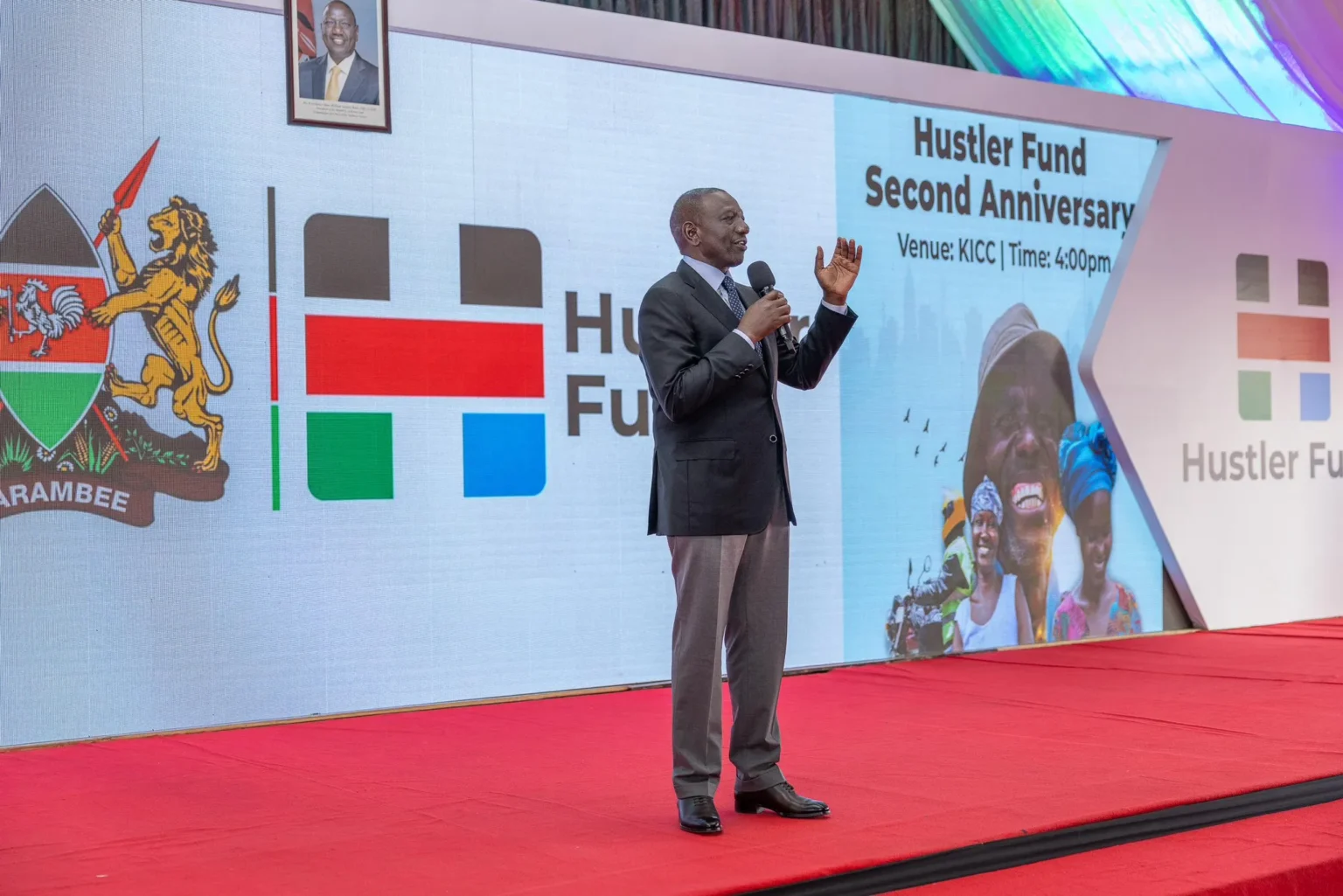
In a move that reveals as much about the financial future of Kenya’s Hustler Fund as it does about consumer convenience, borrowers can now use Safaricom Bonga Points to repay loans issued through the State-backed lending programme.
On the surface, the initiative appears straightforward: another repayment option for borrowers struggling to clear outstanding balances.
Beneath that simplicity lies a more significant story.
The Hustler Fund is entering a new phase—one in which its survival increasingly depends not on fresh government funding but on convincing borrowers to repay what they owe.
A programme built on inclusion
When the Kenya Kwanza administration launched the Hustler Fund in November 2022, it was presented as a solution to one of Kenya’s persistent financial challenges.
Millions of Kenyans remained outside the formal banking system or lacked access to affordable credit.
Traditional lenders often required collateral, extensive documentation or credit histories that many informal workers could not provide.
The Hustler Fund promised something different.
Small loans.
Quick access.
Digital delivery.
And an opportunity for ordinary Kenyans to build a financial track record.
The programme quickly became one of the government’s most visible economic initiatives.
By March this year, official data showed the fund had disbursed approximately Sh83 billion to borrowers across the country.
The scale of lending demonstrated both the demand for accessible credit and the programme’s political significance.
Yet lending money is only half the challenge.
Recovering it is the other half.
The reality of repayment
Government figures indicate that borrowers have repaid around Sh71 billion of the money disbursed through the programme.
That still leaves roughly Sh12.5 billion outstanding.
The numbers translate into a default rate of about 15 percent.
In private-sector lending, such figures would immediately trigger questions about sustainability.
For a government-backed programme originally designed to expand financial inclusion rather than maximise profit, the implications are more complex.
The challenge has become increasingly urgent because the financial foundations of the Hustler Fund are changing.
In its early years, the programme relied heavily on direct government support.
Initial capital injections helped fuel lending and absorb some of the risks associated with serving borrowers traditionally excluded from formal finance.
That cushion is now disappearing.
Budget documents for the 2026/27 financial year confirmed that no fresh development allocation would be provided to the fund.
Future lending will increasingly depend on money recovered from existing borrowers.
That transition fundamentally changes the programme’s operating logic.
The success of tomorrow’s loans now depends heavily on the repayment of yesterday’s loans.
Enter Bonga Points
Against that backdrop, the decision to accept Safaricom Bonga Points takes on greater significance.
The Financial Inclusion Fund has begun notifying borrowers that they can use accumulated loyalty points to reduce or clear outstanding loan balances.
According to Financial Inclusion Fund Chief Executive Officer Henry Tanui, the initiative is designed to remove obstacles that prevent borrowers from making repayments.
“The idea is that if there are other convenient options for borrowers to repay, then we should make them available,” Mr Tanui said.
The early results appear encouraging.
Officials say the initiative recovered approximately Sh3 million within its first week.
While that amount is modest compared to the billions still outstanding, it offers insight into a broader strategy: making repayment easier rather than relying solely on enforcement.
A borrower currently requires approximately five Bonga Points to repay one shilling of debt.
That means a Sh500 Hustler Fund loan would require roughly 2,500 points to settle fully.
The value may vary depending on Safaricom’s redemption structures, but the principle remains the same.
Unused loyalty rewards are being converted into debt repayments.
The economics behind the experiment
The partnership draws on a surprisingly large pool of dormant value.
Safaricom’s latest annual report showed customers collectively held Bonga Points worth approximately Sh3.6 billion as of March 2026.
Viewed differently, that represents billions of shillings in consumer rewards sitting within the telecommunications ecosystem.
Government officials appear to have recognised an opportunity.
Rather than allowing those points to remain unused or be redeemed only for consumer purchases, they can now support repayment behaviour.
Financial analysts say the approach reflects an emerging trend in digital finance where loyalty programmes increasingly function as financial assets rather than simple marketing incentives.
In mature digital economies, reward points have been used to pay bills, purchase services and even offset loan obligations.
Kenya’s adaptation of that model demonstrates how rapidly the country’s mobile ecosystem continues to evolve.
The sustainability question
Yet convenience alone will not determine the Hustler Fund’s future.
The larger question remains whether the programme can sustain itself primarily through repayments.
The answer depends not only on recovery rates but also on operational efficiency, borrower behaviour and confidence in the lending model.
Critics have long questioned aspects of the fund’s administration.
The Auditor-General previously reported that more than 104,000 loans worth Sh116.5 million were issued to individuals whose national identity card numbers were missing from verification databases.
The findings raised concerns about borrower validation and risk management.
Also Read: Hustler Fund hits Sh87bn in loans to 28 million accounts, says Mbadi
Such issues matter because sustainable lending requires more than disbursing money.
It requires confidence that borrowers can be identified, assessed and encouraged to repay.
The government insists reforms continue.
Supporters argue that every large-scale lending programme experiences challenges during its formative years.
A glimpse into the future
The Bonga Points initiative may ultimately be remembered as more than a repayment option.
It represents a glimpse into how Kenya’s financial system is increasingly blending telecommunications, digital payments, government services and consumer behaviour into a single ecosystem.
A mobile reward earned from buying airtime can now help settle a government-backed loan.
That would have seemed improbable only a few years ago.
Today, it feels almost inevitable.
Whether the initiative significantly reduces defaults remains to be seen.
The amounts recovered so far are small compared to the billions still outstanding.
But the experiment reveals something important about the Hustler Fund’s next chapter.
The programme is no longer operating in an environment where government funding automatically fills every gap.
Its future increasingly depends on something less political and more practical.
Repayment.
And in that new reality, even loyalty points have become valuable.