

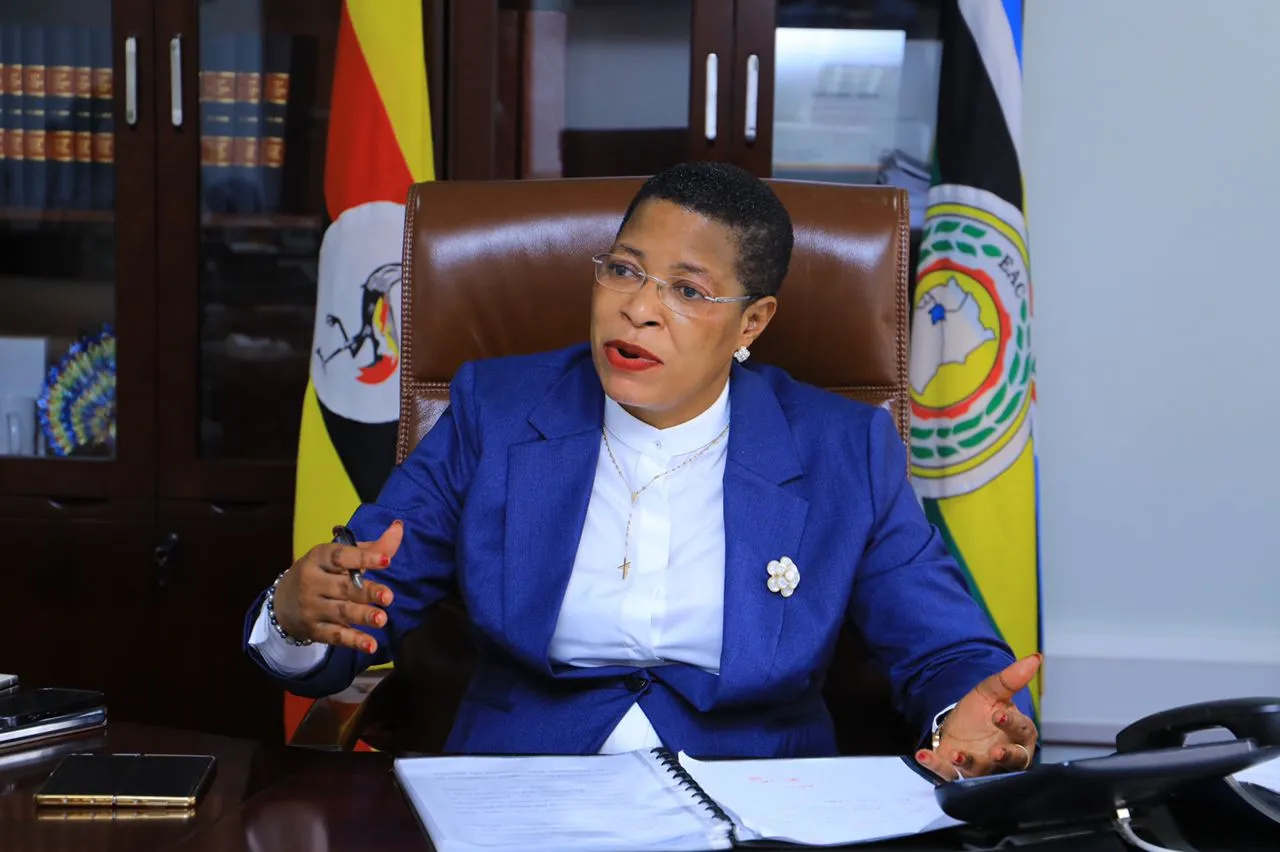
KAMPALA, Uganda — For years, Anita Annet Among occupied one of the most powerful offices in Uganda.
As Speaker of Parliament, she presided over national debates, commanded influence within the ruling National Resistance Movement (NRM), and emerged as one of the country’s most consequential political figures.
At the height of that influence, few could have imagined a scenario in which fellow legislators would reportedly contribute money through a WhatsApp group to help her buy food.
Yet that is precisely the picture now emerging from members of the Teso Parliamentary Group, who say lawmakers from the region have been informally raising funds to support the former Speaker after the freezing of bank accounts linked to ongoing investigations into Parliament’s financial management.
Whether viewed as an act of solidarity, political loyalty or personal gratitude, the claims offer a rare glimpse into how political relationships are tested when power begins to recede.
Because beyond the headlines, the story is not merely about money.
It is about what remains when access to power is suddenly restricted.
A remarkable political reversal
Politics often creates the illusion of permanence.
Individuals who occupy powerful offices can appear untouchable, surrounded by influence, resources and networks that seem unshakeable.
History repeatedly shows otherwise.
From Presidents and Ministers to Parliamentary leaders, political fortunes can change with surprising speed.
Among’s situation illustrates how quickly circumstances can evolve once investigations, legal scrutiny and institutional pressure enter the equation.
According to lawmakers from Teso who spoke anonymously, the freezing of accounts has created practical difficulties that extend beyond legal proceedings.
“Yes, the situation is bad for Among. We raise money for her food and other household necessities,” one MP told Vivid Voice News.
“Among always supported our initiatives and we can’t let her down.”
Another legislator described contributions being coordinated informally through the group’s WhatsApp platform whenever assistance is required.
“It is really true that Among’s main problem now is food. She cannot access her accounts to buy food. So we chip in with our resources; it’s strange but true.”
The claim is striking not simply because of the financial assistance itself but because of what it suggests about the current state of one of Uganda’s most prominent political figures.
The politics of reciprocity
Political scientists often describe politics as an exchange of relationships rather than a competition of institutions alone.
Support is rarely forgotten.
Favours create obligations.
Alliances generate expectations.
Influence often depends as much on personal networks as formal authority.
That reality may help explain why MPs from Teso appear willing to assist Among during a difficult period.
Many legislators from the region have long viewed her rise as a source of regional pride.
Others credit her with supporting projects, political initiatives and development programmes that benefited constituents.
In many political cultures, loyalty operates as a long-term investment.
Support given during periods of strength creates expectations of support during periods of weakness.
The reported fundraising effort appears to reflect that dynamic.
For some MPs, contributing may be less about financial necessity and more about demonstrating allegiance to someone they believe stood with them previously.
More than a personal challenge
The reported difficulties also highlight the broader consequences of financial investigations.
Asset freezes are designed to preserve evidence and prevent the movement of funds while inquiries proceed.
Yet they can also create immediate practical consequences for those affected.
According to sources cited by Vivid Voice News, restrictions reportedly extend beyond Among herself and affect accounts linked to her husband, Budiope East MP Moses Magogo.
The issue recently surfaced during a meeting between Iteso Cultural Union Paramount Chief Papa Emorimor Paul Sande Etomeileng Emolot and Gen Salim Saleh in Kapeeka.
During that discussion, the Emorimor appealed for intervention.
“These bank accounts were frozen when her homes in Nakasero and Kigo were raided by security forces,” he said.
“Now life is so difficult for Hon. Among.”
“She needs money to buy food and run her businesses.”
Saleh’s response reflected his typically informal style.
“You know I am not a politician. I don’t tell lies like your politicians. That’s why I failed in politics,” he said.
“But I will work on that issue.”
Whether any intervention follows remains unclear.
But the conversation demonstrates how concerns about Among’s situation have moved beyond Parliament and into broader political and cultural circles.
The investigation behind the headlines
The claims about financial hardship cannot be separated from the investigations that triggered them.
Among has been under scrutiny following searches at properties in Nakasero, Kigo and Bukedea.
Those searches form part of wider investigations into the management of parliamentary finances.
Several senior parliamentary officials have since faced charges including embezzlement, money laundering and causing financial loss.
The investigations have become one of the most significant examinations of Parliament’s internal operations in recent years.
For investigators, the focus remains accountability and financial governance.
For Among’s supporters, the situation is often framed differently — as a personal and political ordeal affecting someone they regard as a victim of broader political dynamics.
Those competing narratives continue to shape public debate.
The loneliness of political decline
Perhaps the most enduring lesson from the story is how political influence changes under pressure.
Public office often creates large circles of supporters, allies and beneficiaries.
When controversy emerges, those circles frequently contract.
Some allies distance themselves.
Others remain.
The difference can reveal much about the nature of political relationships.
Also Read: Experts question handling of Anita Among probe, warn of potential legal fallout
The reported fundraising effort by MPs from Teso suggests that Among retains a core network willing to stand beside her despite mounting challenges.
Whether motivated by friendship, regional solidarity, gratitude or political calculation, the support indicates that influence does not disappear immediately when formal authority weakens.
Yet it also highlights the fragility of power itself.
One day, a politician can command a national institution.
The next, according to supporters, colleagues are collecting money to help meet household expenses.
That contrast may ultimately explain why the story has resonated so strongly.
It is not simply about Anita Among.
It is about the uncertainty that shadows every political career.
Power can open doors, create opportunities and build vast networks.
But when circumstances change, the most valuable asset often becomes something far less visible than office or influence.
It becomes the people who choose to remain.