


KIGALI, Rwanda — Three decades after the 1994 Genocide against the Tutsi, Rwanda’s security doctrine remains anchored to a threat that many outside the Great Lakes region rarely discuss but which continues to shape relations between Kigali and Kinshasa, influence regional diplomacy and complicate every major peace initiative in eastern Democratic Republic of Congo (DRC).
That threat is the Democratic Forces for the Liberation of Rwanda (FDLR).
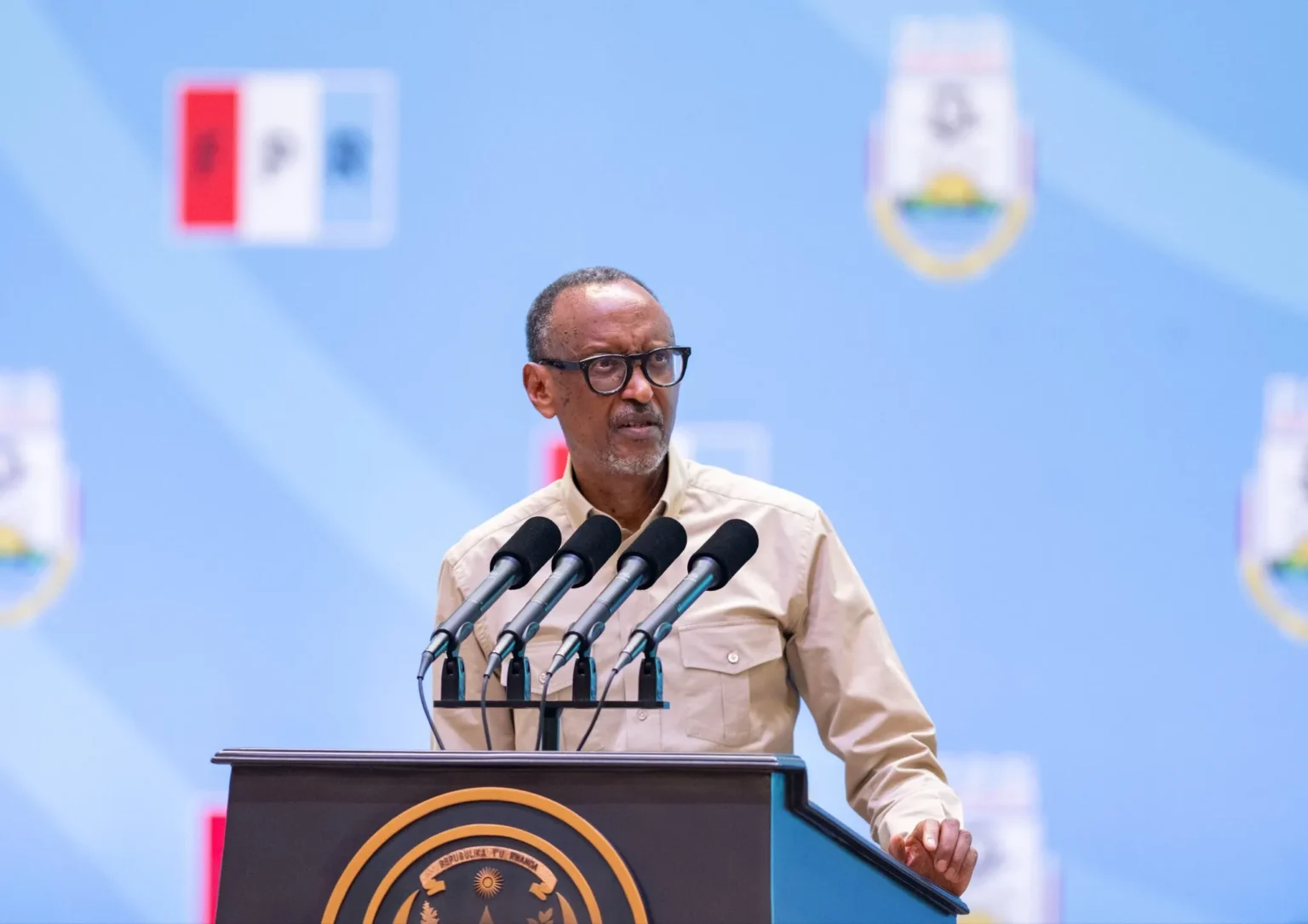
Speaking during an extended meeting of the ruling Rwandan Patriotic Front (RPF) Bureau Politique in Kigali on Friday 17, July 2026, President Paul Kagame returned to an argument that has defined Rwanda’s position on the conflict in eastern Congo for years: that the continued presence of the FDLR across the border remains Rwanda’s central national security concern and one that neither the Congolese government nor the international community has adequately addressed.
“It only becomes Rwanda’s problem when it comes to FDLR that has to be sorted out,” Kagame said.
“Either you sort it out, you Congolese, or the UN that is deployed there. You stop them from invading our country, or we will sort it out ourselves.”
The statement was not merely another diplomatic exchange in the long-running dispute between Rwanda and the Democratic Republic of Congo (DRC). It offered a window into how Kigali continues to view the conflict in eastern Congo, why Rwanda insists its security concerns are being misunderstood internationally, and why peace efforts repeatedly struggle to bridge the gap between the narratives emerging from Kigali and Kinshasa.
At the heart of the disagreement lies a fundamental question: Is eastern Congo primarily a regional security problem or an internal Congolese political crisis?
For Rwanda, the answer begins with the FDLR.
The group traces its origins to elements linked to the former Rwandan government and military structures that fled into what is now eastern Congo after the 1994 genocide. Kigali has long argued that the continued existence of the movement represents an unresolved security threat and a reminder that the forces responsible for one of Africa’s darkest chapters were never fully dismantled.
Successive Rwandan governments have maintained that as long as armed groups hostile to Rwanda operate freely inside Congo, security concerns will inevitably spill across borders.
That position was central to Kagame’s remarks.
The Rwandan leader revealed details of a conversation he said he had with Congolese President Félix Tshisekedi during an early regional summit in Nairobi convened after renewed fighting involving the M23 rebellion.
“I asked President Tshisekedi, ‘How has this become Rwanda’s problem? This is not something started by us,’” Kagame said.
According to Kagame, the discussion focused on reports that the FDLR had established a significant presence in parts of eastern Congo.
“I asked him, ‘Are you aware that those rural areas have more or less been taken over by the FDLR and that they even collect taxes?’ He hesitated and said he had heard about it,” Kagame recounted.
Whether one accepts Kigali’s interpretation or not, the remarks illuminate a recurring frustration within Rwanda’s political establishment: the belief that international attention focuses heavily on allegations against Rwanda while paying less attention to the armed groups operating inside Congo.
That perception has become even more pronounced since the resurgence of M23.
The rebel movement has dramatically altered the security landscape in eastern Congo, capturing territory, displacing populations and triggering one of the region’s most serious diplomatic crises in years.
Kinshasa, supported by several Western governments and United Nations experts, has repeatedly accused Rwanda of backing the M23 rebellion with troops and military equipment. Kigali consistently denies those allegations.
The result has been a diplomatic deadlock in which both sides present fundamentally different explanations for the conflict.
For the Congolese government, M23 represents external interference supported by Rwanda.
For Rwanda, M23 is largely a symptom of deeper internal Congolese problems that have remained unresolved for years.
Kagame reiterated that position on Friday.
“Every time I brought up this issue, I asked, ‘Why did you make this Rwanda’s problem?’ It is not Rwanda’s problem. It is the problem of Congo and their own people,” he said.
That argument reflects a broader reality about eastern Congo that many conflict analysts have highlighted for years.
The region hosts dozens of armed groups with varying political, ethnic and economic motivations. Some are local militias. Others have cross-border origins. Many survive through access to minerals, taxation networks and weak state control.
The result is a security environment so complex that even international peacekeeping missions have struggled to stabilise it.
For regional mediators, this complexity creates a difficult challenge.
Addressing Rwanda’s concerns about the FDLR without appearing to legitimise accusations against Congo is politically sensitive.
Addressing Congo’s concerns about M23 without deepening Rwanda’s sense of insecurity is equally difficult.
That balancing act explains why peace initiatives have repeatedly stalled despite years of negotiations.
Kagame’s remarks also revealed growing frustration with external actors attempting to influence the conflict.
“Making people just shut up is going to be more difficult than people think,” Kagame said.
“Telling us, ‘Shut up, we will support those who want to come and kill you like they killed you last time,’ and we will handle it the way we want, the only way to make me shut up is when I am dead.”
The unusually blunt language reflects how deeply questions of national security and historical memory remain intertwined in Rwanda’s political discourse.
For Kigali, the legacy of 1994 is not simply a historical event. It remains a central lens through which security threats are interpreted.
That perspective often shapes Rwanda’s responses to developments beyond its borders, particularly when armed groups linked to the genocide era remain active.
Yet history alone cannot resolve the present conflict.
The challenge facing mediators is translating competing narratives into practical security arrangements that both countries can accept.
That task remains daunting.
Last month’s U.S.-brokered peace framework represented one of the most ambitious diplomatic efforts in recent years. The agreement commits both countries to addressing core security concerns, including the neutralisation of the FDLR and the disengagement of armed groups operating in eastern Congo.
On paper, the framework acknowledges concerns raised by both Kigali and Kinshasa.
In practice, implementation remains the difficult part.
Questions persist over who will verify compliance, how armed groups will be disarmed, and whether sufficient trust exists between the two governments to sustain the process.
That trust deficit may be the greatest obstacle of all.
Also Read: Rwanda-DRC peace talks collapse over Paul Kagame’s demands
For decades, relations between Rwanda and the Democratic Republic of Congo have been shaped by cycles of accusation, military confrontation and fragile diplomatic engagement.
Each side views itself as responding to legitimate security threats.
Each accuses the other of worsening instability.
And each remains deeply sceptical of the other’s intentions.
Kagame’s latest remarks underscore how far that mistrust still runs.
They also highlight why lasting peace in eastern Congo remains elusive despite intense regional and international involvement.
Ultimately, the debate is no longer only about the FDLR, M23 or even Rwanda and Congo themselves.
It is about whether a region haunted by historical grievances can build enough confidence to move beyond them.
Until that question is answered, the border between Rwanda and eastern Congo is likely to remain one of Africa’s most sensitive fault lines, where history, security and politics continue to collide.